
The final detail that can make or break a bathroom renovation is often the lighting. You’ve picked the perfect tile and a stunning vanity, but the wrong fixture can cast unflattering shadows and undermine the entire design. The right nickel bathroom vanity lights solve this, offering a versatile, modern finish that bridges the gap between sterile chrome and traditional bronze, delivering both style and function right where you need it most.
This isn’t just about screwing in a light bulb; it’s about creating an atmosphere. It’s the difference between a harsh, clinical space and a warm, inviting retreat.
At a Glance: What You’ll Learn
- Nail the Sizing: Discover the simple formulas for choosing a light fixture that’s perfectly proportional to your vanity and mirror.
- Match Your Style: Learn to identify which nickel light design—from minimalist bars to classic multi-bulb fixtures—complements your specific bathroom aesthetic.
- Master the Light: Understand the crucial difference between uplighting and downlighting and how to choose the right direction for shadow-free task lighting.
- Decode the Bulbs: Go beyond watts and learn why Kelvin temperature and CRI (Color Rendering Index) are the secrets to flattering, true-to-life light.
- Avoid Common Pitfalls: Get practical tips on placement, cleaning, and mixing metals for a polished, professional look.
Why Brushed Nickel Remains a Designer’s Go-To
Brushed nickel has a staying power that few other finishes can claim. Unlike polished chrome, its soft, matte texture resists fingerprints and water spots, making it a practical choice for a high-humidity environment. Its warm silver tone is also incredibly versatile, pairing beautifully with both cool color palettes (grays, blues) and warm ones (beiges, wood tones).
This adaptability makes it a cornerstone of transitional and modern design. It provides a clean, updated look without feeling cold or stark. While this article focuses specifically on the vanity light, understanding how this finish works with faucets, towel bars, and other hardware is key to a cohesive design. For a complete overview of how to build a unified look, our comprehensive Brushed Nickel Bathroom Fixtures Guide provides the broader framework.
First, Get the Size and Placement Right
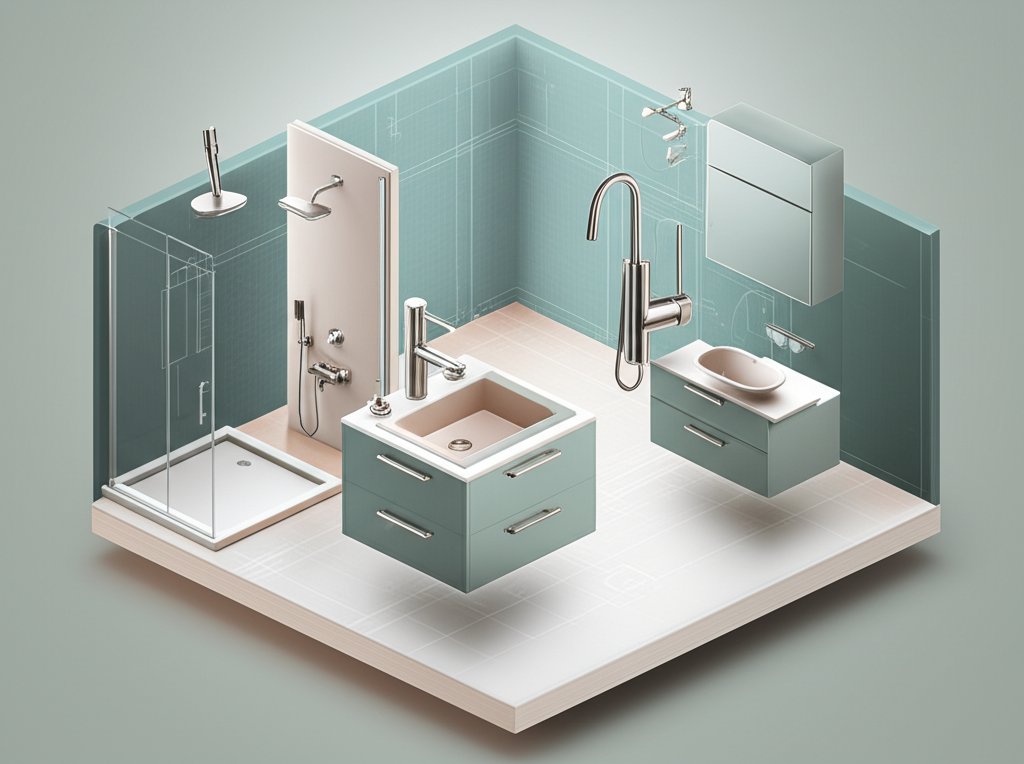
A fixture that’s too small will look lost, while one that’s too large can overwhelm your space. Getting the scale correct is the first and most important step.
A Simple Sizing Formula
The goal is balanced, even illumination across your face and the countertop. Follow these two rules of thumb:
- For a Single Vanity Mirror: Choose a light fixture that is roughly 75% of the mirror’s total width. It should not be wider than the mirror itself.
- For Double Sinks/Mirrors: You have two great options. You can either place a smaller fixture centered over each mirror (each about 75% of its respective mirror’s width) or run a single, long light bar across the top of both mirrors.
Here’s a quick reference for common vanity sizes:
| Vanity Width | Mirror Width (Approx.) | Recommended Light Fixture Width |
| :———– | :——————— | :——————————– |
| 24-30 inches | 22-28 inches | 17-21 inches |
| 36 inches | 34 inches | 24-28 inches |
| 48 inches | 46 inches | 34-36 inches |
| 60-72 inches | 58-70 inches | 42-50 inches (or two 24″ lights) |
Mounting Height Matters
Where you hang the light is just as critical as its size.
- Above the Mirror: Mount the fixture 75 to 80 inches from the floor to the center of the light. This typically places the bottom of the fixture a few inches above the mirror frame, directing light downward and forward.
- Flanking the Mirror (Sconces): If using vertical sconces, mount them on either side of the mirror, roughly 36 to 40 inches apart. The center of each sconce should be at eye level, which is typically 60 to 65 inches from the floor. This provides excellent cross-illumination, minimizing shadows under the chin, eyes, and cheeks.
Expert Tip: Before your electrician makes a final cut, have someone hold the fixture in place while you stand at the vanity. This simple “dry fit” can help you visualize the final effect and make minor adjustments for a perfect result.
Find a Style That Speaks to Your Bathroom’s Vibe
Nickel bathroom vanity lights come in a vast array of styles. The key is to choose one that enhances your existing design, whether it’s modern minimalist, modern farmhouse, or industrial chic.
The Sleek Minimalist: Bar Lights
For a clean, contemporary look, nothing beats a linear LED bar light. These fixtures provide a wide, even wash of light and often feature a simple, rectangular profile in brushed nickel.
- Best For: Bathrooms with floating vanities, frameless mirrors, and a minimalist aesthetic.
- Case Snippet: In a small powder room with a dark gray accent wall, a 24-inch horizontal LED bar light mounted above a simple round mirror created a dramatic, hotel-like feel without adding visual clutter. The brushed nickel finish kept it from feeling too cold.
The Transitional Classic: Multi-Light Fixtures
This is the most common category, featuring a single horizontal bar with two, three, four, or more individual lights. The style is largely defined by the shades.
- Clear Glass Shades: Offer a slightly industrial or vintage feel. They provide bright, direct light and look fantastic with Edison-style bulbs. The downside? They show dust and must be kept clean.
- Frosted or Alabaster Glass Shades: Diffuse the light for a softer, more ambient glow. This is a great choice for reducing glare and creating a more relaxing, spa-like atmosphere. They are also more forgiving when it comes to dust.
- Shade Shapes: Bell-shaped, cylindrical, and square shades are all popular options. A simple bell shape leans traditional, while a sharp-angled square shade feels distinctly modern.
The Industrial Edge: Caged and Exposed Bulb Designs
For a bolder look, consider fixtures with metal cages around the bulbs or a design that intentionally exposes the bulb as a focal point. These nickel bathroom vanity lights pair exceptionally well with concrete countertops, reclaimed wood, and black matte hardware.
Pointing in the Right Direction: Uplighting vs. Downlighting

Should your light shades point up toward the ceiling or down toward the counter? It’s not just an aesthetic choice—it dramatically affects the quality of your light.
- Downlighting: This is the most practical choice for a vanity. By directing light downward, it provides direct, focused task lighting for shaving, applying makeup, and other grooming. This is the best option for minimizing shadows on your face.
- Uplighting: This directs light toward the ceiling, which then bounces back down into the room. It creates soft, ambient, and generally flattering light. However, it’s not ideal for tasks, as it can create shadows under your eyes and jaw. It works best in powder rooms or as a secondary, decorative light source.
- Reversible Fixtures: Many multi-light fixtures are designed to be mounted with the shades facing either up or down, giving you ultimate flexibility.
If your bathroom relies solely on the vanity light for all its illumination, a down-facing fixture is almost always the superior choice for functionality.
Quick Answers to Common Questions
Q: Is brushed nickel going out of style?
A: Not at all. While other finishes like matte black and champagne bronze have gained popularity, brushed nickel remains a timeless classic. Its neutral tone and durability make it a safe and stylish bet for any modern or transitional bathroom. According to the National Kitchen & Bath Association (NKBA) trend reports, it consistently ranks as a top-three finish choice among designers.
Q: Can I mix brushed nickel vanity lights with other metal finishes?
A: Absolutely. Mixing metals is a hallmark of modern design. Brushed nickel pairs beautifully with matte black for a high-contrast look or with chrome for a subtle, layered feel. The key is to be intentional. A good rule of thumb is to stick to two, or at most three, metal finishes in one space. For example, use brushed nickel for your lighting and faucets, and matte black for your mirror frame and cabinet hardware.
Q: How do I clean my brushed nickel fixtures?
A: The beauty of the brushed finish is its low maintenance. Simply wipe it down with a soft, damp cloth and a little mild soap. Avoid abrasive cleaners, harsh chemicals, or scrubbing pads, as they can scratch the finish and damage the protective lacquer.
Q: What’s more important: lumens or Kelvin?
A: Both are crucial, but for different reasons. Lumens measure brightness—for a vanity, aim for around 700-800 lumens per square meter (or about 1600 total lumens for a primary vanity). Kelvin (K) measures color temperature. For a bathroom, a range of 2700K (warm, soft white) to 3500K (neutral white) is ideal. Anything over 4000K can feel stark and clinical, like an office. Also, look for a high CRI (Color Rendering Index) of 90+ to ensure skin tones and makeup colors appear accurate.
Your Action Plan for a Brighter Bathroom
Choosing the right light fixture doesn’t have to be overwhelming. By breaking it down, you can move from browsing to buying with confidence.
- Measure First: Start with your vanity and mirror widths. Use the 75% rule to determine your ideal fixture size. Measure your ceiling height to confirm you can mount it at the recommended 75-80 inches from the floor.
- Define Your Style: Look at your vanity, faucet, and tile. Are they sharp and modern? Soft and traditional? Industrial? Choose a nickel bathroom vanity light that echoes those same design cues.
- Prioritize Task Lighting: For a primary bathroom, a fixture that casts light downward is the most functional choice. It will give you the bright, shadowless light you need every day.
- Check the Specs: Don’t just look at the design. Check the bulb requirements. For the most flattering light, aim for a fixture that supports bulbs with a CRI of 90+ and a color temperature of around 3000K.
The vanity light is the jewelry of the bathroom. It’s a functional necessity that doubles as a critical style element. By focusing on proportion, style, and the quality of light itself, you can select a brushed nickel fixture that not only illuminates your space but elevates it entirely.

- DIY Bathroom Mirror Frame Designs on a Budget - October 12, 2026
- Creative Bathroom Mirror Border Ideas for Every Style and Budget - October 11, 2026
- Bathroom Finishes That Handle Moisture and Look Great - October 10, 2026