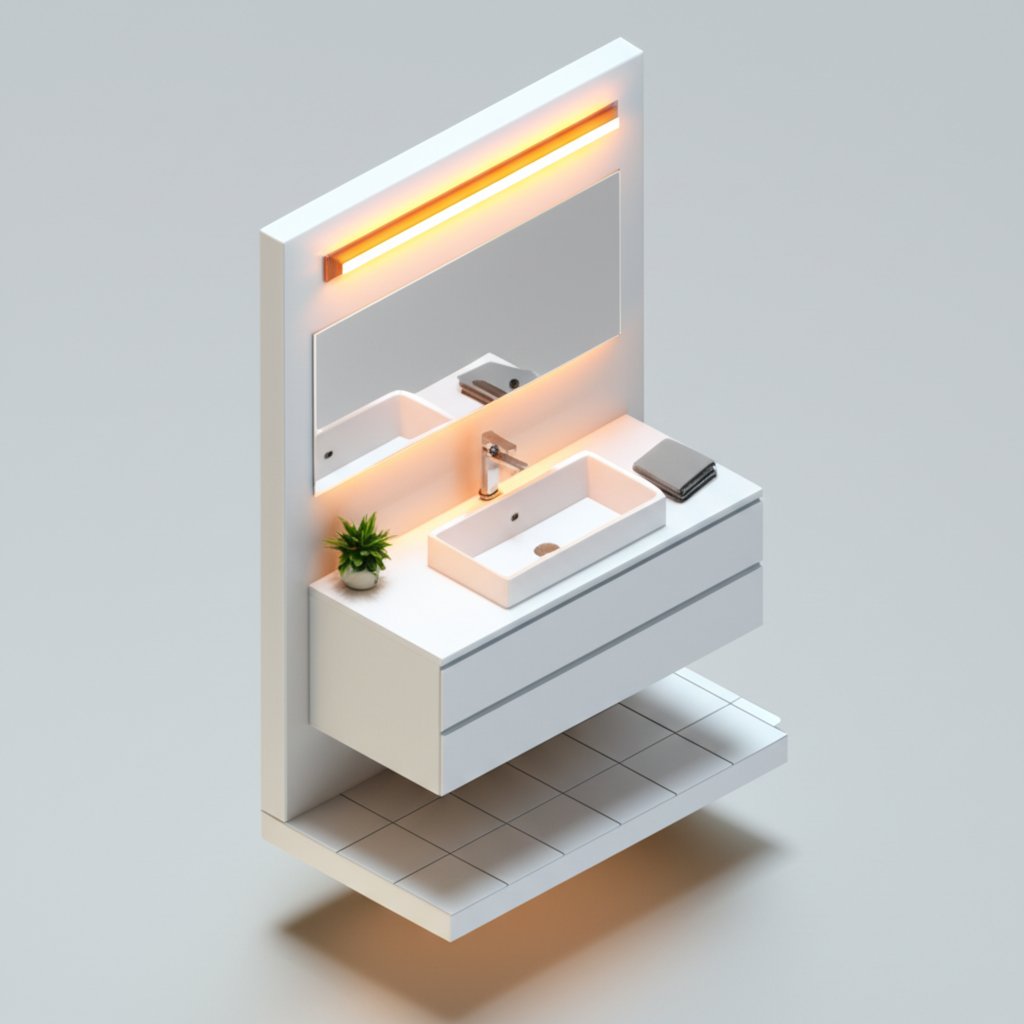
The difference between a functional bathroom and a sanctuary often comes down to the details. A poorly chosen fixture can cast harsh shadows or clash with your minimalist faucet, but the right contemporary bathroom vanity lights do more than just illuminate—they act as a focal point, reinforcing the clean lines and sophisticated simplicity of your entire space. They are the crucial final layer that transforms a room from merely modern to truly memorable.
At a Glance: Your Path to Perfect Contemporary Lighting
- Clarify the Style: Understand the key differences between “modern” and “contemporary” to select a fixture with lasting appeal.
- Choose the Right Form: Decide between linear bars, sculptural sconces, or integrated mirror lights based on your space and aesthetic goals.
- Master the Technicals: Learn the “recipe” for perfect task lighting—lumens (brightness), Kelvin (color temperature), and CRI (color accuracy).
- Size and Place Like a Pro: Follow simple rules for sizing and mounting fixtures to create a balanced, flattering light source.
- Avoid Common Pitfalls: Ensure your choice is UL-rated for damp locations and compatible with a dimmer for ultimate control.
What Truly Defines “Contemporary” in Bathroom Lighting?
Before you start shopping, it’s vital to grasp the aesthetic. Contemporary design is defined by its clean, uncluttered lines, neutral color palettes, and an emphasis on form and material over ornamentation. It’s about creating a feeling of calm, sophistication, and intentionality.
Contemporary vs. Modern: A Quick Clarification
People often use “modern” and “contemporary” interchangeably, but in design, they have distinct meanings.
- Modern Design refers to a specific historical period, primarily the mid-20th century (think clean lines of the 1950s and 60s). It’s a fixed style.
- Contemporary Design is about the now. It’s dynamic and evolving, borrowing elements from modernism but also incorporating current trends. It’s less a strict set of rules and more a curated sensibility.
Think of it this way: Modern is a classic photograph, while Contemporary is a live video feed. For vanity lighting, this means you’ll find fixtures with geometric purity, but also those with organic shapes, innovative materials like acrylic diffusers, and the latest in integrated LED technology.
Key Materials and Finishes to Look For
Contemporary bathroom vanity lights showcase materials honestly. You won’t find faux finishes or ornate scrollwork here. Instead, look for:
- Matte Black: A bold, graphic choice that provides strong contrast.
- Brushed Nickel & Polished Chrome: Timeless, sleek metallics that coordinate easily with most faucets and hardware.
- Satin & Brushed Brass/Gold: A warmer metallic that adds a touch of luxe without feeling traditional.
- Acrylic & Frosted Glass: Used as diffusers, these materials soften the light and create a clean, uniform glow.
Choosing Your Fixture: The Three Core Contemporary Forms
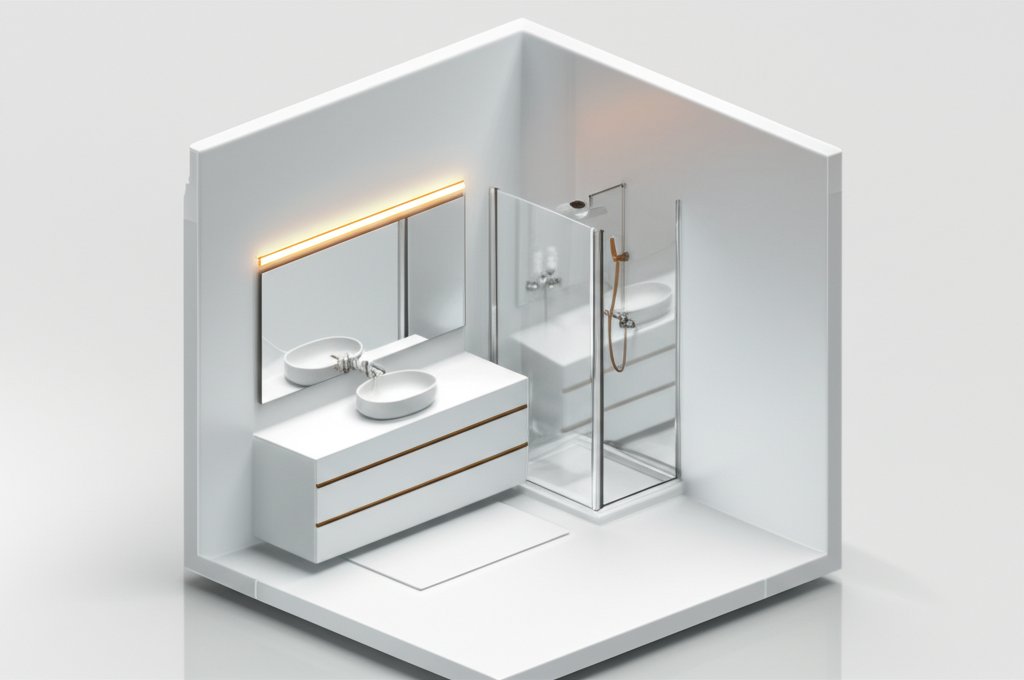
Contemporary vanity lights generally fall into three categories. Your choice will depend on the size of your vanity, the shape of your mirror, and the overall look you want to achieve.
1. The Linear Bar Light
This is the quintessential contemporary fixture. A linear bar light is a long, streamlined fixture that can be mounted horizontally above the mirror or vertically as a pair flanking it.
- Best For: Creating even, shadow-free task lighting across the entire vanity. It’s the most functional and popular choice for its minimalist appeal.
- Placement:
- Horizontal: Mount it a few inches above the mirror. A good rule is to choose a bar that is about 75% of the mirror’s width, but never wider than the mirror itself.
- Vertical: Mount two shorter bars on either side of the mirror, with their midpoints roughly at eye level (about 60-66 inches from the floor). This cross-illumination is excellent for eliminating shadows during grooming.
- Case Snippet: For a sleek 60-inch double vanity with a wide, single mirror, a 48-inch horizontal LED bar in a matte black finish provides ample, even light while reinforcing the room’s clean, horizontal lines.
2. The Sculptural Sconce
While bars are about function, contemporary sconces can be functional art. They are individual fixtures, typically installed in pairs, that add a strong design element. Think geometric shapes, minimalist globes, or abstract metallic forms.
- Best For: Powder rooms or bathrooms where the vanity lighting is a primary design statement. They add visual interest and layered light.
- Placement: Always used in pairs, flanking the mirror. The same eye-level mounting rule applies (60-66 inches from the floor) to ensure the light is cast onto your face, not just the wall.
- Case Snippet: In a small powder room with a 24-inch round mirror, a pair of simple, globe-shaped sconces from a brand like George Kovacs or Tech Lighting adds a touch of elegance and provides soft, flattering light for guests.
3. The Integrated Mirror Light
For the ultimate minimalist, the light is built directly into the mirror itself, often as a frosted perimeter or backlit panel. This creates a seamless, high-tech look.
- Best For: Small bathrooms where space is at a premium, or for achieving an ultra-clean, hotel-inspired aesthetic.
- The Catch: While beautiful, the LED components are often not replaceable. If the light fails years down the road, you may have to replace the entire mirror unit. Quality is paramount here.
- Case Snippet: A floating vanity in a compact guest bath is paired with a 30-inch round integrated LED mirror. The backlit glow provides both task and ambient light, making the small space feel open and sophisticated.
While we’re focused on the style of contemporary fixtures, the underlying technology is just as important. For a complete rundown on the benefits of the technology itself, our Guide to LED vanity lights covers everything from energy savings to lifespan.
Beyond Style: Nailing the Technical Recipe for Flawless Light
A beautiful fixture that casts unflattering light is a design failure. To get it right, you need to pay attention to three key specifications. This is the “recipe” for light that is both functional and beautiful.
Brightness (Lumens): How Much Light is Enough?
For task-heavy areas like a vanity, you need bright, clear light. The American Lighting Association recommends 1600-4000 total lumens for a bathroom, with a significant portion dedicated to the vanity.
- Actionable Rule: Aim for at least 700-800 lumens for every 24 inches of vanity width. For a 48-inch vanity, that means you need a fixture (or pair of fixtures) that provides at least 1400-1600 lumens. Most product specifications list the lumen output clearly.
Color Temperature (Kelvin): Setting the Right Mood
Kelvin (K) measures the color of the light, from warm and cozy to cool and energizing.
| Kelvin (K) | Light Appearance | Best For |
|---|---|---|
| 2700K | Warm, Incandescent | Ambient, relaxing light (not ideal for tasks) |
| 3000K | Soft White / Neutral | The sweet spot. Bright and clean without being sterile. |
| 4000K | Cool White | Crisp and energizing. Good for a very modern, white bath. |
| 5000K+ | Daylight / Bluish | Can feel clinical or harsh in a residential setting. |
| For most contemporary bathrooms, a color temperature of 3000K to 4000K is ideal. It provides clean, accurate light for grooming without feeling cold or sterile. |
Color Accuracy (CRI): Seeing True Colors
The Color Rendering Index (CRI) is a scale from 0 to 100 that measures how accurately a light source reveals the true colors of objects. This is critical at a vanity for tasks like applying makeup or matching clothes. Low CRI light can make skin tones look washed out or unnatural.
- Actionable Rule: For a bathroom vanity, accept nothing less than a CRI of 90+. This ensures that reds look red and your skin tone is rendered accurately, just as it would be in natural daylight. High-quality LED fixtures will prominently feature their CRI 90+ rating.
Your Practical Playbook: Sizing and Placement Rules
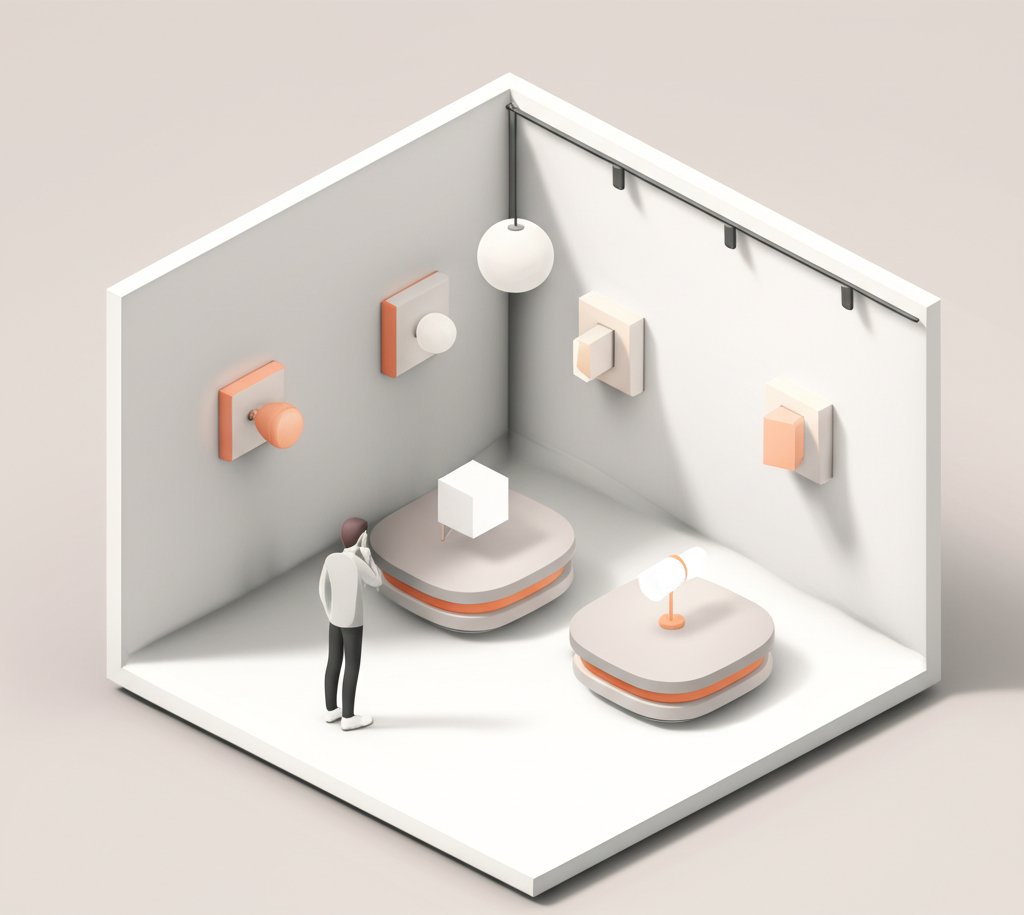
Proper placement is just as important as the fixture itself. Follow these guidelines to avoid common mistakes.
Sizing Your Light to Your Mirror and Vanity
- Horizontal Bar (Above Mirror): The fixture should be at least 75% of the mirror’s width to ensure even illumination. For example, for a 36-inch mirror, look for a bar between 28 and 34 inches wide. It should never be wider than the vanity cabinet itself.
- Vertical Sconces (Flanking Mirror): The sconces should not feel crowded. Mount them 3-4 inches from the sides of the mirror and ensure they are at least 30-36 inches apart to cast light evenly across your face. The height of each sconce should be roughly one-third the height of the mirror.
Installation Checklist: Don’t Forget the Details
- Check the UL Rating. Bathrooms are wet environments. Your fixture MUST be UL Listed for “Damp Locations.” If it’s going inside a shower, it needs to be rated for “Wet Locations.” This is a non-negotiable safety requirement.
- Plan for a Dimmer. Contemporary design is about control and mood. Ensure the LED fixture you choose is “dimmable” and pair it with a compatible LED dimmer switch (an ELV or TRIAC dimmer, as specified by the manufacturer).
- Verify Your Junction Box. Before you buy, know where your electrical junction box is located. Is it centered over the mirror? Or are there two boxes for sconces? If the placement is wrong, you’ll need an electrician to move it, which adds to the cost.
Quick Answers to Common Questions
Q: Are integrated LED vanity lights a good idea?
A: They offer a supremely minimalist look and are very space-efficient. The main drawback is that the LEDs are part of the fixture and cannot be replaced. If the light fails after the warranty period, you have to replace the entire mirror. Choose a reputable brand with a long-life rating (e.g., 50,000 hours) to minimize this risk.
Q: Can I just use a single overhead ceiling light instead of a vanity light?
A: This is a common mistake that creates what designers call “monster lighting.” A single light source directly overhead casts harsh, unflattering shadows under your eyes, nose, and chin. Vanity lighting should come from the front (above or beside the mirror) to illuminate your face evenly.
Q: What’s the best finish for contemporary bathroom vanity lights?
A: Matte black is currently the most popular for its strong, graphic look. Brushed nickel and chrome are timeless and safe choices. Brushed brass adds warmth and a touch of luxury. The best practice is to match your vanity light finish to your faucet and other hardware for a cohesive, intentional look.
Q: How high should I mount my vanity light?
A: For a horizontal bar above the mirror, mount it 75 to 80 inches from the finished floor. For vertical sconces, the center of the fixture should be at eye level, which is typically 60 to 66 inches from the floor.
From Plan to Perfect: Your Next Steps
Choosing the right contemporary bathroom vanity light isn’t just about picking a pretty fixture. It’s about creating a harmonious balance between form, function, and technology. By following a clear process, you can ensure your choice enhances your daily routine and elevates your bathroom’s design.
Here is your final decision-making checklist:
- Measure First: Record the width of your vanity and your mirror.
- Choose Your Form: Decide between a horizontal bar, a pair of vertical sconces, or an integrated mirror light based on your layout and style.
- Select Your Style: Pick a finish (Matte Black, Brushed Nickel, etc.) that complements your faucet and hardware.
- Verify the Specs: Confirm the fixture meets your technical recipe: enough lumens for your vanity size, a 3000K-4000K color temperature, and a CRI of 90 or higher.
- Confirm the Details: Ensure the fixture is UL-rated for damp locations and is compatible with a dimmer switch.
With these principles in mind, your new lighting won’t just illuminate your space—it will define it.

- DIY Bathroom Mirror Frame Designs on a Budget - October 12, 2026
- Creative Bathroom Mirror Border Ideas for Every Style and Budget - October 11, 2026
- Bathroom Finishes That Handle Moisture and Look Great - October 10, 2026