Of all the rooms in your home, the bathroom is where lighting matters most. It’s a functional workspace for your morning routine and a sanctuary for unwinding at night, so getting the best bath lighting is a non-negotiable part of creating a space that truly serves you. Bad lighting can cast unflattering shadows, make precise tasks like shaving or applying makeup difficult, and turn a potential spa-like retreat into a clinical, uninviting box. The right strategy, however, transforms it completely.
This guide moves beyond generic advice to give you the specific plans and principles for creating a layered, functional, and beautiful lighting scheme.
At a Glance: Your Path to Perfect Bathroom Lighting
- Embrace Layering: The best lighting plans combine three types: Task (for the vanity), Ambient (for overall room light), and Accent (for mood and detail).
- Prioritize the Vanity: Cross-illumination from vertical sconces on either side of the mirror is the gold standard for shadow-free light on your face.
- Get the Bulbs Right: A Color Rendering Index (CRI) of 90+ and a color temperature around 2700K are your secret weapons for natural-looking skin tones.
- Control is Everything: Dimmers are essential. They allow you to shift from bright, energizing light for your morning routine to a soft, relaxing glow for an evening soak.
- Safety is Paramount: Understand the difference between damp-rated and wet-rated fixtures to ensure your lighting is safe, compliant, and durable.
The Three Layers of Brilliant Bathroom Lighting
Think of lighting a room like painting a picture. You don’t just use one color; you layer different shades to create depth and focus. The same principle applies to your bathroom. A single, harsh overhead light creates a flat, shadow-filled environment. The best bath lighting strategy always incorporates three distinct layers.
- Task Lighting: This is your workhorse. It provides focused, bright light for specific activities like applying makeup, shaving, or styling your hair. The vanity mirror area is the most critical zone for task lighting.
- Ambient Lighting: This is the general, overall illumination for the room. It fills in the shadows, ensures safe navigation, and provides a baseline level of light. It’s what you flip on when you first walk into the room.
- Accent Lighting: This is the jewelry of your lighting plan. It’s used to highlight specific features you love, like beautiful tile work, a piece of art, or the architecture of a recessed niche.
While this layered approach is the foundation for all great Bathroom lighting for your best look, let’s break down exactly how to execute each layer for a functional and inviting space.
Nailing Your Vanity Lighting: The Most Important Lights in the Room
If you only get one part of your bathroom lighting right, make it the vanity. This is where you prepare for your day and wind down at night. Poor lighting here can fool you into thinking you look tired or that your makeup is blended perfectly when it isn’t.
Why Cross-Illumination Wins Every Time
The undisputed best practice for vanity lighting is to place two vertical fixtures, or sconces, on either side of the mirror. This technique, called cross-illumination, bathes your face in even light from both sides, eliminating the harsh shadows under your eyes, nose, and chin that a single overhead light creates.
The Pro-Placement Formula:
- Height: Mount the center of each sconce roughly at eye level, which is typically 60 to 66 inches from the finished floor.
- Spacing: Position the sconces 36 to 40 inches apart, flanking the mirror. This ensures the light cones overlap and illuminate your entire face.
Case Snippet: The Powder Room Fix
A client had a small powder room with a single, dated “Hollywood” light bar above the mirror. Guests often commented on the harsh lighting. We replaced it with two slim, vertical LED sconces. Even though the room’s footprint didn’t change, it immediately felt more spacious, elegant, and welcoming. The quality of light on guests’ faces was dramatically softer and more flattering.
The Overhead Alternative: When Sconces Won’t Work
Sometimes, due to wall space constraints or existing wiring, side sconces aren’t an option. In this case, a horizontal fixture mounted above the mirror is the next best choice.
To make it work, follow these rules:
- Length: The fixture should be at least 24 inches long—ideally, nearly the width of your mirror—to provide broad, even light. A tiny fixture will create a “hot spot” right in the middle of your forehead.
- Height: Mount it 75 to 80 inches above the floor. This height helps direct the light downward at a more flattering angle, reducing some (but not all) of the under-eye shadows.
- Power: Aim for at least 150 watts of total illumination for a primary bathroom vanity. For modern LED fixtures, look for a total output of around 1600-2000 lumens.
Illuminating Wet Zones: Shower and Bathtub Lighting Safety
Lighting in and around showers and tubs requires special attention to safety. Water and electricity are a dangerous mix, so fixtures in these areas must have specific ratings to be code-compliant and safe.
Shower Lighting: Go Recessed and Wet-Rated
A dark shower is a dreary and potentially unsafe space. A single recessed light centered in the shower ceiling is the most common and effective solution.
- The Rating: The fixture must be “wet-rated,” which means it’s sealed to prevent any water intrusion from spray or steam.
- The Lens: Opt for a fixture with a glass lens instead of a plastic one. Plastic can yellow over time from heat and moisture, diminishing the quality and color of the light.
- Modern Touches: For a more high-end, spa-like feel, consider installing a wet-rated LED strip light inside a shower niche. It provides a soft, indirect glow that’s perfect for highlighting decorative tile and creating ambiance.
Bathtub Ambiance: Setting a Spa-Like Mood
Lighting around a freestanding or alcove tub is all about creating a relaxing atmosphere.
- Recessed Lights: A single recessed light with a dimmer, placed over the center of the tub, is a simple and effective choice. This fixture should be “damp-rated” if it’s not in the direct path of a shower spray.
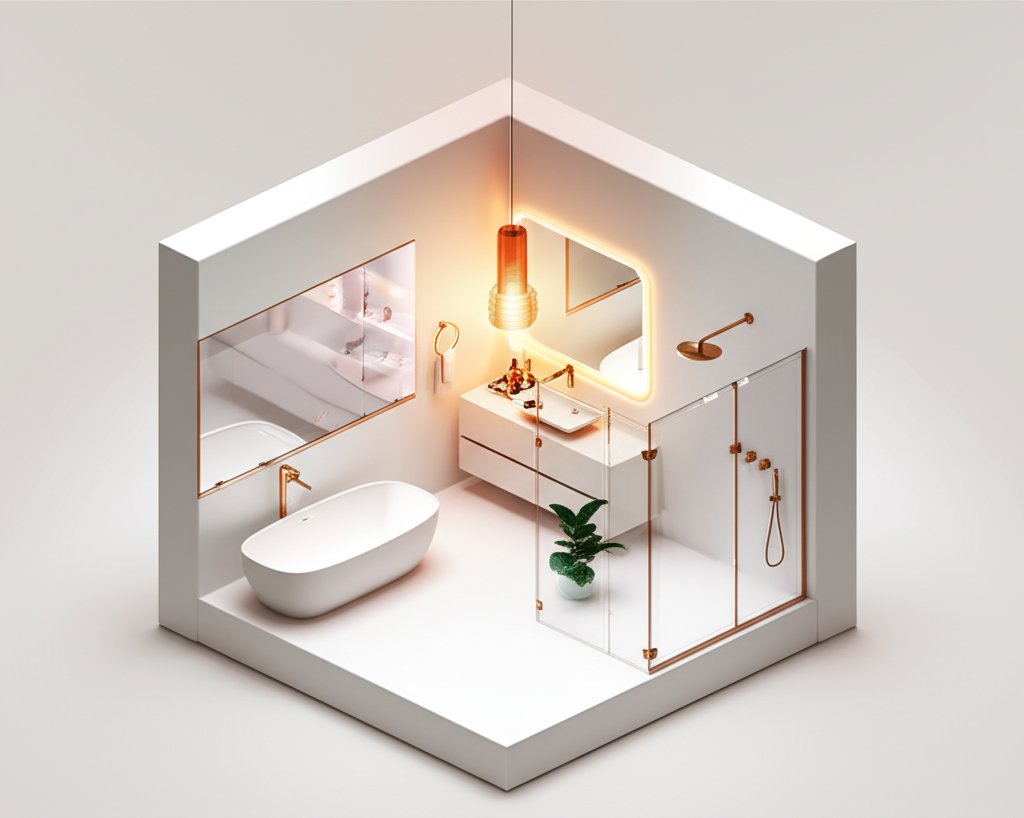
- Decorative Fixtures: A small chandelier or pendant can be a stunning focal point over a freestanding tub. However, safety codes are strict. The bottom of the fixture must be at least 8 feet above the tub’s rim or 3 feet outside of it horizontally. Always use a damp-rated or wet-rated fixture and have it installed by a licensed electrician to ensure it meets local building codes.
The Unsung Hero: Getting Ambient and Accent Lighting Right
Once your task and wet-zone lighting are planned, you can fill in the rest of the room with ambient light and add a touch of drama with accent lighting.
Filling the Room with General Light
For general illumination, a central ceiling fixture is often the best choice.
- Fixture Types: A flush mount (sits directly against the ceiling) is great for low ceilings. A semi-flush mount (hangs down a few inches) can offer a bit more decorative flair and bounce some light off the ceiling for a softer effect.
- Recessed Lighting: In larger bathrooms, a grid of recessed lights can provide seamless ambient light. A good rule of thumb for spacing is to divide the ceiling height by two. For an 8-foot ceiling, space your recessed lights about 4 feet apart.
Adding Drama with Accent Lights
Accent lighting is what elevates a bathroom from purely functional to truly designed. Use small, adjustable spotlights or low-profile picture lights to draw attention to unique details.
- Highlight a Tiled Wall: Graze a textured stone or tile wall with a recessed “wall wash” fixture.
- Spotlight Artwork: Use a small, aimable spotlight to illuminate a favorite piece of art.
- Light a Niche: Place a tiny LED “puck” light inside a built-in shelf to create a soft, inviting glow.
The Expert’s Toolkit: Bulbs, Dimmers, and Controls
The fixtures are only half the story. The bulbs you choose and the controls you use have a massive impact on the quality of your bathroom light.
Decoding the Light Bulb: CRI, Kelvins, and Lumens
Don’t just grab any bulb off the shelf. Understanding these three terms will ensure you get the best bath lighting possible.
| Specification | What It Means | The Ideal Choice for a Bathroom |
|---|---|---|
| CRI (Color Rendering Index) | How accurately a light source reveals the true colors of objects. Scale of 0-100. | 90+ CRI. This is critical for seeing accurate skin tones, makeup colors, and clothing. |
| Kelvin (K) (Color Temp) | The color of the light itself, from warm (yellowish) to cool (bluish). | 2700K to 3000K. This range mimics warm, natural daylight and is incredibly flattering. Anything over 3500K can feel sterile and clinical. |
| Lumens (Brightness) | The total amount of visible light emitted by the bulb. | Vanity: 700-800 lumens per fixture. Ambient: 50-80 lumens per square foot of room area. |
| LED bulbs are the top recommendation. They are energy-efficient, have an incredibly long lifespan, and are available in the high-CRI and specific Kelvin temperatures you need. |
Why Every Bathroom Light Deserves a Dimmer
A dimmer switch is arguably the most valuable, and least expensive, upgrade you can make to your bathroom lighting. It allows you to have bright, focused light when you’re getting ready in the morning, and a soft, tranquil glow when you’re taking a relaxing bath at night. It puts you in complete control of the mood and functionality of the space.
Pro Tip: Ensure your dimmer is compatible with your light bulbs, especially if you’re using LEDs. Not all LED bulbs are dimmable, and using an incompatible switch can cause flickering or buzzing.
Quick Answers to Common Bath Lighting Questions
Q: What’s the biggest mistake people make with bathroom lighting?
A: Relying on a single overhead fixture, often centered in the room. This creates harsh shadows on the face at the vanity and leaves corners of the room feeling dark and gloomy. Layering your light is the solution.
Q: How many lumens do I really need for a bathroom?
A: A general guideline is to aim for a total of 50-80 lumens per square foot. For a 100-square-foot bathroom, that’s 5,000-8,000 total lumens distributed among your task, ambient, and accent fixtures. The most important part is concentrating lumens at the vanity for task-oriented activities.
Q: Can I put a chandelier over my bathtub?
A: Yes, but with very strict safety rules. National Electric Code (NEC) requires the bottom of the fixture to be at least 8 feet above the highest point of the tub’s edge. If that clearance isn’t possible, the fixture must be damp- or wet-rated. Always consult a licensed electrician to ensure your installation is safe and up to local code.
Q: Is 3000K or 4000K better for a bathroom?
A: For most residential bathrooms, 2700K to 3000K is ideal. This range provides a warm, flattering light that is bright enough for tasks but doesn’t feel cold or clinical. A 4000K light is much cooler and bluer, often used in commercial or hospital settings, and can make skin tones appear washed out.
Your Bathroom Lighting Plan in 4 Simple Steps
Feeling ready to tackle your project? Follow this straightforward plan.
- Assess and Measure: Sketch your bathroom layout. Note the locations of the vanity, shower, and tub. Measure ceiling height and the width of your mirror to guide fixture placement and size.
- Plan Your Layers: Start with the vanity. Can you fit sconces? If not, plan for a quality overhead light bar. Then, add a wet-rated light for the shower. Finally, select a central ambient fixture to fill the room.
- Choose Your Fixtures: Select fixtures that match your bathroom’s style and are appropriately rated for their location (damp or wet). Don’t forget to check the dimensions.
- Select Bulbs and Controls: Source high-CRI (90+) LED bulbs in the 2700K color temperature range. And most importantly, put every light on a compatible dimmer switch.
By moving beyond a single, functional light and embracing a thoughtful, layered approach, you can create a bathroom that not only helps you look your best but also feels like a true personal retreat. It’s an investment in your home and your daily well-being.

- DIY Bathroom Mirror Frame Designs on a Budget - October 12, 2026
- Creative Bathroom Mirror Border Ideas for Every Style and Budget - October 11, 2026
- Bathroom Finishes That Handle Moisture and Look Great - October 10, 2026