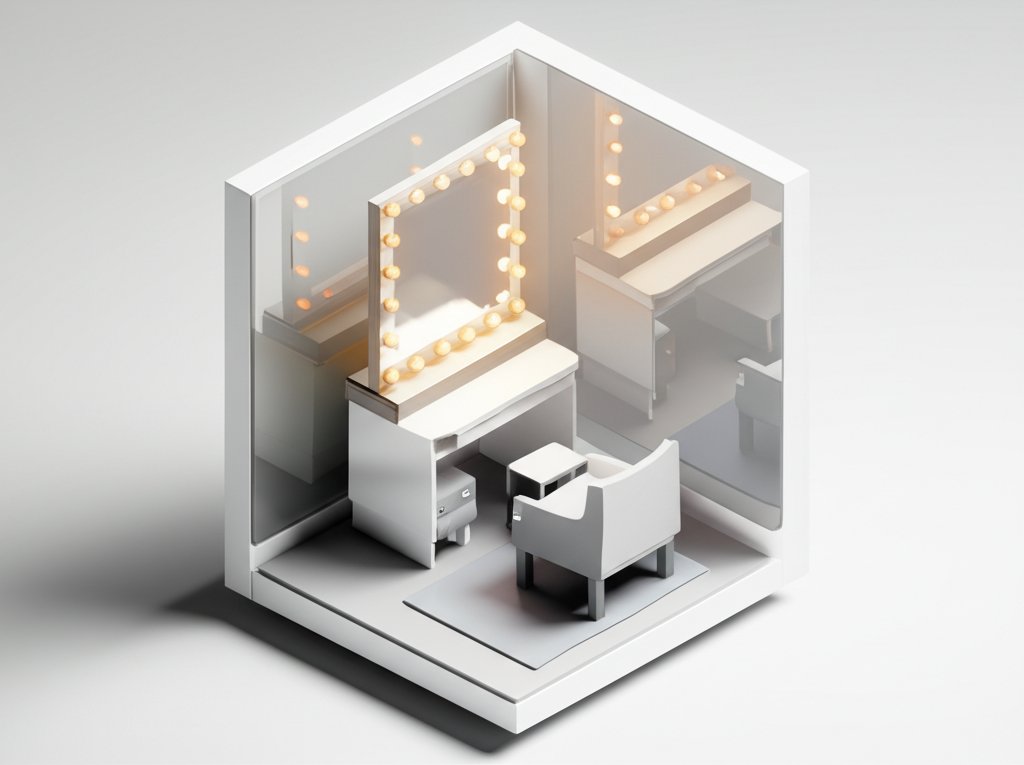
That unflattering, shadowy reflection staring back at you from the bathroom mirror isn’t you—it’s your lighting. The wrong setup can cast harsh shadows, warp colors, and make simple tasks like applying makeup or shaving a frustrating guessing game. Finding the right lights for mirror installations isn’t just about brightness; it’s about clarity, accuracy, and creating a space where you can see yourself in the best possible light, literally.
Getting it right transforms a daily routine into a satisfying ritual. It’s the difference between foundation that matches your skin tone perfectly and one that looks jarring the moment you step outside. It’s the secret to a flawless shave, perfectly plucked brows, and a morning routine that starts with confidence instead of squinting.
At a Glance: Your Quick Lighting Guide
Pressed for time? Here are the essential takeaways for choosing the perfect vanity lights:
- Placement is Key: The best light comes from the sides. Flank your mirror with lights at eye level to eliminate shadows on your face.
- Color Matters Most: Look for a “color temperature” between 4000K and 5000K (Kelvins). This mimics natural daylight, showing you true-to-life colors.
- CRI is Your Secret Weapon: A Color Rendering Index (CRI) of 90+ is non-negotiable for makeup application. It ensures the light reveals colors accurately.
- Brightness Should Be Adjustable: Aim for at least 1600 lumens total for a standard vanity, and always opt for a dimmable option to control the intensity.
- Style Follows Function: From sleek LED strips to classic Hollywood bulbs, the best style is one that provides even, flattering light first and complements your decor second.
Why Your Current Bathroom Lighting Is Failing You
Most bathrooms are designed with a single, central ceiling fixture or a bar light mounted high above the mirror. While this illuminates the room, it’s a disaster for tasks done in front of the mirror.
Think of it like taking a photo with a bright light directly overhead. It creates deep, unflattering shadows under your eyes, nose, and chin—a phenomenon makeup artists call “monster lighting.” You end up overcompensating with concealer or missing spots while shaving because you simply can’t see properly.
The goal of good mirror lighting is to create cross-illumination. This means having light sources on both sides of your face, filling in any potential shadows and providing a smooth, even canvas. It’s less about blasting your face with light and more about bathing it in balanced, accurate light.
Decoding the Different Types of Mirror Lights
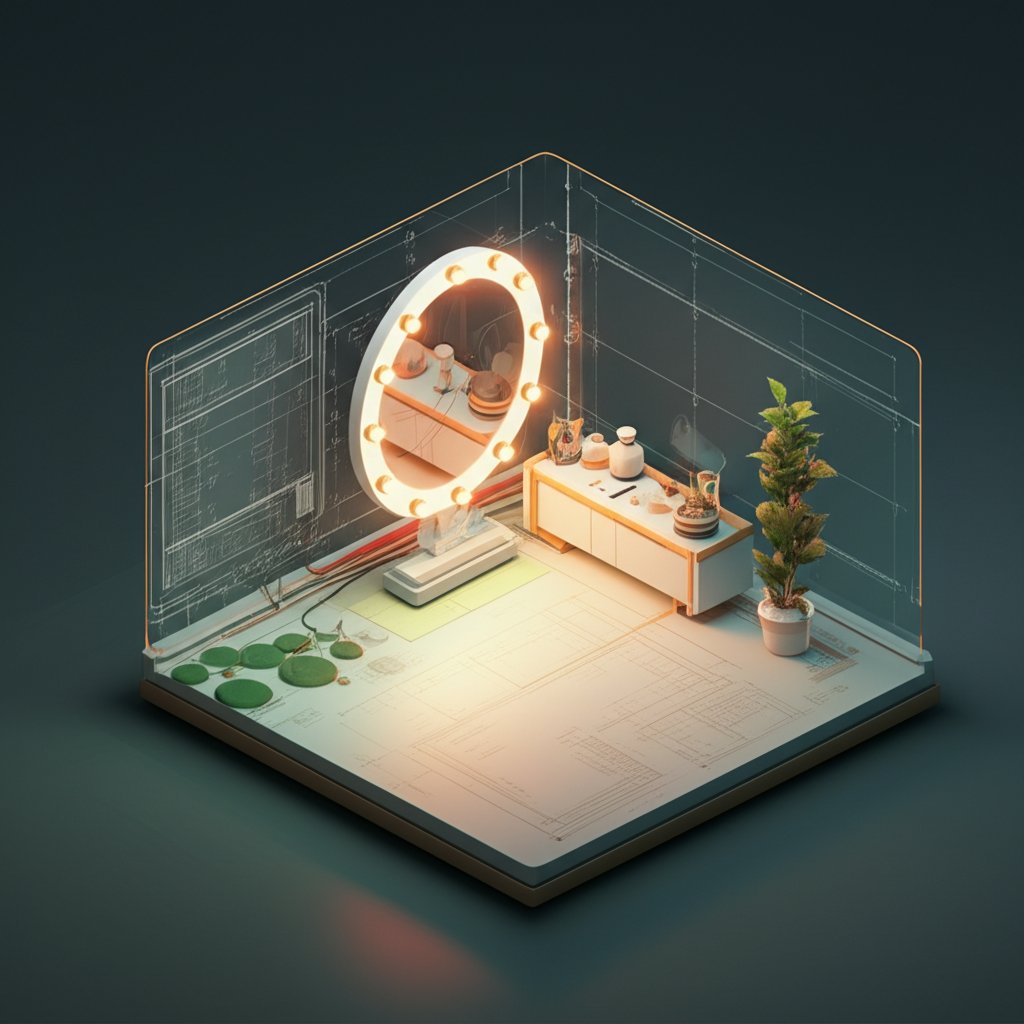
The market is full of options, from simple stick-on strips to elegant, hardwired sconces. Understanding the pros and cons of each style is the first step toward finding your perfect match.
1. LED Strip Lights
These are flexible, adhesive-backed ribbons of light that you can stick directly onto your mirror or around its frame. They’ve become incredibly popular for their ease of installation and modern aesthetic.
- Best For: Renters, DIY enthusiasts, and anyone looking for a quick, affordable, and customizable upgrade. Perfect for frameless mirrors.
- Pros:
- Easy to Install: Most are plug-and-play, requiring no electrical work. Just peel and stick.
- Customizable: You can often cut them to the exact length you need. Many come with adjustable brightness and color temperature.
- Sleek Profile: They offer a clean, minimalist look that doesn’t obstruct your view.
- Cons:
- Can Look “Spotty”: Cheaper strips have widely spaced LEDs, creating visible dots of light instead of a smooth glow. Look for strips with a high density of LEDs or a frosted diffuser cover.
- Adhesive Can Fail: In steamy bathrooms, the adhesive might lose its grip over time. Proper surface preparation is crucial.
2. Hollywood-Style Globe Bulbs
The quintessential “movie star dressing room” look. These are kits that typically include a string of wires with sockets for large, round bulbs that you mount around the mirror’s perimeter.
- Best For: Anyone wanting that classic, glamorous vanity feel with bright, diffused, all-around lighting.
- Pros:
- Excellent Illumination: When placed correctly, they provide ample, shadow-free light from all angles.
- Statement Look: It’s a bold, decorative choice that defines the space.
- Cons:
- Potential for Glare: The direct view of the bulbs can be intense for some. Frosted or matte bulbs are a must.
- Bulky: They take up visual and physical space, which might not work for smaller mirrors or minimalist designs.
- Heat (with old bulbs): Always choose LED globe bulbs. Old-school incandescent versions get hot, which is uncomfortable and can affect makeup application.
3. Wall Sconces
Sconces are light fixtures that mount directly to the wall. Placing one on each side of your mirror is the gold standard for professional-grade vanity lighting.
- Best For: Homeowners planning a renovation or anyone wanting a polished, permanent, and highly effective lighting solution.
- Pros:
- The Best Quality Light: They provide perfect cross-illumination, eliminating all facial shadows when mounted at the right height.
- Elegant and Integrated: They become a beautiful, intentional part of your bathroom’s design.
- Huge Variety: You can find sconces to match any decor style, from industrial to art deco.
- Cons:
- Requires Electrical Work: They need to be hardwired, which usually means hiring an electrician. This makes them a more involved and expensive option.
- Less Flexible: Once they’re installed, you can’t easily move them.
4. Bath Bar Lights
These are long, linear fixtures, often with multiple bulbs or an integrated LED source. They are typically mounted horizontally above the mirror or, for a more modern look, vertically on each side.
- Best For: Large or wide mirrors where a single pair of sconces might not provide enough coverage.
- Pros:
- Wide, Even Coverage: A single bar light can illuminate the entire width of a large vanity.
- Clean, Modern Lines: They offer a streamlined look that works well in contemporary bathrooms.
- Cons:
- Risk of Top-Down Shadows: When mounted horizontally above the mirror, they can still create some shadowing, though it’s usually less harsh than a central ceiling light. Mounting two vertically is the ideal (but less common) solution. While strip lights offer flexibility, more traditional fixtures can elevate your space. Your guide to vanity lamps explores these options in detail.
5. Integrated and Backlit Mirrors
These are mirrors that come with lighting built directly into them, either as a glowing border around the edge (backlit) or as frosted strips on the mirror’s surface (integrated).
- Best For: Minimalists, small bathrooms, and anyone who loves a high-tech, seamless look.
- Pros:
- Space-Saving: No need for separate fixtures, keeping the wall space clean and uncluttered.
- Ultra-Modern Aesthetic: It’s a sleek, sophisticated look that often includes bonus features like anti-fog pads and built-in clocks.
- Good Ambient Light: They provide a soft, diffused glow that’s great for general tasks and setting a mood.
- Cons:
- Not Always Task-Specific: The light is often more ambient than direct. For precise makeup application, the forward-facing light from integrated strips is better than the halo effect of backlit models.
- Repair and Replacement: If the LED fails, you often can’t just change a bulb; you may need to replace the entire mirror unit.
- Higher Cost: They are generally more expensive than buying a mirror and lights separately.
How to Choose the Right Lights for Your Mirror: A 4-Step Checklist
Now that you know the types, how do you pick the one that’s right for you? Focus on these four technical specs. Getting them right is more important than the style of the fixture itself.
Step 1: Nail the Color Temperature
Have you ever put on makeup indoors and realized it looks completely different in natural sunlight? That’s color temperature at play. It’s measured in Kelvins (K), and it determines whether light appears warm (yellowish) or cool (bluish).
- Warm Light (2700K-3000K): This is the cozy, yellowish light of a traditional lightbulb. It’s great for relaxing in a living room but terrible for a vanity. It makes it hard to see the true colors of your foundation and blush.
- Natural Daylight (4000K-5000K): This is the sweet spot. This range of crisp, white light mimics natural daylight, allowing you to see colors accurately. It’s bright and clear without feeling sterile or blue.
- Cool Light (5500K+): This light starts to have a blueish tint, like you’d find in a commercial or clinical setting. It can feel harsh and unflattering for a home environment.
The Verdict: For any mirror used for makeup or grooming, choose lights with a color temperature between 4000K and 5000K. Many modern LED options let you toggle between different temperatures, giving you the best of both worlds.
Step 2: Understand Brightness (Lumens, Not Watts)
We used to judge a bulb’s brightness by its wattage, but for energy-efficient LEDs, that’s no longer accurate. The number you need to look for is lumens, which is a direct measure of light output.
For a typical single-person vanity, you need a total of at least 1600 lumens. To put that in perspective, a standard 60-watt incandescent bulb is about 800 lumens. So, you’d need two of them (or their LED equivalent) to get adequate light.
Pro Tip: Always choose dimmable lights. Full brightness is great for detailed tasks, but you’ll want the ability to dim the lights for a more relaxed mood or for a quick check-in at night.
Step 3: Insist on a High CRI
This is the spec that most people overlook, but it’s arguably the most important for makeup application. The Color Rendering Index (CRI) measures how accurately a light source reveals the true colors of an object compared to natural sunlight. The scale goes up to 100 (which is the CRI of the sun).
- CRI below 80: Poor. Colors will look dull, washed out, or have a strange tint. This is common in cheap LEDs and fluorescent tubes.
- CRI 80-89: Good. Acceptable for general household lighting.
- CRI 90+: Excellent. This is the professional standard for artists, photographers, and anyone who needs to see color with absolute precision. Skin tones, foundation, and eyeshadow colors will appear true to life.
The Verdict: For a vanity mirror, do not compromise. Look for a CRI of 90 or higher. Most product descriptions will list this spec. If they don’t, be wary.
Step 4: Perfect Your Placement
You can buy the most expensive, highest-quality lights in the world, but if you place them incorrectly, they won’t work.
- The Ideal Setup: Mount vertical fixtures or sconces on either side of the mirror. The center of each light should be roughly at your eye level, or about 60-66 inches from the floor. This creates that coveted cross-illumination.
- For Bar Lights Above the Mirror: If your space only allows for an over-the-mirror light, mount it as low as possible—ideally around 75-80 inches from the floor—and choose a fixture that directs light downwards and slightly out, not just straight down. A fixture that is at least 24 inches wide will also help minimize side shadows.
- For Stick-On Strips: If you’re using LED strips on the mirror itself, place them along both vertical sides for the best effect. If you must run them along the top and bottom, prioritize the sides first.
Common Questions, Answered
Let’s tackle some of the most frequently asked questions about vanity lighting.
What color light is best for a makeup mirror?
The best light for a makeup mirror is a neutral, white light that mimics natural daylight. Look for a CCT (Correlated Color Temperature) between 4000K and 5000K and, most importantly, a CRI (Color Rendering Index) of 90 or higher to ensure colors are rendered accurately.
Are LED lights good for a vanity mirror?
Yes, LEDs are the best choice for a vanity mirror. They are energy-efficient, last for years, and produce very little heat, so they won’t melt your makeup or make you sweat while you’re getting ready. Just be sure to buy quality LEDs with the right color temperature (4000K-5000K) and a high CRI (90+).
How bright should vanity lights be?
For a standard single-user vanity, aim for a total light output of at least 1600 lumens. For a larger double vanity, you may need 3000-4000 lumens total. The key is to have enough light for detailed tasks, which is why choosing a dimmable option is so important for flexibility.
Can you add lights to an existing mirror?
Absolutely. This is where stick-on LED light strips or Hollywood-style bulb kits shine. They are specifically designed to be retrofitted onto an existing mirror without any wiring or permanent modification, making them a perfect solution for renters or anyone seeking a simple upgrade.
Your Reflection, Perfectly Lit
Choosing the right lights for your mirror is one of the most impactful upgrades you can make to your bathroom or dressing area. It’s a functional change that feels like a luxury every single day.
Forget the harsh overhead glare and mystifying shadows. By focusing on the essentials—side placement, daylight color temperature, high CRI, and dimmable brightness—you can design a setup that is both beautiful and incredibly practical. You’ll be able to trust what you see in the mirror, allowing you to step out of your home each day feeling polished, prepared, and truly confident.

- DIY Bathroom Mirror Frame Designs on a Budget - October 12, 2026
- Creative Bathroom Mirror Border Ideas for Every Style and Budget - October 11, 2026
- Bathroom Finishes That Handle Moisture and Look Great - October 10, 2026