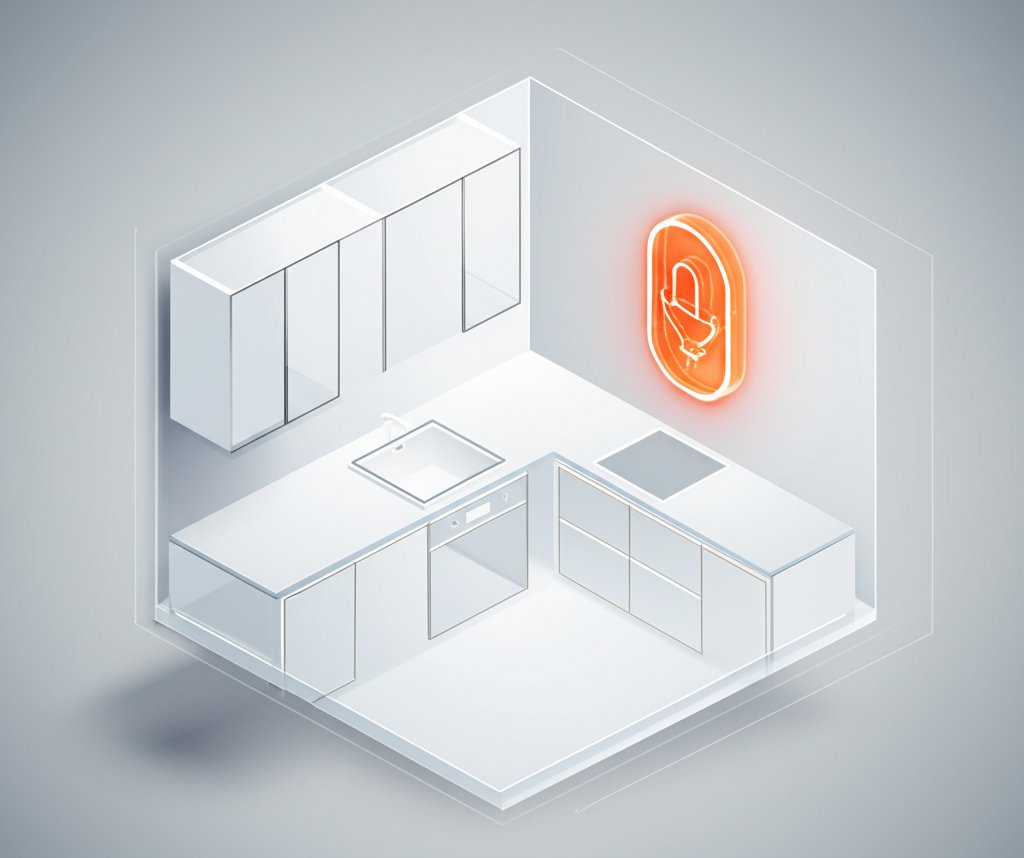
Overhead recessed lighting gets the job done, but it often leaves kitchens feeling flat, sterile, and full of harsh shadows right where you need to see. This is where most people stop, assuming the only fix is a costly, full-scale lighting renovation. But the most effective solution is often simpler and more elegant: strategically placed kitchen wall sconces can completely transform the space, layering in warmth and focused light exactly where you need it most.
They aren’t just decorative afterthoughts; they are functional workhorses that solve common lighting problems while infusing your kitchen with personality and charm.
At a Glance: What You’ll Learn
- Strategic Placement: Pinpoint the five most effective locations for kitchen sconces to maximize both style and function.
- Matching Sconce to Task: Learn to differentiate between ambient, task, and accent sconces and choose the right one for each zone.
- Kitchen-Ready Materials: Discover which materials and finishes stand up to the heat, steam, and grease of a working kitchen.
- Installation Simplified: Understand the pros and cons of hardwired versus plug-in options and when to choose each.
- Actionable Guidelines: Get concrete measurements and rules of thumb for placing sconces for optimal impact.
More Than Just a Pretty Light: The Role of Sconces in Kitchen Design
In any well-lit room, lighting exists in layers: ambient (overall illumination), task (focused light for work), and accent (light that highlights features). Most kitchens have decent ambient light from the ceiling but fail miserably at task and accent lighting. This is the gap kitchen wall sconces are uniquely qualified to fill.
Think of your overhead lights as the broad, midday sun. They light up everything generally. Sconces, however, are like the warm, focused light from a desk lamp or a candle on a dinner table. They create intimacy, draw attention, and make the space usable and inviting. They break up monotonous walls, add a sculptural element at eye level, and cast a soft, flattering glow that makes everyone look better.
The choice between a permanently installed fixture and a more flexible one is a key early decision. While our Bedroom sconce lights guide explores the foundational differences between hardwired and plug-in models, the kitchen environment adds specific factors to consider, from proximity to water to the need for durable, cleanable surfaces.
Mapping Your Kitchen: The 5 Best Places for Wall Sconces
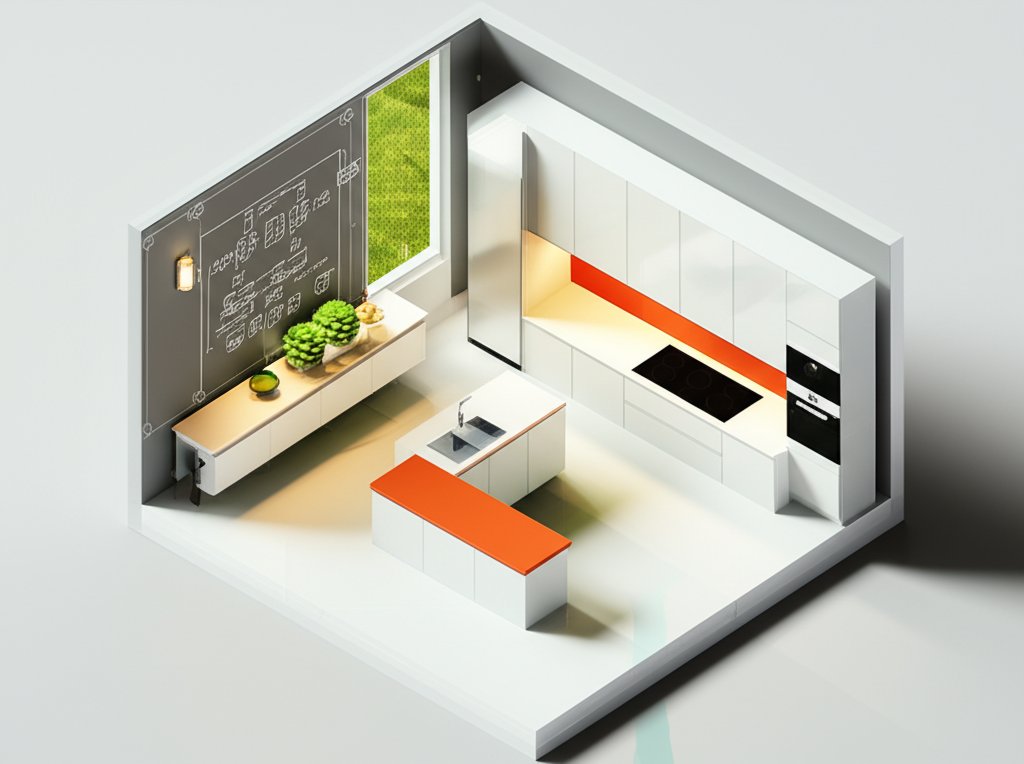
Not all walls are created equal. Placing a sconce correctly is the difference between a thoughtful design element and a random, glaring light. Here are the five most impactful locations.
1. Above the Kitchen Sink
This is a classic for a reason. A single, stylish sconce centered over the sink provides excellent task lighting for washing dishes and prepping vegetables, eliminating the shadow your own body casts from an overhead light.
- Scenario Snippet: In a modern farmhouse kitchen, a single, large gooseneck or “barn light” sconce in a matte black or oil-rubbed bronze finish becomes a stunning focal point. It’s both practical and a powerful design statement.
- Best For: Task lighting, creating a central visual anchor.
- Considerations: Choose a fixture with a downward-casting shade to direct light onto the work area. Ensure it’s damp-rated by UL (Underwriters Laboratories) if it’s likely to get splashed.
2. Flanking a Window or Range Hood
Symmetry is a powerful design tool. Placing a pair of sconces on either side of a key architectural feature—like a beautiful window or a statement range hood—creates a sense of balance and grandeur.
- Scenario Snippet: Imagine a pair of slender, aged-brass sconces with simple glass shades flanking a large window behind the sink. They provide soft, ambient light in the evening and frame the view beautifully during the day.
- Best For: Ambient lighting, architectural accenting, creating visual balance.
- Considerations: The scale is crucial. The sconces should be substantial enough to hold their own next to the feature they are framing but not so large that they overwhelm it.
3. Illuminating Open Shelving
Open shelving is a popular way to display beautiful dishes, glassware, and decor. Wall sconces mounted above or between shelving units turn these displays into glowing features.
- Scenario Snippet: In a kitchen with two sets of floating oak shelves, a small, adjustable “picture light” style sconce mounted above each set casts a gallery-like glow, highlighting the items on display and adding immense depth to the wall.
- Best For: Accent lighting, adding a layer of sophisticated ambiance.
- Considerations: Opt for sconces that direct light downward or can be angled. A dimmer switch here is non-negotiable for controlling the mood.
4. Creating a Cozy Breakfast Nook
A breakfast nook or a banquette seating area is the perfect spot for softer, more intimate lighting. A wall sconce can define this zone, making it feel like a cozy café within your kitchen.
- Scenario Snippet: A built-in banquette is made infinitely more inviting with an adjustable swing-arm sconce mounted on the wall above the table. It can be pulled out for reading the morning paper or pushed back for a soft, ambient glow during meals.
- Best For: Flexible task and ambient lighting, defining a specific zone.
- Considerations: A plug-in, swing-arm model offers maximum flexibility here without the need for an electrician.
5. Along a Long Wall or Galley Kitchen
Long, featureless walls, common in galley kitchens or along a bank of pantry cabinets, can feel monotonous. A series of two or three identical sconces breaks up the expanse and adds rhythmic interest.
- Scenario Snippet: In a narrow galley kitchen, installing three minimalist, upward-facing sconces along the main wall draws the eye upward, making the space feel wider and less corridor-like. The soft, indirect light is much more pleasant than a single, harsh overhead fixture.
- Best For: Ambient lighting, creating visual rhythm, making a space feel larger.
- Considerations: Ensure the spacing is even. Divide the wall length to find the optimal placement for each fixture.
A Practical Playbook for Selection and Placement
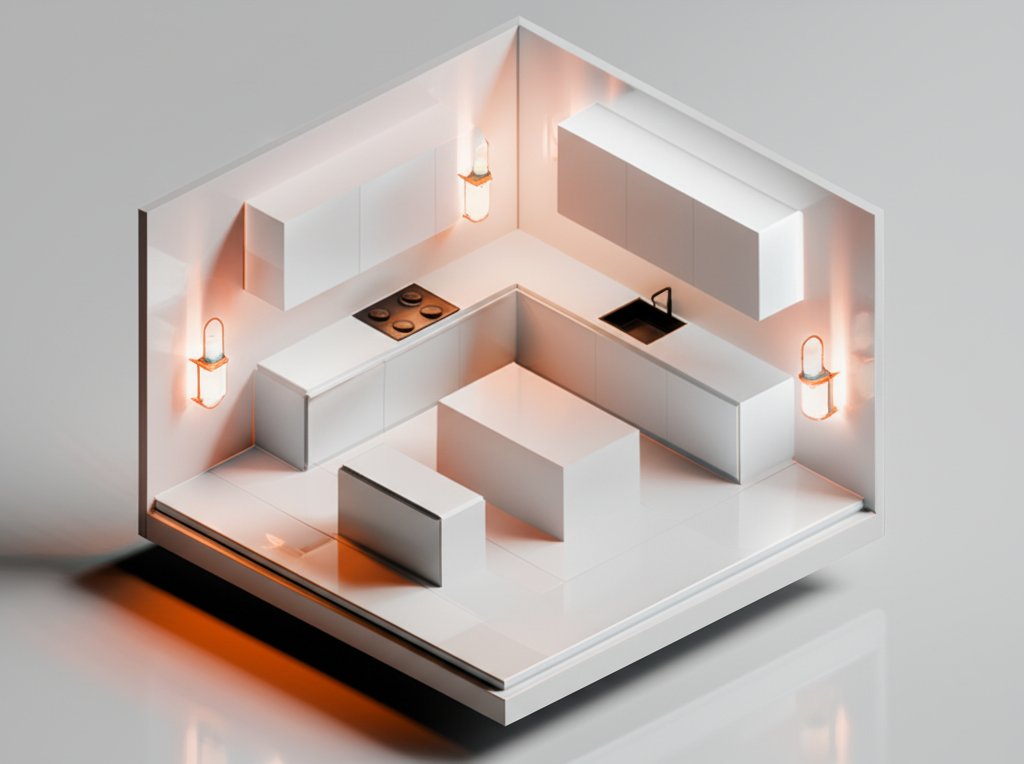
Choosing and placing kitchen wall sconces doesn’t have to be guesswork. Follow this simple framework.
Step 1: Define the Job
First, identify the problem you’re trying to solve in a specific location.
- Is it a dark corner for chopping vegetables? You need a task sconce (e.g., an adjustable or downward-facing light).
- Is it a boring, blank wall? You need an ambient sconce (e.g., an upward-facing or fabric-shaded light for a soft glow).
- Is it a piece of art or beautiful tile you want to show off? You need an accent sconce (e.g., a picture light).
Step 2: Choose Kitchen-Proof Materials
Kitchens are hostile environments for delicate materials. Grease, steam, and heat are constant threats.
| Material | Pros | Cons | Best For |
|---|---|---|---|
| Metal (Brass, Bronze, Nickel) | Highly durable, easy to clean, wide variety of finishes. | Can show fingerprints (polished finishes); may tarnish over time (unlacquered brass). | Almost any kitchen application; a safe and stylish bet. |
| Glass (Clear, Seeded, Opal) | Easy to wipe down, doesn’t trap grease, diffuses light beautifully. | Can be fragile, shows dust easily. | Shades and enclosures, especially near sinks and stoves. |
| Ceramic | Can be glazed for easy cleaning, offers a handcrafted, organic look. | Can chip if struck. | Adding a touch of color or texture away from high-traffic zones. |
| Fabric Shades (Linen, Cotton) | Provide a soft, diffused, cozy light. | Grease and dust magnets; difficult to clean and a potential fire hazard near cooktops. | Use with extreme caution, only in areas far from the stove or sink, like a breakfast nook. |
Step 3: Get the Height and Spacing Right
Improper placement can ruin the effect. Use these guidelines as a starting point, but always trust your eye.
- General Height: The vertical center of the sconce should typically be between 60 and 66 inches from the finished floor. This places it slightly above eye level, preventing glare.
- Above a Counter: If placing above a standard-height countertop, aim for 30 to 36 inches above the counter surface.
- Flanking a Feature: When placing sconces on either side of a window or mirror, mount them a few inches to the side of the frame and a few inches above the vertical midpoint of the feature.
- Spacing: If using multiple sconces along a wall, a spacing of 6 to 8 feet apart is a good rule of thumb. Adjust based on the size of the fixtures and the length of the wall.
Quick Answers to Common Questions
Q: How high should you hang kitchen wall sconces?
As a general rule, the center of the fixture should be around 60-66 inches from the floor. This puts the light source just above eye level, preventing direct glare. However, always adjust for the specific context. If placed over a countertop, ensure it’s high enough not to interfere with your workspace but low enough to cast useful light.
Q: Can you put a wall sconce directly over a kitchen sink?
Absolutely. It’s a fantastic way to add focused task lighting. Just ensure the fixture is UL-rated for “damp locations” to withstand moisture and occasional splashes. Also, position it high enough that it doesn’t get in the way when you’re washing large pots.
Q: Are kitchen wall sconces going out of style?
Not at all. In fact, they are more popular than ever. Designers are increasingly using them to create layered, sophisticated lighting schemes that move beyond basic overhead cans. The key is choosing timeless shapes and finishes—like classic goosenecks, simple globe sconces, or elegant swing-arm designs—that complement your kitchen’s architecture rather than chasing fleeting trends.
Q: What kind of light bulb is best for a kitchen sconce?
For kitchens, look for LED bulbs with a color temperature between 2700K (warm white) and 3000K (soft white). This range provides a bright, clean light that’s excellent for tasks but still feels warm and inviting. For task areas like over the sink, aim for a higher lumen output (around 800 lumens, equivalent to a 60-watt incandescent). For ambient sconces, a lower output (400-500 lumens) is often sufficient. Always install a dimmer switch for maximum control.
Your First Move: Light Up One Key Zone
You don’t need to relight your entire kitchen at once. The beauty of kitchen wall sconces is their ability to make a significant impact one or two at a time.
Start by finding the one spot that needs the most help. Is it the dark, shadowy area by the sink? The blank wall next to your pantry? Or the breakfast nook that feels more like a bus station than a cozy retreat?
Pick that one zone. Measure the space, define the sconce’s job, and choose a style that complements your existing fixtures. Installing a single pair of well-chosen sconces can bring more character, function, and warmth to your kitchen than any other single upgrade. It’s the expert touch that takes a kitchen from merely functional to truly inviting.

- DIY Bathroom Mirror Frame Designs on a Budget - October 12, 2026
- Creative Bathroom Mirror Border Ideas for Every Style and Budget - October 11, 2026
- Bathroom Finishes That Handle Moisture and Look Great - October 10, 2026