Often overlooked, the humble hallway is more than just a path from one room to another; it’s the connective tissue of your home’s design story. The right hallway wall light fixtures can transform these transitional spaces from dark, narrow tunnels into bright, welcoming galleries. Instead of a single, harsh overhead light, a series of well-chosen wall sconces provides layered, atmospheric illumination that adds architectural depth and a touch of elegance to bare walls.
At a Glance: Your Hallway Lighting Toolkit
- Master Placement: Learn the industry standards for sconce height (typically 60-66 inches) and spacing (8-10 feet apart) to create a balanced, professional look.
- Layer with Purpose: Understand how to use sconces for ambient, accent, and decorative light, turning a utilitarian space into a design feature.
- Prioritize Safety: Discover why low-profile, ADA-compliant fixtures (protruding 4 inches or less) are a non-negotiable for safe passage in narrow corridors.
- Decode the Tech Specs: Get clear, simple rules for choosing the right brightness (lumens) and color temperature (Kelvin) for a warm and inviting atmosphere.
- Match Style to Function: Explore the differences between uplights, downlights, and diffused sconces to find the perfect fixture for your home’s aesthetic and your hallway’s specific needs.
Why Sconces are the Secret to a Well-Lit Hallway
A single ceiling-mounted “boob light” is the default for many hallways, yet it’s often the worst solution. It casts a flat, uninviting glare, creates harsh shadows, and does nothing to enhance the space. Wall sconces, on the other hand, are the key to unlocking a hallway’s potential by introducing layers of light.
Think of lighting in three layers:
- Ambient Light: The overall illumination that allows you to see and move safely.
- Task Light: Focused light for specific activities, like reading.
- Accent Light: Directional light used to highlight architectural features or artwork.
In a hallway, sconces excel at providing both ambient and accent light. They wash the walls with a soft glow, which makes the space feel wider and more open. This technique, known as “wall grazing” or “wall washing,” draws the eye, adds visual interest, and turns a plain corridor into a thoughtful design moment.
While the principles of selecting a light for a specific activity are covered in-depth in our Main Bedroom Sconce Guide, hallway lighting focuses more on creating ambiance and safe passage. Here, the fixture itself becomes a decorative element, breaking up long, monotonous walls with points of light and style.
Nailing the Installation: How High and How Far Apart?
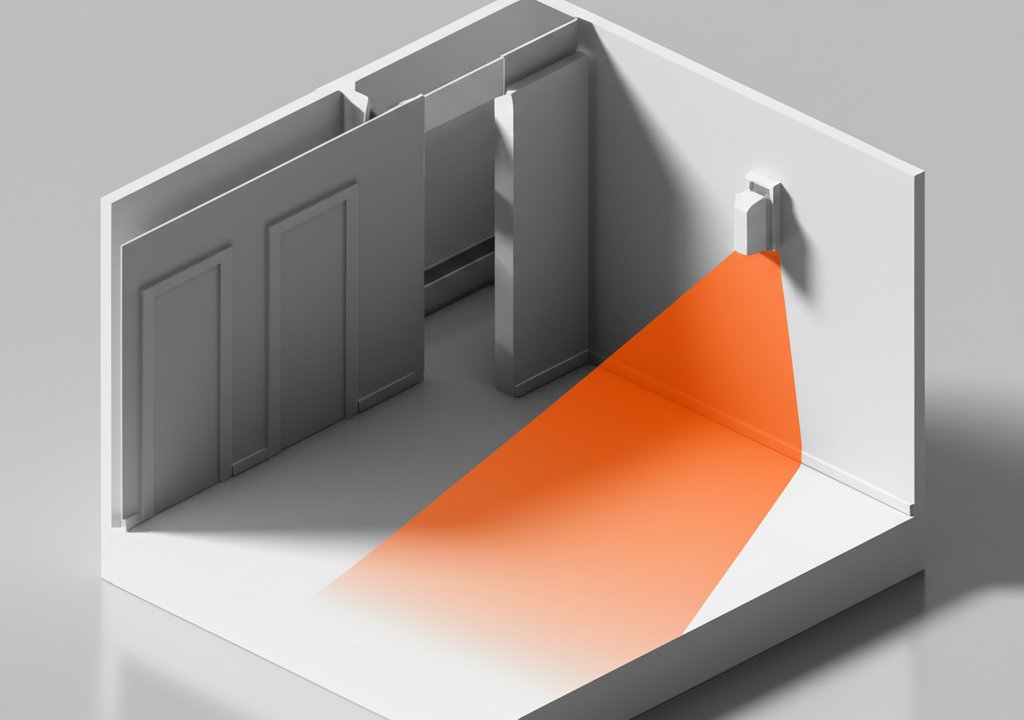
Proper placement is what separates a professional-looking installation from a haphazard one. Following a few key guidelines for height and spacing will ensure your hallway wall light fixtures look balanced and function effectively.
The Goldilocks Zone for Height
The standard rule of thumb is to mount wall sconces so the center of the fixture is 60 to 66 inches above the finished floor. This typically places the light source just above eye level for the average person, preventing direct glare.
However, this isn’t a rigid rule. Consider these adjustments:
- High Ceilings (9 ft+): If your hallway has taller ceilings, you can raise the sconces slightly to 68 or even 72 inches. This maintains a sense of proportion and draws the eye upward.
- Visible Bulbs: For fixtures with exposed bulbs, mounting them a bit higher (around 68 inches) is often more comfortable, as it keeps the bright filament out of your direct line of sight.
Case Snippet: In a recent project with a long hallway and 10-foot ceilings, we installed a series of tall, linear sconces centered at 70 inches. This not only suited the grander scale of the space but also created a beautiful vertical rhythm that made the ceiling feel even higher.
Getting the Spacing Right
For long hallways, aim to space your sconces 8 to 10 feet apart. This creates a pleasing cadence of light without making the hallway look like an airport runway. The goal is to provide even illumination with gentle overlaps of light, eliminating dark spots.
Pro Tip: Before you call the electrician, use painter’s tape to mark out the center of each proposed fixture on the wall. Cut out paper templates the size of your chosen sconces and tape them up. Live with them for a day or two to get a real feel for the scale and spacing.
A Critical Note on ADA Compliance
The Americans with Disabilities Act (ADA) mandates that any object protruding from a wall in a walkway must not stick out more than 4 inches. While this is a legal code for public and commercial spaces, it’s an essential best practice for residential hallways.
Choosing ADA-compliant hallway wall light fixtures is crucial for safety. A sconce that juts out too far can easily be bumped into, snagged by a backpack, or become a hazard, especially in narrower corridors (less than 42 inches wide). Many of the best modern designs, like those from Kuzco Lighting or Modern Forms, are incredibly slim and sleek, making it easy to find a stylish option that meets this safety guideline.
Decoding Sconce Types for Your Hallway’s Needs
The style of sconce you choose will dramatically impact the look and feel of your hallway. Function is just as important as form; consider how each type directs light.
| Sconce Type | Light Direction | Best For… |
|---|---|---|
| Uplight | Casts light up toward the ceiling. | Creating a sense of height, providing soft, indirect ambient light. Ideal for hallways with light-colored 8-9 ft ceilings. |
| Downlight | Directs light downward. | Highlighting flooring, creating dramatic pools of light, or serving as an accent over a specific feature. |
| Up/Down Light | Projects light in both directions. | Washing both the ceiling and floor with light for balanced illumination and a strong vertical statement. |
| Diffused/Ambient | Scatters light evenly in all directions. | The most versatile option for general, glare-free hallway lighting. Often features a glass or fabric shade. |
| Picture Light | A focused downlight for artwork. | Turning a hallway into a personal gallery and providing a sophisticated layer of accent light. |
| For a playful, sculptural element, whimsical designs like the Jonathan Adler Giraffe Sconce can serve as functional art. For a more understated and sleek look, minimalist fixtures in metallic or matte black finishes create a clean, contemporary feel. |
Lumens, Color Temperature, and Dimmers: The Trio of Ambiance

The most beautiful fixture can be ruined by the wrong light bulb. Getting the technical details right is what creates a truly comfortable and inviting atmosphere.
How Bright is Bright Enough? (Lumens)
Lumens measure the total amount of visible light from a source. For a hallway, you don’t need the same brightness as a kitchen or bathroom. A good target is 10 to 20 lumens per square foot.
- Example Calculation: A hallway that is 4 feet wide and 15 feet long has an area of 60 square feet.
- Total Lumens Needed: 60 sq ft x 10-20 lumens = 600-1200 total lumens.
- If you install three sconces, each one should provide roughly 200-400 lumens. This is equivalent to a 25-40 watt incandescent bulb, but modern LED bulbs can provide this brightness using just 4-6 watts.
Setting the Mood with Color (Kelvin)
Color temperature, measured in Kelvin (K), describes the appearance of the light, from warm to cool.
- 2700K (Warm White): This is the color of a traditional incandescent bulb. It’s warm, cozy, and inviting—perfect for making a hallway feel like a welcoming part of your home.
- 3000K (Soft White): A slightly crisper, whiter light that still feels warm. It’s an excellent, versatile choice that bridges the gap between cozy and clean.
- 4000K+ (Cool White/Daylight): This light has a blueish tint and can feel sterile or clinical. It’s generally best to avoid this range for residential hallways unless you have an ultra-modern, gallery-like aesthetic.
The Ultimate Control: Why Dimmers are Non-Negotiable
A dimmer switch is the single most effective tool for controlling the mood in your hallway. It gives you the flexibility to have bright, clear light when needed (like when cleaning or carrying in groceries) and a soft, low glow for navigating at night or creating a calm ambiance in the evening.
Crucial Tip: Ensure both your fixture (or bulb) and your dimmer switch are compatible. Most modern LED sconces require a specific type of dimmer, often an ELV (Electronic Low Voltage) dimmer, to function without flickering or buzzing.
A Quick-Start Guide to Selecting Your Hallway Sconces
Feeling ready to make a choice? Follow these steps to narrow down your options.
- Measure Your Space: Note the hallway’s length, width, and ceiling height. This will dictate your spacing and height requirements.
- Define Your Style: Is your home Mid-Century Modern, Transitional, or Contemporary? Look for fixtures with finishes (e.g., brass, matte black, chrome) and shapes that complement your existing decor.
- Choose the Function: Decide on the primary goal. Is it general ambient light (diffused sconces), architectural drama (up/downlights), or accenting artwork (picture lights)?
- Check the Depth: For any hallway, but especially those under 4 feet wide, prioritize ADA-compliant fixtures that protrude 4 inches or less from the wall.
- Calculate Light Needs: Use the 10-20 lumens per square foot rule to determine your target brightness.
- Select a Bulb & Dimmer: Choose a dimmable LED bulb in the 2700K-3000K range and pair it with a compatible, high-quality dimmer switch.
Answering Your Hallway Lighting Questions
Q: Can I use just one sconce in a short hallway?
A: Absolutely. For a short hall, foyer, or landing, a single, impactful “statement” sconce can be a fantastic choice. Center it on the most prominent wall—often the wall at the end of the hall—to create a beautiful focal point.
Q: Should my hallway wall light fixtures match my other lights?
A: They should coordinate, not necessarily match. A successful lighting plan feels cohesive. You can achieve this by sticking to a consistent finish (e.g., all brushed nickel) or a similar design language (e.g., all fixtures have soft, rounded forms or sharp, geometric lines).
Q: Are LED integrated fixtures a good choice for hallways?
A: They are an excellent choice. Integrated LED fixtures have the light source built-in and often boast lifespans of 50,000 hours or more. This means you won’t have to worry about changing a bulb in a potentially awkward spot for 15-20 years. This technology also allows for incredibly slim and creative designs that aren’t possible with traditional bulbs.
Q: How do I light a hallway with no existing wiring for sconces?
A: Look for plug-in wall sconces. These fixtures mount to the wall just like a hardwired version but have a decorative cord that runs down to a standard electrical outlet. Many come with cord covers that can be painted the same color as your wall for a more seamless, custom look without the cost of an electrician.
Your hallway is the first impression of your home’s interior and the last space you see when you leave a room. By thoughtfully selecting and placing your hallway wall light fixtures, you can elevate this simple passageway into an attractive and well-lit experience. It’s a design upgrade that punches well above its weight, proving that every square foot of your home is an opportunity for style and function.

- DIY Bathroom Mirror Frame Designs on a Budget - October 12, 2026
- Creative Bathroom Mirror Border Ideas for Every Style and Budget - October 11, 2026
- Bathroom Finishes That Handle Moisture and Look Great - October 10, 2026