For the bigger picture and full context, make sure you read our main guide on Choosing the Right 6 Inch Led Lights for Your Space.
markdown
Choosing the right 6 inch recessed light can feel overwhelming. You want ample light, energy efficiency, and a seamless look – without accidentally buying the wrong housing type or trim.
At a glance:
- Determine if you need IC-rated or non-IC-rated housings.
- Select the appropriate trim style for aesthetics and light distribution.
- Understand the impact of color temperature and CRI on your space.
- Choose between new construction and retrofit installation methods.
- Optimize for dimming and smart home compatibility to maximize energy savings and ambiance.
Why 6 Inch Recessed Lights? Brightness and Coverage
Six-inch recessed lights are your workhorses when you need to efficiently illuminate larger areas or spaces with high ceilings. Unlike smaller lights, a single 6 inch recessed light delivers a broad, even spread of light, minimizing shadows and reducing the total number of fixtures required. This translates to lower installation costs and a cleaner, less cluttered ceiling. Think of it as the sweet spot between spotlighting and ambient lighting.
Understanding Housing Types: IC vs. Non-IC
The housing of your 6 inch recessed light is the metal can that sits above the ceiling. The first crucial decision is whether you need an IC-rated or non-IC-rated housing.
- IC-rated (Insulation Contact): These housings are designed to be in direct contact with insulation. They have a thermal protector that shuts off the light if it overheats, preventing fire hazards. Use case: If your ceiling is insulated, always choose IC-rated housings.
- Non-IC-rated: These housings require a minimum of 3 inches of clearance from insulation. They are generally less expensive but pose a fire risk if covered by insulation. Use case: Suitable for open, uninsulated ceilings.
Pitfall: Installing a non-IC-rated housing where insulation is present is a common, and dangerous, mistake. Always check your ceiling’s insulation before making a purchase.
New Construction vs. Retrofit: Installation Considerations
The installation method dictates the type of housing you’ll need and the complexity of the project.
- New Construction: These housings are installed before the ceiling is finished. They typically attach to ceiling joists. Benefit: Easier wiring and placement flexibility.
- Retrofit (Remodel): These kits are designed to replace existing lights without extensive demolition. They often use spring clips or similar mechanisms to secure the fixture inside the existing opening. Benefit: Ideal for upgrading outdated fixtures or adding recessed lighting to finished ceilings.
Snippet: A homeowner wanted to upgrade their outdated kitchen lighting. Instead of tearing down the ceiling for new construction housings, they opted for retrofit kits. Installation was completed in a few hours with minimal disruption.
Trim Styles: Functionality and Aesthetics
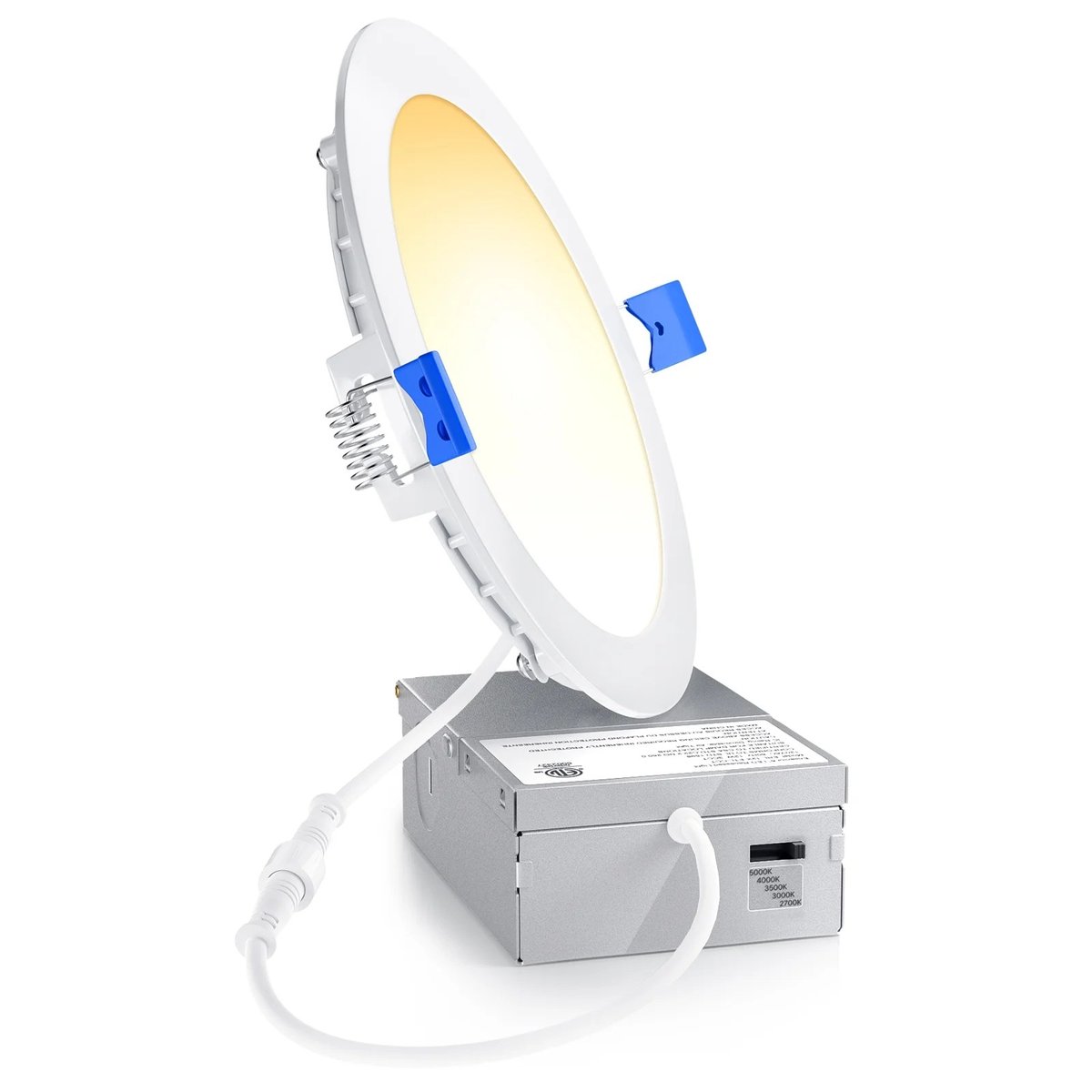
The trim is the visible part of the 6 inch recessed light that sits flush with the ceiling. It plays a significant role in both the aesthetics and the light distribution.
Here’s a breakdown of common trim styles:
| Trim Style | Description | Light Distribution | Best For |
|---|---|---|---|
| Baffle | Features a series of concentric rings to reduce glare. | Soft, diffused light. | Bedrooms, living rooms. |
| Reflector | Smooth, shiny surface designed to maximize light output. | Focused, intense light. | Task lighting, retail displays. |
| Open | Simple, unobstructed opening. | Direct, unfiltered light. | General illumination, highlighting specific areas. |
| Adjustable/Gimbal | Allows you to aim the light in a specific direction. | Directional light. | Artwork, accent lighting. |
| Wet Rated | Constructed for use in wet environments and will prevent condensation hazards | Creates general lighting in moist areas | Showers, steam rooms, saunas, and covered exterior locations |
| Example: A clothing boutique might use reflector trims to highlight merchandise, while a restaurant might opt for baffle trims to create a softer, more inviting ambiance. |
Color Temperature and CRI: Setting the Mood
Color temperature, measured in Kelvin (K), describes the warmth or coolness of the light. Color Rendering Index (CRI) measures how accurately a light source renders colors compared to natural sunlight (100 CRI).
- Warm White (2700K-3000K): Creates a cozy, inviting atmosphere. Ideal for bedrooms, living rooms, and dining areas.
- Neutral White (3500K-4000K): Provides a balanced, natural light. Suitable for kitchens, offices, and retail spaces.
- Cool White (4500K-5000K): Offers a bright, energizing light. Commonly used in garages, workshops, and security lighting.
CRI Recommendation: For spaces where accurate color representation is crucial (e.g., retail, art studios), choose lights with a CRI of 90 or higher.
Example: A bakery owner chose 3000K lights with a high CRI to accurately showcase the colors of their pastries, making them look more appealing to customers.
Dimming and Smart Home Integration
Many 6 inch recessed LED lights are dimmable, allowing you to adjust the brightness to create different moods and save energy. Some models also offer smart home compatibility, enabling you to control your lighting with your smartphone or voice assistant.
Benefits of Dimming:
- Energy Savings: Dimming lights reduces energy consumption and extends the lifespan of the bulbs.
- Ambiance Control: Create the perfect atmosphere for any occasion.
- Convenience: Easily adjust lighting levels with a dimmer switch or smart home app.
For a broader understanding of LED lighting options, Here are a few options, with slight variations in tone and emphasis: * Find Perfect 6-Inch LED Lights * Choosing Your 6-Inch LED Lighting * Selecting 6-Inch LED Lights Guide * Right 6-Inch LEDs for You * Learn About 6-Inch LED Options.
Practical Playbook: Choosing Your 6 Inch Recessed Lights
Here’s a step-by-step guide to selecting the right 6 inch recessed lights for your project:
- Assess your ceiling: Determine if it’s insulated or uninsulated. This dictates whether you need IC-rated or non-IC-rated housings.
- Decide on installation method: Are you working on new construction or a remodel? Choose housings or retrofit kits accordingly.
- Choose your trim style: Consider both aesthetics and light distribution requirements. Select the trim that best suits your needs.
- Select your color temperature and CRI: Choose the appropriate color temperature for the desired ambiance and ensure a CRI that meets your color accuracy needs.
- Consider dimming and smart home compatibility: If desired, select lights with dimming capabilities and smart home integration.
- Check local codes: Ensure your chosen lights meet all applicable building codes and safety standards.
Quick Start: Decision Tree
- Is your ceiling insulated?
- Yes: Use IC-rated housings.
- No: Use Non-IC rated housings.
- New construction or remodel?
- New construction: New construction housings.
- Remodel: Retrofit kits.
- Desired ambiance?
- Cozy: Warm white (2700K-3000K).
- Balanced: Neutral white (3500K-4000K).
- Bright: Cool white (4500K-5000K).
- Color accuracy important?
- Yes: CRI 90+.
- No: CRI 80+.
Quick Answers: Common Questions About 6 Inch Recessed Lights
Q: Can I use a dimmer switch with all 6 inch LED recessed lights?
A: Not all LED lights are dimmable. Look for lights that are specifically labeled as “dimmable” and use a compatible LED dimmer switch.
Q: How many 6 inch recessed lights do I need for a room?
A: A general rule of thumb is to space lights approximately half the ceiling height apart. For example, in an 8-foot ceiling, space the lights about 4 feet apart. However, this is just a starting point; consider room size, shape, and desired brightness levels.
Q: Can I install 6 inch recessed lights myself?
A: Electrical work can be dangerous. If you’re not comfortable working with electricity, hire a qualified electrician. Always follow local building codes and safety regulations.
Q: What does “wet rated” mean?
A: “Wet rated” means the fixture is designed to be used in areas that are directly exposed to water, such as showers and saunas. Damp-rated fixtures are suitable for damp environments like bathrooms and covered patios but not direct water exposure.
Q: Are LED recessed lights energy-efficient?
A: Yes, LED recessed lights are significantly more energy-efficient than traditional incandescent or halogen lights. They use a fraction of the energy and last much longer.
Take Action: Light Up Your Space the Right Way
Choosing the right 6 inch recessed light doesn’t have to be a headache. By understanding housing types, trim styles, color temperature, and installation methods, you can confidently select the perfect lights for your project. Now, take the plunge, assess your needs, and start illuminating your space with efficiency and style.

- DIY Bathroom Mirror Frame Designs on a Budget - October 12, 2026
- Creative Bathroom Mirror Border Ideas for Every Style and Budget - October 11, 2026
- Bathroom Finishes That Handle Moisture and Look Great - October 10, 2026