
Dreaming of a professional home kitchen that rivals your favorite restaurant? You can transform your cooking space into a high-performance culinary center, even on a residential scale. The key is to prioritize functionality, durability, and smart design choices.
At a glance:
- Learn how to choose pro-grade appliances that fit your home kitchen.
- Discover crucial space planning tips, including effective countertop and storage strategies.
- Understand what to consider for flooring, sinks, and faucets that stand up to heavy use.
- Explore the importance of proper ventilation and lighting in a chef-inspired space.
- Get answers to common questions about bringing a commercial sensibility to your home cooking.
Designing for Performance: Appliances that Deliver
Serious home chefs know that the right appliances are the foundation of a professional home kitchen. But which features truly make a difference?
High-BTU Burners: Power When You Need It
Look for rangetops or ranges with at least one or two high-output burners (15,000+ BTUs). This is essential for searing meats, rapidly boiling water, and wok cooking. Consider features like:
- Cast-iron grates: Provide a stable and durable cooking surface.
- Sealed burners: Easier to clean and prevent spills from seeping into the cooktop.
- Precise simmer control: The ability to maintain ultra-low heat (around 140 degrees) is crucial for delicate sauces and melting chocolate. Some models offer burners designed to disperse heat evenly. Thermador’s star-shaped burner, for example, promotes even heating.
Dual-Fuel Ranges: The Best of Both Worlds
Dual-fuel ranges, with a gas cooktop and electric oven, offer a sweet spot between power and precision. Gas cooktops provide responsive heat control, while electric ovens deliver consistent temperatures and even baking, especially with true convection. Look for digital control panels that simplify temperature programming.
Commercial-Style Refrigeration: Beyond Basic Cooling
While a standard refrigerator will keep food cold, a commercial-style fridge offers benefits like:
- Stainless steel interiors: Durable, easy to clean, and help maintain consistent temperatures. True Refrigeration, for example, offers stainless steel interiors.
- Glass door options: Allow you to quickly see what’s inside (True Refrigeration makes them for home use).
- Superior temperature control: Keeps food fresher for longer.
Pitfall to Avoid: Commercial-style ranges can sometimes have smaller oven cavities than standard models. Measure carefully to ensure it can handle your roasting needs! Also, some models may lack a self-cleaning feature.
Space Planning: Optimizing Your Workflow
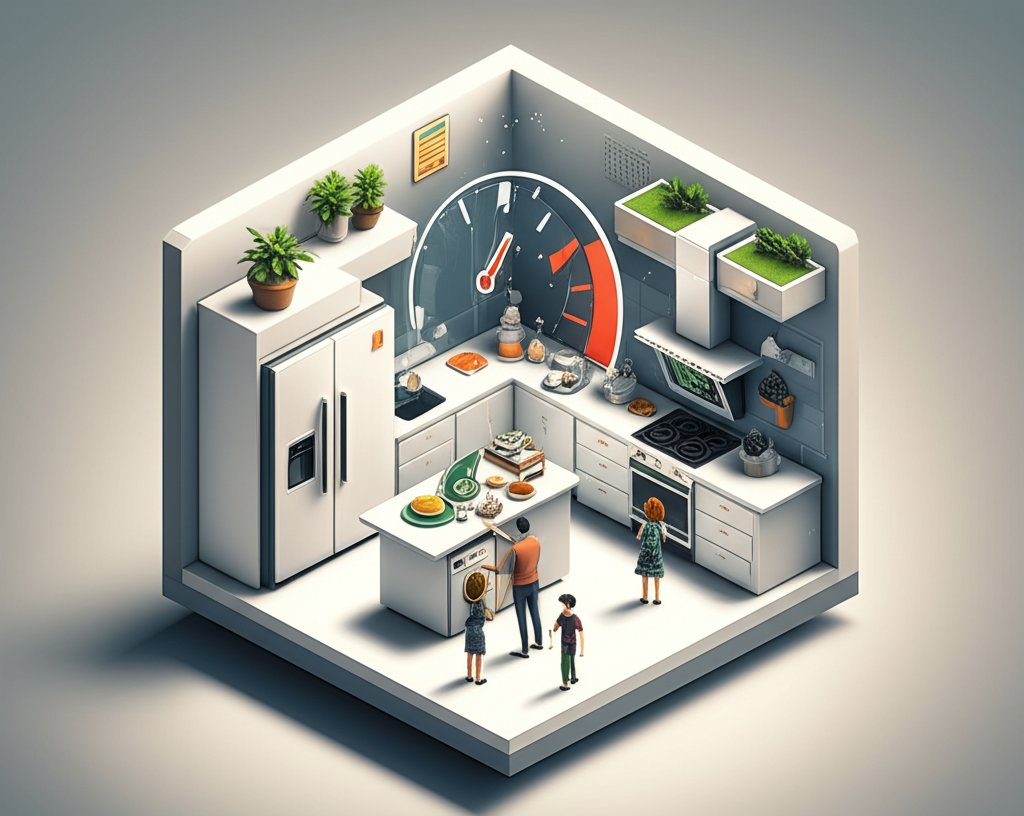
A professional kitchen isn’t just about appliances; it’s about how you use the space.
The Power of Three: Counter Zones
Aim for at least three distinct counter areas:
- Prep zone: Dedicated space for chopping, measuring, and assembling ingredients.
- Cooking zone: Adjacent to the cooktop and oven, with easy access to utensils and cookware.
- Cleaning zone: Centered around the sink and dishwasher, with ample space for drying dishes.
Island Life: Adding Prep and Seating
A kitchen island can be a game-changer, adding valuable counter space, storage, and a casual seating area. Plan its size and placement carefully to avoid disrupting the flow between zones.
Storage Solutions: Keep Everything in Its Place
Ample and well-organized storage is essential. Consider:
- Plenty of kitchen cabinets: Keep everything you need out of sight.
- Adjustable shelving: Allows you to customize storage to fit your needs.
- Pots and pans racks: Keep frequently used cookware within easy reach, either mounted on the wall or suspended from the ceiling.
Maximizing counter space is key for any cook. You can read more about various design approaches that can help you Design a pro-level kitchen.
Durable Materials: Flooring, Sinks, and Faucets Built to Last
A professional home kitchen needs to withstand heavy use, so choose durable and easy-to-clean materials.
Flooring Options: Balancing Style and Function
Good flooring options include:
- Hardwood: Offers a classic look but requires careful maintenance.
- Tile: Durable, water-resistant, and available in a wide range of styles.
- Natural stone: Elegant and durable, but can be expensive.
- Concrete: Modern and industrial, but can be cold and hard underfoot.
Industrial-Sized Sinks: Tackling Large Pots and Pans
Opt for a large, deep sink made of stainless steel. This provides ample space for washing bulky cookware and stands up to daily wear and tear.
Powerful Faucets: Speeding Up Prep and Cleanup
Choose a commercial-style faucet with a pull-down sprayer. The high arc and 360-degree swivel make it easy to fill pots, rinse ingredients, and clean the sink.
Safety and Comfort: Ventilation and Lighting
Don’t overlook these crucial elements.
Ventilation: Clearing the Air
A powerful range hood or exhaust fan is essential for removing heat, smoke, and odors. Ensure it meets local building codes and safety standards.
Lighting: Illuminating Your Workspace
Good lighting is crucial for safety and efficiency. Combine ambient lighting (general illumination) with task lighting (focused on specific work areas). Under-cabinet lights are particularly helpful for illuminating countertops.
Practical Playbook: Steps to Creating Your Professional Home Kitchen

Ready to transform your kitchen? Here’s a quick start guide:
- Assess your needs: What kind of cooking do you do most often? What are your biggest pain points in your current kitchen?
- Develop a budget: Be realistic about the costs involved, including appliances, materials, and labor.
- Plan your layout: Consider traffic flow, work zones, and storage needs.
- Choose appliances and materials: Prioritize durability, performance, and ease of cleaning.
- Install proper ventilation and lighting: Ensure a safe and comfortable workspace.
- Organize your storage: Keep everything in its place for maximum efficiency.
Quick Answers: FAQs About Professional Home Kitchens
- Q: Will a commercial-style range increase my utility bills?
- A: High-BTU burners can consume more gas, and convection ovens may use more electricity. However, the efficiency gains from precise temperature control and faster cooking times can offset some of the increased energy usage.
- Q: Do I need a special permit to install a commercial-style range hood?
- A: Building codes vary by location, but it’s generally advisable to check with your local building department before installing any major appliance.
- Q: Are stainless steel appliances difficult to keep clean?
- A: Stainless steel can show fingerprints and smudges, but it’s generally easy to clean with a microfiber cloth and a stainless steel cleaner.
- Q: What about zoning regulations?
- A: Local zoning laws dictate how land can be used, and it’s important to confirm these regulations before building a commercial kitchen at home. In some cases, operating a commercial kitchen in a residential area may not be allowed, unless exceptions are made for “cottage kitchens” or “home-based food businesses”.
Stop Dreaming, Start Cooking
Transforming your home kitchen into a professional-grade space is an investment, but one that pays off in enhanced efficiency, culinary creativity, and pure cooking enjoyment. Prioritize functionality, durability, and smart design choices, and you’ll create a culinary haven that rivals the best restaurant kitchens. Don’t wait – start planning your dream kitchen today!

- DIY Bathroom Mirror Frame Designs on a Budget - October 12, 2026
- Creative Bathroom Mirror Border Ideas for Every Style and Budget - October 11, 2026
- Bathroom Finishes That Handle Moisture and Look Great - October 10, 2026