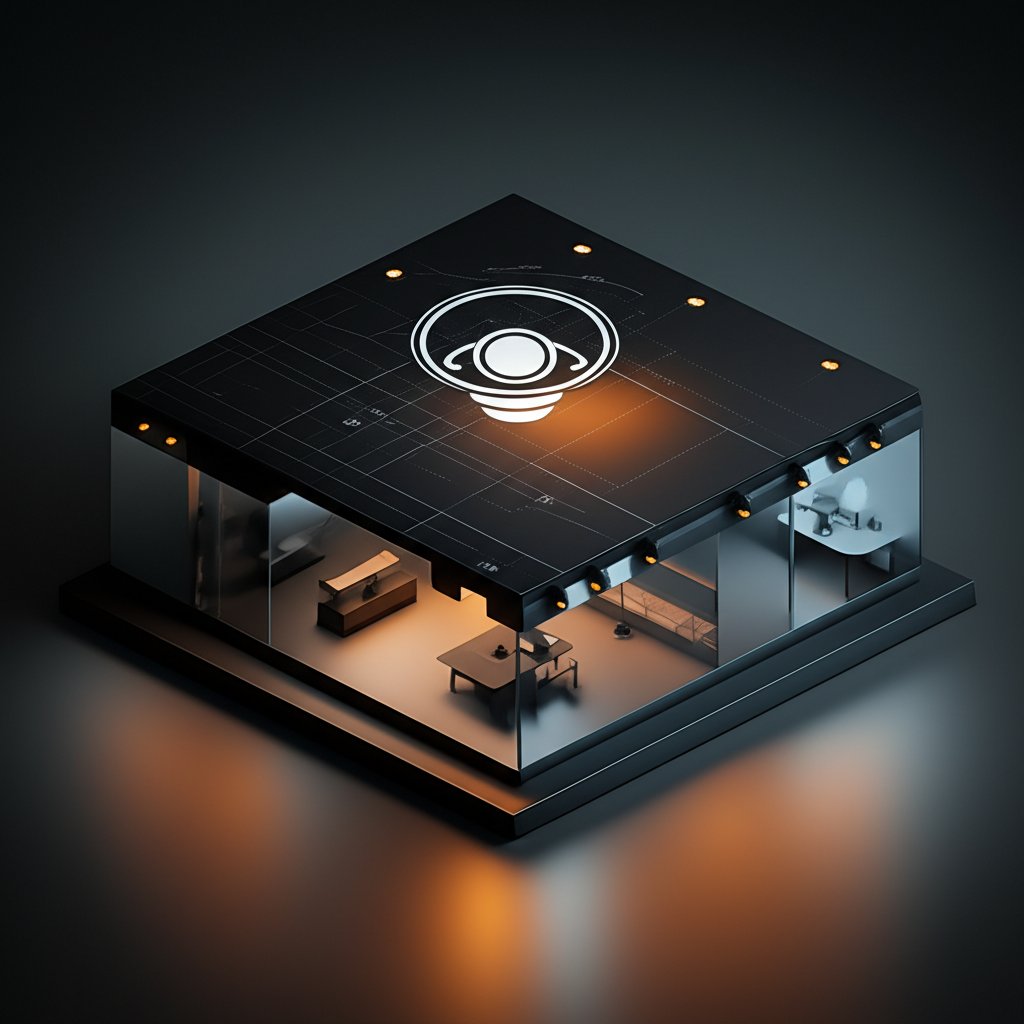
Walk into a thoughtfully designed modern home, and your eyes will likely be drawn to the clean lines, the curated art, and the beautiful finishes. What you won’t see is a ceiling dotted with distracting white circles. Instead, you’ll feel a warm, inviting glow that seems to appear from nowhere. This is the subtle magic of black recessed lighting, a design choice that swaps distracting fixtures for sophisticated, barely-there sources of light.
It’s a simple swap with a dramatic impact. Where white trim can create a “Swiss cheese” effect on a dark ceiling or stand out on a white one, black trim creates a dark, quiet aperture. The fixture itself recedes from view, letting the light it casts take center stage. This guide is your complete roadmap to understanding, choosing, and implementing this sleek lighting solution to elevate your own space.
At a Glance: Your Quick Guide
Pressed for time? Here are the key takeaways for mastering black recessed lighting:
- Why Black? Black trims absorb light, making the fixture itself seem to disappear into the ceiling. This creates a clean, minimalist look and reduces visual clutter, especially in media rooms or spaces with high-contrast design.
- Trim Style is Key: The most common styles are baffle (ribbed to reduce glare), smooth (for a clean, modern look), and gimbal (adjustable to aim light at art or specific tasks).
- Size and Placement Matter: 4-inch lights are great for accent and task lighting, while 6-inch lights work well for general ambient illumination. Proper spacing is crucial to avoid shadows or a “runway” look.
- Get the Glow Right: Color temperature (measured in Kelvin) determines the warmth or coolness of the light. 2700K-3000K is warm and cozy for living areas, while 3500K-4000K is a neutral white that’s perfect for kitchens and workspaces.
- Always Use a Dimmer: Dimmers are non-negotiable. They give you complete control over the mood and functionality of a room, from bright and productive to low and relaxed.
More Than Just a Color: The Design Power of Black Fixtures
Choosing black for a recessed light isn’t merely a color preference; it’s a strategic design decision rooted in the physics of light and perception. While white fixtures are designed to blend into a standard white ceiling, they often fail to disappear completely. The bright ring of the trim catches the eye, creating a pattern of dots across the ceiling plane.
Black recessed lighting works on a different principle: the “quiet aperture.”
A black trim and baffle (the inner ribbed part of the fixture) absorb stray light rather than reflecting it. When the light is off, the fixture is a small, dark shadow that’s far less noticeable than a white circle. When the light is on, your eye is drawn to the beam of light itself, not the housing it comes from. This makes the ceiling plane feel calmer, more unified, and even higher.
This effect is especially powerful in several key design scenarios:
- Modern and Minimalist Homes: In spaces defined by clean lines and an absence of clutter, black recessed lights reinforce the aesthetic by removing visual noise from the ceiling.
- Rooms with Dark or Wood Ceilings: Using white fixtures on a dark wood or painted ceiling is a design misstep. Black fixtures blend in seamlessly, preserving the rich, dramatic effect of the ceiling material.
- Home Theaters and Media Rooms: This is where black recessed lighting truly shines—by not shining. The dark trims eliminate distracting reflections on the screen, creating a more immersive viewing experience.
- High-Contrast Interiors: In rooms that pair dark floors or cabinetry with light walls, black fixtures act as a deliberate accent, tying the design elements together.
Choosing the Right Black Recessed Lights for Your Space
Once you’re sold on the concept, the next step is navigating the hardware. The options can seem daunting, but they break down into a few simple choices about function, size, and style.
New Construction vs. Remodel: What’s the Difference?
The first question is about installation. Your choice depends on whether you have open access to the ceiling joists.
- New Construction Cans: These are larger housings with mounting bars that attach directly to ceiling joists. They are installed before the drywall goes up, making them the standard choice for new builds, major renovations, or additions.
- Remodel Cans: Designed for existing ceilings, these housings are more compact and are secured by clips that clamp onto the back of the drywall. You simply cut a hole of the correct size, wire the fixture, and push it into place.
If you’re simply upgrading the lighting in a finished room, you’ll be looking for remodel kits.
Size Matters: Decoding 4-Inch, 6-Inch, and Other Diameters
Recessed lights are most commonly found in 4-inch and 6-inch diameters, and each has a distinct purpose.
- 6-Inch Lights: These are the traditional workhorses for general (ambient) lighting. Their larger size and wider beam spread can illuminate a whole room. They are a solid choice for living rooms, kitchens, and basements where broad, even light is the primary goal.
- 4-Inch Lights: These smaller fixtures offer a more contemporary, refined look. They are perfect for task and accent lighting. Use them in a series over a kitchen island, to spotlight a piece of art on the wall, or to illuminate a hallway. Because their beams are more focused, you may need more of them to light an entire room, but the result is often more sophisticated and layered.
- Smaller Sizes (2- or 3-Inch): These are almost exclusively used for accenting—tucked into built-in shelving, soffits, or art niches for a precise, dramatic effect.
Gimbal, Baffle, or Smooth? Understanding Trim Styles
The trim is the visible part of the fixture, and its style dictates both its look and its function. This is a critical choice that shapes how the light performs.
| Trim Style | Best For | Visual Effect |
|---|---|---|
| Baffle Trim | General lighting, glare reduction | The interior has concentric grooves that absorb excess light, minimizing glare when you look up at the ceiling. It’s the most popular and versatile style. |
| Smooth Trim | General lighting, clean aesthetic | The interior is a smooth, funnel-like reflector. It provides a crisp, minimalist appearance and is excellent for a modern, seamless look. |
| Gimbal Trim | Accent and task lighting | Features a pivoting “eyeball” that allows you to direct the light exactly where you need it-on a fireplace, a countertop, or a gallery wall. |
| Choosing the right combination of these elements is a key step. You might use black baffle trims for general room lighting and a matching gimbal trim to highlight the mantle. For a deeper dive into the nuances of each type, our complete Guide to Black Recessed Lighting offers detailed comparisons and project examples. |
It’s Not Just About the Fixture, It’s About the Glow
A beautiful fixture is useless if the light it produces is harsh, cold, or dim. Controlling the quality of your light comes down to two main factors: color temperature and brightness.
Finding Your Perfect “Temperature”: From Warm to Cool White
The color of white light is measured on the Kelvin (K) scale. Lower numbers are warmer (more yellow/orange), and higher numbers are cooler (bluer). Getting this right is arguably the most important decision for setting the mood of your space.
- 2700K (Warm White): This is the color of a traditional incandescent bulb. It’s warm, cozy, and inviting, making it perfect for bedrooms, living rooms, and dens where relaxation is the goal.
- 3000K (Soft White): A slightly crisper, more neutral white. It’s still warm and inviting but provides a bit more clarity. This is a fantastic all-around choice, well-suited for kitchens, bathrooms, and living areas.
- 4000K (Cool White): This is a bright, neutral white light that mimics natural daylight. It’s excellent for promoting focus and energy, making it ideal for home offices, garages, and laundry rooms. It can feel a bit sterile in living spaces.
- 5000K+ (Daylight): A very cool, blue-toned light that feels almost clinical. It’s most often used in commercial settings or for highly detailed task lighting, but it’s generally too intense for most home applications.
Many modern LED recessed lights now come with a switch that lets you select the color temperature during installation, giving you the flexibility to fine-tune the feel of your room.
Lumens and Dimmers: Controlling the Intensity
Lumens measure brightness. More lumens mean more light. Instead of relying on wattage, which measures energy use, check the lumen output on the box (often around 650-1200 lumens for a typical recessed light).
But raw power isn’t everything. The single most important feature for any recessed lighting plan is a dimmer. Dimmers allow you to adjust the lumen output on demand. You can have bright, clear light for cleaning or cooking, then dim it down to 20% for a relaxed dinner party or movie night. Without a dimmer, you’re stuck with one level of light, which severely limits the versatility of your room.
Where to Use Black Recessed Lighting for Maximum Impact
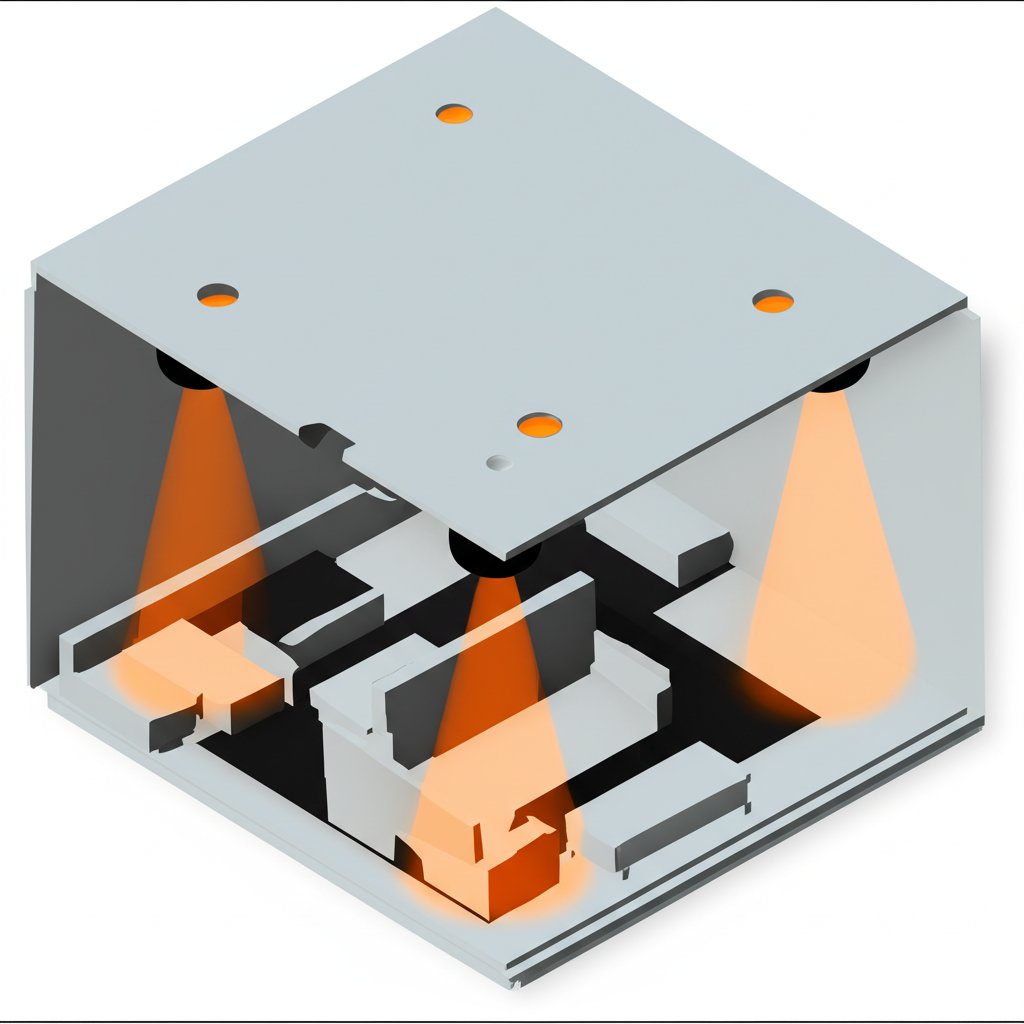
Proper placement is what separates a professional-looking installation from an amateur one. The goal is to create even layers of light that serve the functions of the room.
- Living Rooms: Focus on “wall washing.” Instead of placing lights in the center of the room, position them 2-3 feet from the walls. This bounces light back into the room, making the space feel larger and brighter while highlighting decor. Use adjustable gimbal trims to spotlight art or architectural features.
- Kitchens: This is a task-heavy zone. Place lights directly over the edge of your countertops—not in the central walkways. This ensures your own body doesn’t cast a shadow on your workspace. A row of 4-inch black lights over an island creates a beautiful, functional focal point.
- Bedrooms: Avoid placing lights directly over the bed. This creates an unpleasant glare when you’re lying down. Instead, focus light around the room’s perimeter, over dressers, and in closets. Keep the light warm (2700K) and always on a dimmer.
- Hallways: Space lights evenly to create a clear, welcoming path. A common rule of thumb is to space them roughly the same distance apart as their beam spread (e.g., 4-6 feet).
- Home Theaters: As mentioned, black baffle trims are the undisputed champion here. They kill ceiling glare, allowing you to get fully lost in the film.
Planning Your Layout: A Blueprint for Success
Before you or your electrician cuts a single hole, map everything out. A common mistake is creating a rigid, grid-like pattern that ignores the room’s furniture and function.
A better approach is to light in layers:
- Ambient Layer: Start with your general lighting, typically 6-inch fixtures. A good spacing rule is to divide the ceiling height in half. For an 8-foot ceiling, space your lights about 4 feet apart.
- Task Layer: Identify work zones. Where do you read, cook, or get ready? Add dedicated lights there, like 4-inch fixtures over the kitchen sink or a gimbal trim angled at a reading chair.
- Accent Layer: Finally, what do you want to show off? A textured brick wall? A favorite painting? Use narrow-beam spotlights or gimbals to draw the eye.
Mistakes That Can Ruin the Look
Avoid these common pitfalls:
- The Runway: Placing all your lights in a single, straight line down the middle of a room or hallway. It feels rigid and institutional. Staggering them or placing them based on room function is much more effective.
- Creating Shadows: Placing a light directly behind where a person will be standing (e.g., in the center of the kitchen walkway) will cast a shadow on the counter where they work. Always position task lights between the person and their task.
- Ignoring Dimmers: We’ve said it before, but it bears repeating. Skipping dimmers is the number one regret in lighting design.
- Mixing Color Temperatures: Using 2700K bulbs next to 4000K bulbs in the same room will look chaotic and unsettling. Be consistent within a single space.
Frequently Asked Questions, Answered
Still have questions? Here are clear answers to the most common queries about black recessed lighting.
Q: Does black recessed lighting make a room feel smaller or darker?
A: This is a common myth. Because the black trim makes the fixture disappear, it actually makes the ceiling plane feel less cluttered and more expansive. The focus shifts entirely to the pools of light on the walls and floor, which can make a room feel more open and intentionally designed.
Q: Is black recessed lighting a trend, or is it timeless?
A: While it has certainly surged in popularity alongside modern farmhouse and minimalist styles, black is a foundational color in design. It acts as a neutral. Like a classic black picture frame, it doesn’t compete with its surroundings. This gives it a timeless quality that is unlikely to feel dated.
Q: Can I just paint my existing white trims black?
A: You can, but proceed with caution. You must use a high-heat enamel spray paint designed for metal and follow a meticulous prep process (cleaning, light sanding, priming). A poorly done paint job will chip and look cheap. For a durable, professional finish, buying factory-finished black trims is always the better option.
Q: Are black recessed lights more expensive than other finishes?
A: Generally, no. Black is a standard finish for most major lighting manufacturers. You can typically find black recessed lighting kits at a price comparable to their white, brushed nickel, or bronze counterparts. Any significant price difference is more likely due to features like smart technology or high-end LED components rather than the color itself.
Your Next Step: From Ceiling Concept to Reality
Switching to black recessed lighting is more than an upgrade; it’s a re-imagining of your ceiling from a functional surface to a quiet, architectural plane. By making the light source disappear, you allow the important things in your room—the people, the furniture, the art—to take center stage. You trade visual noise for calm sophistication.
Ready to move forward? Follow this simple checklist:
- Define Your Goal: What is the primary function of the room? Relaxation, work, or entertainment? This will guide your decisions on color temperature and trim style.
- Choose Your Hardware: Decide on remodel vs. new construction cans, select the right size (4- or 6-inch) for your ambient and task needs, and pick a trim style (baffle, smooth, or gimbal) that matches your aesthetic and functional goals.
- Select Your Light: Lock in your preferred color temperature (3000K is a safe, versatile bet) and ensure your chosen LED and dimmer are compatible.
- Map It Out: Draw a simple sketch of your room, including furniture. Plan your light placement to wash walls, illuminate tasks, and avoid creating shadows or a rigid grid.
With a little planning, you can use this powerful design tool to create spaces that not only look better but feel better, too.

- DIY Bathroom Mirror Frame Designs on a Budget - October 12, 2026
- Creative Bathroom Mirror Border Ideas for Every Style and Budget - October 11, 2026
- Bathroom Finishes That Handle Moisture and Look Great - October 10, 2026