You’ve painted the walls, chosen the perfect furniture, and curated every piece of decor. But when you look up, the ceiling is a grid of bland, white plastic circles that detract from the intentional design below. Standard recessed lighting is designed to disappear, but it often just looks forgotten. This is where black recessed downlights create a paradigm shift—turning a functional necessity into a deliberate, stylish architectural feature.
Instead of trying to blend in, these fixtures stand out with purpose. They create crisp, dramatic focal points, add visual depth, and frame a room with a sleek, modern edge. They are the punctuation marks on your ceiling, guiding the eye and shaping the atmosphere.
At a Glance: Your Black Downlight Decision Guide
- Understand the Trim: Learn the difference between baffle, reflector, and adjustable trims to control glare and direct light precisely.
- Master the Light Specs: Discover why Color Temperature (Kelvin) and Color Rendering Index (CRI) are even more critical with black fixtures.
- Avoid the “Black Hole” Effect: Get placement strategies to ensure your lights create inviting pools of illumination, not dark voids.
- Match Fixture to Function: See how to select the right black recessed downlights for task, ambient, and accent lighting.
- Plan for Ceiling Height & Color: Learn how to adjust your lighting plan for high ceilings, vaulted spaces, and dark paint colors.
More Than a Trend: The Purpose of a Black Downlight
Choosing black recessed lighting isn’t just a color preference; it’s a strategic design choice. While the broader category includes various styles, the downlight is the workhorse for creating focused, high-impact illumination from above. Understanding this core function is the first step to a successful lighting plan. For a complete overview of all the options, you can Unlock sleek ceiling style with our comprehensive guide.
Here, we’re focusing specifically on the downlight—the most common and versatile type. Its job is to cast light downward in a controlled cone. The magic of a black downlight is how it manipulates both the light and the negative space around it.
A white trim on a white ceiling creates a soft, diffused edge. A black trim, by contrast, creates a sharp, defined aperture. This visual trick makes the light source itself seem to recede, a phenomenon designers call a “quiet ceiling.” Your eye is drawn to the illuminated object or area, not the fixture itself, creating a cleaner, more sophisticated look.
The Anatomy of a Black Recessed Downlight: Key Choices
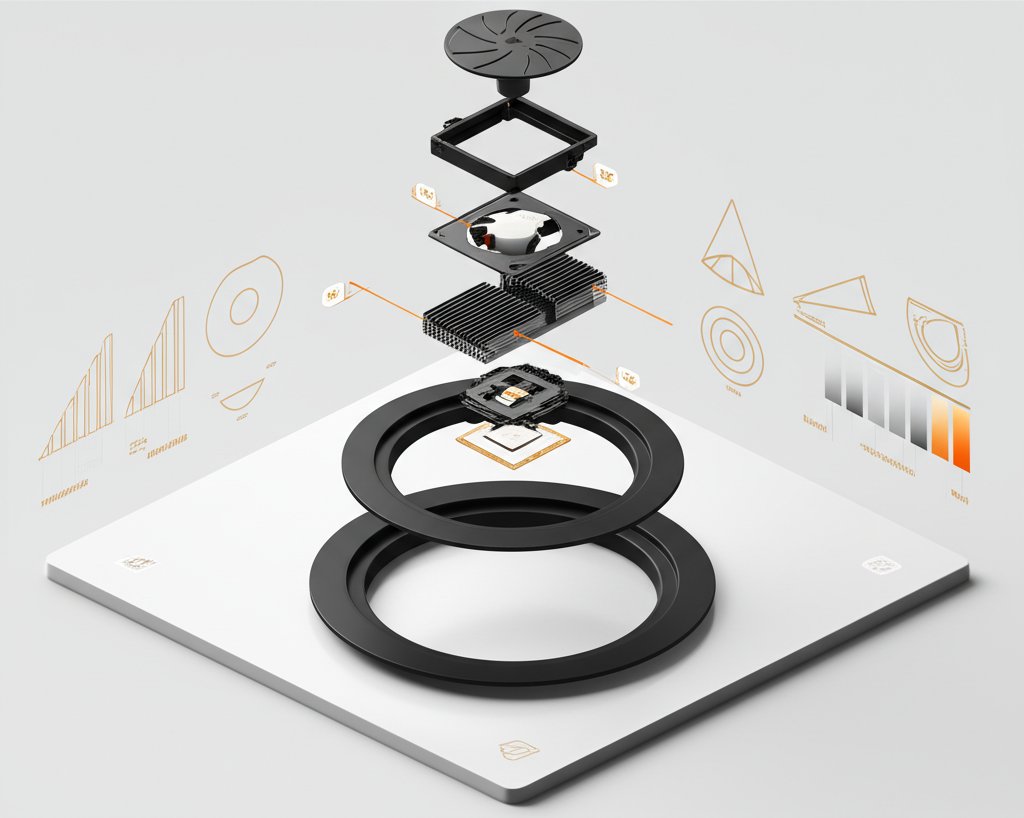
Every black recessed downlight consists of three main parts. Your choices for each will dramatically impact the final look and performance.
- Housing: This is the main fixture installed inside your ceiling. It can be a “New Construction” housing (installed before drywall) or a “Remodel” housing (clipped into an existing ceiling). The housing type is a logistical choice, but ensure it’s compatible with your chosen trim.
- Light Engine: This is the bulb or, more commonly today, the integrated LED module. This is where you decide on brightness (lumens), color temperature (Kelvin), and color quality (CRI). We’ll dive into these specs shortly.
- Trim: This is the only part you see. The trim is the ring and inner component that finishes the light at the ceiling level. For black recessed downlights, the trim style is your most important aesthetic and functional decision.
Choosing Your Black Trim: Baffle vs. Reflector vs. Adjustable
The interior of the trim dictates how the light leaves the fixture. This choice is crucial for controlling glare and shaping the light beam.
| Trim Type | Primary Goal | Best For… | Visual Effect |
|---|---|---|---|
| Black Baffle | Minimize Glare | Living rooms, bedrooms, home theaters | Soft, diffused light; the ribbed texture traps stray light. |
| Black Reflector | Maximize Light Output | Kitchens, workspaces, high ceilings | Bright, crisp light; a smooth, mirror-like interior pushes more light out. |
| Adjustable/Gimbal | Directional Accent | Sloped ceilings, art walls, architectural features | A focused “spotlight” beam that can be aimed precisely. |
H3: Black Baffle Trims for Comfortable, Low-Glare Lighting
A baffle trim has concentric ribs on the interior designed to absorb stray light and reduce glare. When you look up at a black baffle downlight, you see a soft glow rather than a harsh point of light.
- Mini-Case Snippet: In a living room designed for relaxation and movie nights, a grid of black baffle downlights with a warm color temperature (2700K) provides soft, ambient light. The black baffles prevent distracting reflections on the TV screen, creating a comfortable, immersive environment.
H3: Black Reflector Trims for Punchy, Efficient Task Lighting
A reflector trim has a smooth, shiny interior that acts like a mirror, pushing as much light as possible down into the room. This makes it highly efficient and ideal for areas where you need bright, clear illumination.
- Mini-Case Snippet: Over a marble kitchen island, black reflector downlights deliver powerful task lighting for food prep. The crisp, clean light makes the workspace functional, while the black trim creates a stunning visual contrast against a white shiplap ceiling, defining the island as the room’s centerpiece.
H3: Black Adjustable Trims for Dynamic Accent Lighting
Also known as gimbal or eyeball trims, these allow you to pivot and tilt the light source inside the housing. This is your go-to for accent lighting—highlighting artwork, washing a textured wall, or illuminating a specific feature.
- Mini-Case Snippet: In a long hallway, a series of black adjustable downlights are aimed at large-scale photographs on one wall. The black fixtures disappear into the dark-painted ceiling, making the illuminated art appear to float. This turns a simple corridor into a dramatic gallery space.
Getting the Light Right: Kelvin, Lumens, and CRI Matter More in Black
Because black trims absorb more ambient light and create higher contrast, the quality of the light itself becomes paramount. Getting these three specifications right is non-negotiable.
Color Temperature (Kelvin)
Kelvin (K) measures how warm (yellow) or cool (blue) the light appears. With black fixtures, the color temperature sets the entire mood.
- 2700K (Warm White): Creates a cozy, intimate, incandescent-like glow. Perfect for living rooms and bedrooms. It pairs beautifully with wood tones and warm materials.
- 3000K (Soft White): A crisp, clean white that’s still inviting. This is the most popular all-around choice, ideal for kitchens, bathrooms, and general living spaces where you want a modern but not sterile feel.
- 4000K (Cool White): A bright, neutral white with a slightly blueish tint. Use it sparingly in utility areas like garages, modern offices, or commercial spaces. It can feel stark in most residential settings.
Expert Tip: Many modern LED black recessed downlights come with a “CCT Selectable” switch, allowing you to choose between 3-5 color temperatures on the fixture itself. This is a fantastic feature that lets you fine-tune the light on-site.
Brightness (Lumens)
Lumens measure the total amount of light output. Don’t think in watts anymore; think in lumens. Because a black trim can “swallow” some light compared to a white one, you may need to slightly increase your target lumens.
- General Ambient Lighting: 600-800 lumens per fixture, spaced appropriately.
- Task Lighting (e.g., Kitchen Counters): 800-1200 lumens per fixture, focused on the work area.
- Accent Lighting: 400-600 lumens, depending on the object being lit.
Color Rendering Index (CRI)
CRI measures how accurately a light source reveals the true colors of objects, on a scale of 0 to 100. A low CRI light can make wood look dull, food unappetizing, and skin tones appear sickly.
For any quality lighting design, aim for a CRI of 90 or higher. This is especially important with the high-contrast look of black downlights. A 90+ CRI ensures that your paint, furniture, and artwork look exactly as you intended under the focused beams of light.
The Placement Playbook: Spacing and Strategy
Poor placement is the fastest way to ruin a black downlight installation. You can’t just scatter them randomly. The goal is to create overlapping pools of light on the floor and key surfaces, eliminating harsh shadows.
Rule of Thumb for General Spacing
A common formula for ambient lighting is to divide the ceiling height by two. This gives you a rough spacing distance between fixtures.
- 8-foot ceiling: Space fixtures approximately 4 feet apart.
- 10-foot ceiling: Space fixtures approximately 5 feet apart.
Important: This is a starting point. Always adjust based on the beam angle of your light and the room’s purpose. For task areas, you’ll place them closer together.
Laying Out Your Lights: A 3-Step Process
- Identify the Zones: Don’t light the whole room uniformly. Instead, map out the key functional zones: the conversation area, the kitchen work triangle, the reading nook, the art wall.
- Layer the Lighting: Assign a purpose to the lights in each zone.
- Ambient Layer: A general grid for overall illumination (often dimmable).
- Task Layer: Focused lights directly over work surfaces (kitchen counters, desks).
- Accent Layer: Adjustable lights aimed at features you want to highlight.
- Position with Purpose:
- For task lighting, place the downlight directly above the front edge of the counter or desk, not in the center of the walkway behind you. This prevents you from casting a shadow on your own workspace.
- For wall washing, position the fixtures 18-36 inches from the wall. The farther away they are, the longer the scallop of light on the wall will be.
- For art accenting, aim for a 30-degree angle from the fixture to the center of the artwork. This minimizes veiling reflections (glare) on the art.
Quick Answers to Common Questions
Q: Do black recessed downlights make a room feel smaller or darker?
Not if used correctly. While too many black elements can feel heavy, well-placed black downlights create a “quiet ceiling.” By drawing the eye to the pools of light on your walls and furniture, they can actually make the ceiling plane recede, adding a sense of depth and sophistication. The key is to light the vertical surfaces (walls), not just the floor.
Q: Are black recessed downlights just a passing trend?
Black has been a staple in modern and industrial design for a century. It acts as a neutral anchor, much like white or gray. While its popularity may ebb and flow, its status as a classic, high-contrast design element is permanent. It’s less of a trend and more of a timeless choice for creating architectural definition.
Q: What’s better: a fixture with a black trim and a white interior, or all black?
An all-black interior (like a black baffle or reflector) provides the best glare control and the most dramatic “quiet ceiling” effect. A fixture with a black trim ring and a white interior reflector will be slightly more efficient at bouncing light out, but it creates a less cohesive, high-contrast look that can sometimes feel busy. For a truly modern, minimalist aesthetic, all-black is the superior choice.
Q: Can I use black recessed downlights with a dark-painted ceiling?
Absolutely. This is a powerful, high-end design technique. By matching the fixture to the dark ceiling, the lights become nearly invisible when off. When on, you get these dramatic beams of light seemingly appearing from nowhere. To make this work, you must have enough light directed onto the walls and key objects to keep the room from feeling like a cave.
Your 3-Step Black Downlight Action Plan
Feeling ready to make a change? Don’t get overwhelmed. Follow this simple decision path.
- Define the Mission: What is the primary job of the lights in this specific room?
- Is it for comfortable living? Start with Black Baffle Trims and a warm CCT (2700K-3000K).
- Is it for working or cooking? Prioritize Black Reflector Trims for maximum output with a neutral CCT (3000K).
- Is it for highlighting features? You need Black Adjustable Trims to direct the light with precision.
- Get the Specs Right: Lock in the technical details before you buy.
- CRI: Settle for nothing less than 90+ CRI.
- Dimming: Ensure the fixtures and your switches are compatible and designed for smooth, flicker-free dimming. This is essential for adjusting the mood.
- Beam Angle: For most ambient lighting, a 40° to 60° beam angle works well. For accenting, look for a narrower beam of 15° to 25°.
- Map Before You Cut: Create a to-scale drawing of your room and place the lights on paper first. Mark the furniture, walkways, and key features. This small step will save you from making costly mistakes in your ceiling. Consider using painter’s tape or cardboard cutouts on the floor to visualize the “pools” of light before committing.
By moving beyond the default white option, you treat your ceiling as the “fifth wall” it is. Black recessed downlights are a tool for shaping space, directing focus, and adding a layer of architectural polish that elevates your entire home. They are a declaration that in your design, every single detail matters.

- DIY Bathroom Mirror Frame Designs on a Budget - October 12, 2026
- Creative Bathroom Mirror Border Ideas for Every Style and Budget - October 11, 2026
- Bathroom Finishes That Handle Moisture and Look Great - October 10, 2026