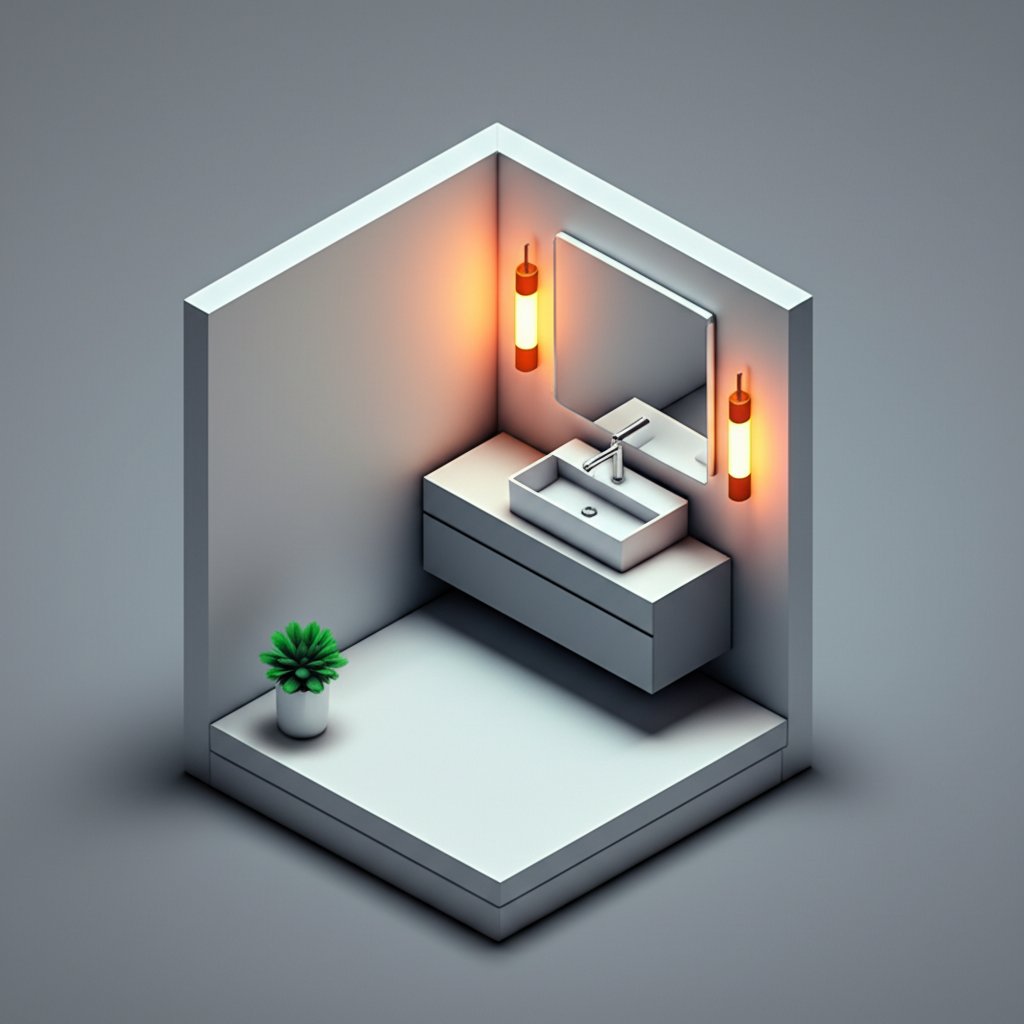
The perfect pairing of mirror and wall sconces is the single most effective way to elevate a bathroom from purely functional to a truly personal sanctuary. It’s not just about adding light; it’s about shaping it. The wrong combination can cast harsh, unflattering shadows, while the right one creates a balanced, welcoming glow that makes every morning routine feel a little more luxurious.
This is where the magic happens—at the intersection of reflection and illumination, where carefully chosen fixtures turn a simple vanity into the room’s stunning focal point.
At a Glance: Your Sconce & Mirror Game Plan
- Placement is Paramount: Learn the precise height and width measurements for mounting sconces to achieve flawless, shadow-free task lighting.
- Scale and Proportion: Discover how to match the size of your sconces to the size and shape of your vanity mirror for a visually balanced look.
- Style Synergy: Get guidance on pairing sconce styles (from industrial to traditional) with different mirror frames and shapes.
- Light Quality Matters: Understand the difference between lumens, Kelvin, and why dimmers are non-negotiable for a versatile bathroom.
- Avoid Common Pitfalls: Sidestep frequent mistakes like mounting fixtures too high, choosing the wrong bulb type, or creating a style clash.
The Placement Playbook: Why Positioning is Everything
Before you fall in love with a specific fixture, you need to master the geometry of bathroom lighting. More design mistakes are made in placement than in any other area. The goal is to create even, cross-illumination that lights up your face from both sides, eliminating the dreaded shadows that a single overhead light creates.
For a comprehensive overview of sconce types that fit these placement rules, our guide can help you Enhance your bathroom’s style and light. Getting the position right ensures whatever style you choose performs beautifully.
The Golden Rule: Flank, Don’t Float
The most flattering light for tasks like makeup application or shaving comes from fixtures mounted on either side of the mirror, not above it. Placing a light source directly overhead casts shadows under your eyes, nose, and chin. By flanking the mirror with wall sconces, you create a source of light that washes across your face evenly.
A sleek 2-light fixture with cylindrical glass shades can often be mounted vertically on each side of the mirror, directing light forward and sideways for optimal coverage. This technique is the secret behind every well-lit professional makeup studio and high-end hotel bathroom.
Precise Measurements for Perfect Placement
Getting the numbers right is crucial. Grab a measuring tape and a pencil; these guidelines are your blueprint for success.
| Placement Guideline | Measurement | The “Why” Behind It |
|---|---|---|
| Sconce Height | Center of the fixture at 60-66 inches from the finished floor. | This puts the light source roughly at eye level for the average person, ensuring the light hits your face directly. |
| Sconce Width | At least 28 inches apart, and 3-4 inches from the edge of the mirror. | This spacing creates a wide plane of light, preventing shadows in the center of your face. |
| Mirror Size | Mirror should be a few inches narrower than the vanity cabinet. | This creates a clean visual frame and leaves adequate wall space for the sconces to be mounted properly. |
| Fixture Length | Sconces should be about 1/3 to 3/4 the height of the mirror frame. | This keeps the scale balanced. A tiny sconce next to a huge mirror looks lost; an oversized one will feel overpowering. |
| Case Snippet: A client with a 48-inch vanity and a 36-inch wide mirror was struggling with placement. We mounted two 18-inch tall sconces with their center line at 65 inches from the floor. Each was placed 4 inches from the side of the mirror, putting the fixtures about 44 inches apart. The result was a perfectly balanced, incredibly functional setup that looked intentional and high-end. |
Marrying Mirror Shape with Sconce Style

Once you’ve nailed down placement, the fun begins. The relationship between your mirror and wall sconces is a stylistic one. The key is to decide if you want them to complement each other harmoniously or create a dynamic contrast.
For Rectangular and Square Mirrors: The Classic Pair
These mirrors offer clean lines and a structured look, making them incredibly versatile.
- Complementary: Pair a simple, black-framed rectangular mirror with sconces that share its geometry. Think of fixtures with a sturdy, rectangular iron backplate and clean glass shades. This creates a cohesive, architectural feel.
- Contrasting: Soften the hard angles of a square mirror with sconces that have rounded elements. A fixture with frosted, striped glass shades or even a traditional “wallchiere” design—featuring a torch-like arm and a soft linen shade—can introduce a gentle curve that prevents the look from feeling too rigid.
For Round and Oval Mirrors: Softening the Edges
Round mirrors bring a sense of softness and flow to a space. Your sconce choice should honor that.
- Complementary: Lean into the curves. Sconces with globe-shaped shades, curved arms, or circular backplates echo the mirror’s form beautifully.
- Contrasting: Juxtapose the round mirror with linear, vertical sconces. A modern, minimalist LED bar-style sconce mounted vertically can create a striking and sophisticated tension between the two shapes. The contrast feels deliberate and design-forward.
For Oversized or Double-Vanity Mirrors: Achieving Balance
When dealing with a large, single mirror over a double vanity, flanking it might not be practical due to the distance.
- The Three-Sconce Solution: Mount one sconce on each side of the large mirror and a third one in the center, directly on the mirror’s surface (this requires having the mirror professionally cut).
- The Over-Mirror Fixture: This is one of the few times an over-mirror light is the best choice. A 4-light vanity fixture with a long, linear metal structure can span the width of the mirror, providing even light across both sinks. Look for models with multiple arms and high-quality crystal or glass shades that can be mounted facing up or down to control the direction of light.
Beyond the Frame: Choosing the Right Sconce Features
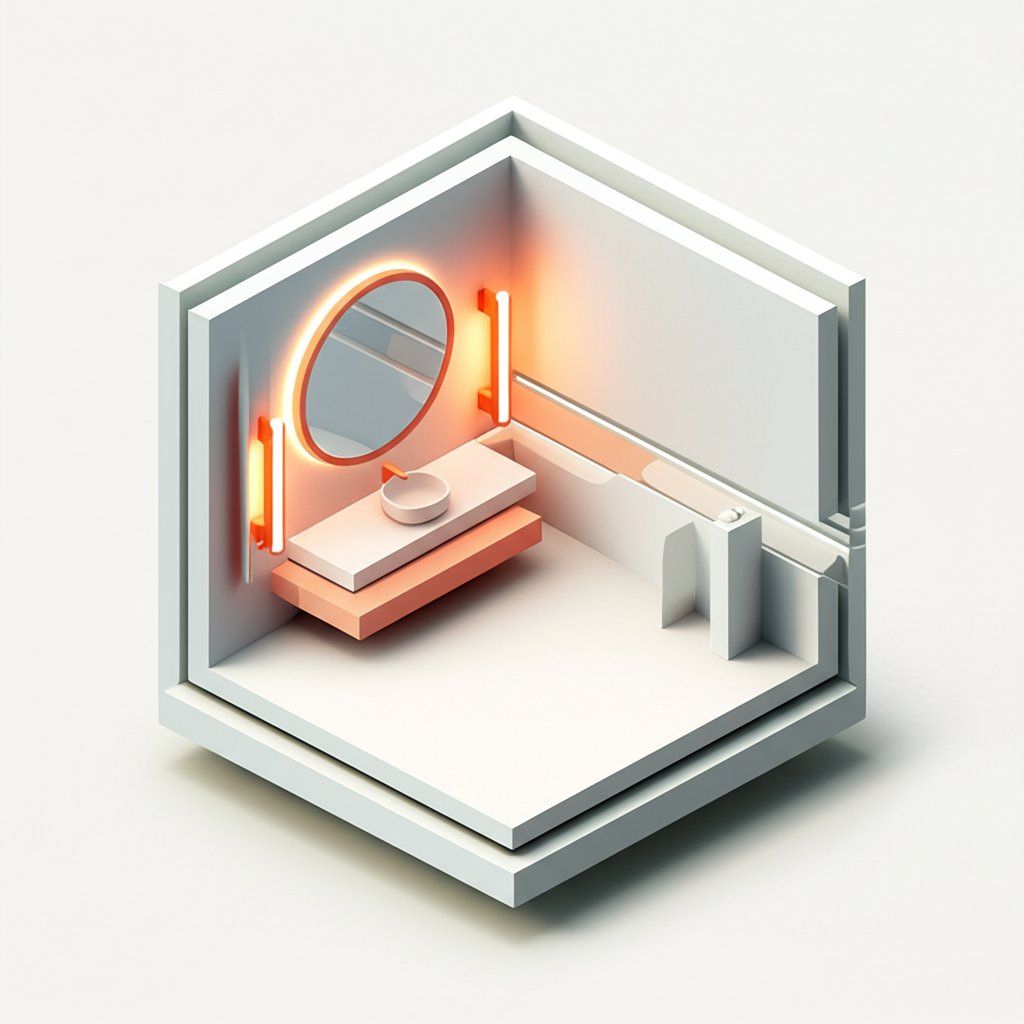
The devil is in the details. The material, the bulb, and the direction of light are just as important as the overall style of the sconce itself.
Material Matters: From Industrial Iron to Spanish Alabaster
The material of your sconce sets the tone. A set of two wall sconces in an industrial design, with clear glass cylinders and an exposed-screw iron base, communicates a rustic or modern-farmhouse vibe. It’s honest and utilitarian.
On the other end of the spectrum, a fixture crafted from imported Spanish Alabaster offers unparalleled luxury. The natural, translucent veining of the stone diffuses light into a soft, ethereal glow that no glass shade can replicate. Its natural heat and impact resistance also make it a durable, long-term investment.
The Right Light: Kelvin, Lumens, and Dimmers
Don’t just buy a fixture; buy the right light.
- Lumens (Brightness): For a vanity, you want around 700-800 lumens per sconce. This is bright enough for detailed tasks.
- Kelvin (Color Temperature): Look for bulbs in the 2700K to 3000K range. This provides a warm, soft white light that is flattering to skin tones. Anything higher (4000K+) can feel sterile and clinical, like an office.
- Dimmers (Control): A dimmer switch is non-negotiable in a bathroom. It allows you to have bright, energizing light in the morning and a soft, relaxing glow for a bath in the evening. Most quality sconces today, whether they use 60W candelabra bulbs or integrated LEDs, are compatible with dimmer switches.
Up, Down, or All Around? Understanding Light Direction
The direction your sconce casts light can dramatically change the room’s ambiance.
- Uplighting: Sconces with shades that open at the top cast light onto the ceiling, creating soft, ambient illumination. This is great for making a room feel larger and more open.
- Downlighting: Shades that open at the bottom focus light downward onto the vanity countertop. This is excellent for task lighting but can create shadows if it’s the only light source. Many 4-light vanity fixtures can be mounted either up or down for versatility.
- Diffused Light: Fixtures with frosted, linen, or alabaster shades scatter light in all directions. This is the best option for flattering facial lighting, as it minimizes sharp shadows. A modern LED sconce with a horizontal acrylic diffuser provides a similar, even wash of light.
Your Quick-Start Guide to Selecting and Installing
Feeling ready to make a change? Follow this simple, step-by-step process.
- Measure Your Space: Before browsing, measure your vanity width, desired mirror size, and mark the ideal sconce height (60-66 inches) on the wall. This grounds your search in reality.
- Define Your Style: Look at your faucet, cabinet hardware, and tile. Are they modern, traditional, industrial, or transitional? Choose a mirror and wall sconces that align with that established aesthetic.
- Choose Your Fixtures: With measurements and style in mind, select your mirror first, then find sconces that are proportionally correct (1/3 to 3/4 the mirror’s height).
- Select Your Bulbs: Don’t treat bulbs as an afterthought. Purchase dimmable LED bulbs around 2700K-3000K to ensure beautiful, functional light from day one.
- Plan the Installation: Are you comfortable with electrical work? Many sconce sets support hardwired connections, which provide a clean, professional look. However, some innovative designs also offer a plug-in option for easier installation. If you’re unsure, always hire a licensed electrician. Safety is paramount.
Common Questions About Mirror and Wall Sconces, Answered
How far apart should wall sconces be on either side of a mirror?
Aim for a distance of at least 28 inches between the sconces, but the ideal spacing is 36 to 40 inches apart. They should be mounted a few inches (typically 3-4) outside the left and right edges of your mirror frame to create a balanced visual and an effective cross-beam of light.
Can I use just one sconce next to a mirror?
While possible in a very small powder room with an off-center sink, it’s generally not recommended for a primary vanity. A single side-sconce will light one side of your face more than the other, creating uneven light and shadows. If space is tight, a narrow sconce on each side is almost always a better solution than a single, larger one.
Should sconces be longer or shorter than the mirror?
Sconces should always be proportionally smaller than the mirror. A good rule of thumb is for the sconce’s height to be no more than three-quarters of the mirror’s height, and ideally closer to one-third or one-half for a classic look. They should never be taller than the mirror itself, as this will throw off the entire visual balance of the vanity.
Do the sconce and faucet finishes have to match?
Not anymore. While matching finishes (e.g., polished chrome faucet with polished chrome sconces) is a safe and classic choice, modern design embraces mixing metals. The key is to be intentional. A popular combination is a matte black faucet with brushed brass or “champagne bronze” sconces. As long as the tones are complementary and the practice is repeated elsewhere in the room (like cabinet pulls), it looks sophisticated and curated.
Pairing mirror and wall sconces is your opportunity to define the entire mood of your bathroom. It’s a design choice that blends form and function in the most personal of spaces. By focusing on placement, proportion, and the quality of light, you move beyond simple illumination. You create an experience—a perfectly lit, beautifully balanced vanity that starts and ends your day on the right note.

- DIY Bathroom Mirror Frame Designs on a Budget - October 12, 2026
- Creative Bathroom Mirror Border Ideas for Every Style and Budget - October 11, 2026
- Bathroom Finishes That Handle Moisture and Look Great - October 10, 2026