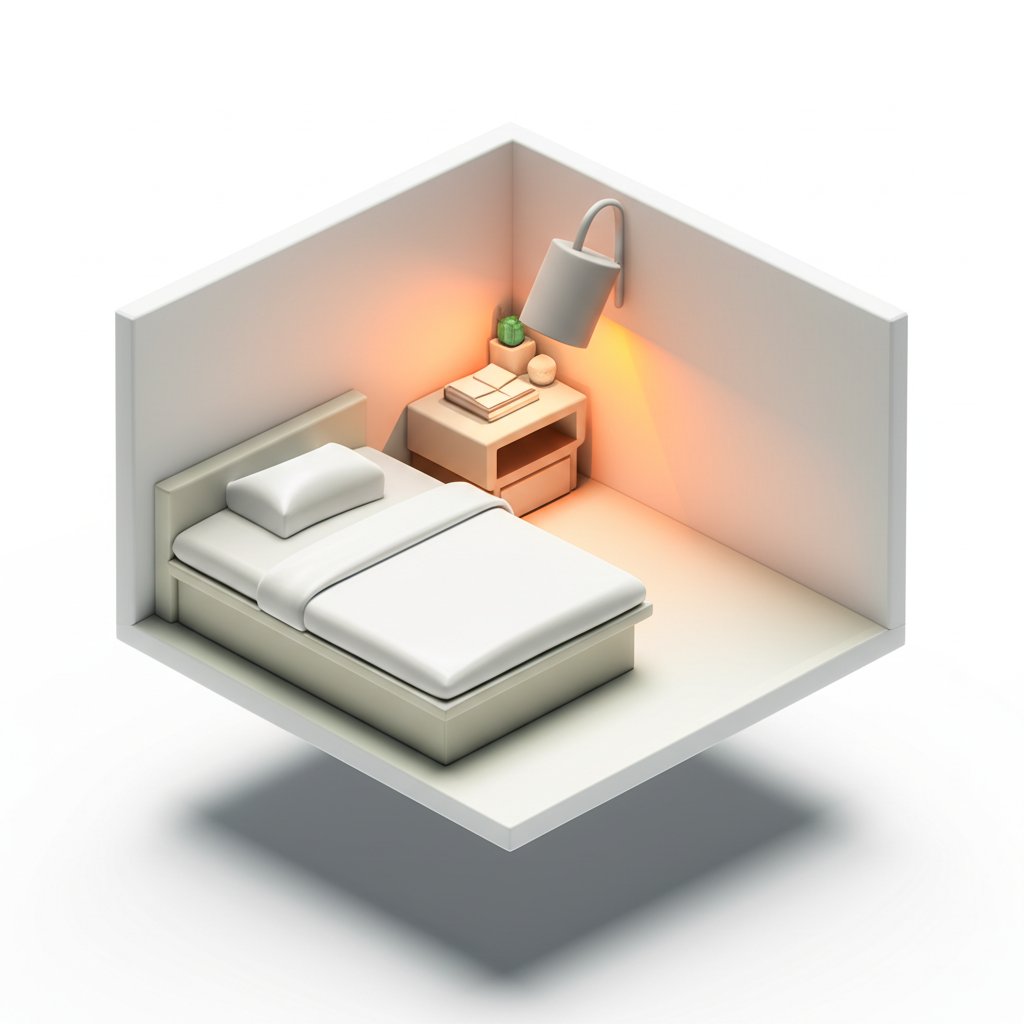
That cluttered nightstand is a familiar sight for many. A lamp, a book, a glass of water, and a phone all compete for precious real estate. The right wall sconces for bedroom lighting don’t just solve this problem—they elevate the entire room, swapping bulky lamps for a streamlined solution that layers light, creates a relaxing mood, and provides perfect, focused comfort for reading. They are the ultimate design multitaskers, acting as both jewelry for your walls and a highly practical light source.
But choosing the right ones can feel paralyzing. With endless styles and technical details, it’s easy to get lost. This guide cuts through the noise to focus on the practical decisions that lead to the perfect bedroom lighting setup.
At a Glance: Your Path to Perfect Bedroom Sconces
- Define the Job First: Decide if your sconce is for soft, ambient light or focused, task-oriented reading. This is the single most important decision.
- Choose Your Installation: Opt for a clean, permanent hardwired installation or the flexibility of a renter-friendly plug-in model.
- Master the Placement: Learn the simple rules for mounting sconces at the right height and distance from your bed for maximum comfort and style.
- Pick the Right Style: Match your sconce’s design—from swing-arm to shaded—to your specific needs and decor.
- Select the Perfect Bulb: Understand how color temperature and brightness (lumens) create either a cozy retreat or a crisp reading nook.
- Consider Control: Factor in dimmers and switch types to fine-tune your lighting for any activity, from winding down to finishing a chapter.
First, Define Your Sconce’s Job: Ambiance or Task?
Before you fall in love with a particular design, you need to be brutally honest about what you need your light to do. Is its primary role to cast a warm, general glow, or is it to illuminate the pages of your book without disturbing your partner? This choice will guide every other decision.
For General Ambiance and Layered Light
If your main goal is to create a soft, inviting atmosphere, look for sconces that diffuse light. These fixtures add depth to your room’s lighting scheme, eliminating harsh shadows from a single overhead fixture and making the space feel cozier and more sophisticated.
- What to Look For: Sconces with fabric shades, frosted or colored glass, or opaque metal shades that direct light up, down, or both. The goal is indirect light that washes the wall.
- Where They Shine: Placed on either side of a dresser, a piece of art, or a bedroom entryway, they create beautiful symmetry and a welcoming glow. They can also be used flanking a headboard if you’re not an avid nighttime reader.
- Case Snippet: In a bedroom with a dark accent wall, a pair of brass sconces with white linen drum shades were mounted on either side of the bed. They don’t provide sharp reading light, but they cast a gentle upward and downward glow that highlights the wall texture and makes the entire room feel like a serene sanctuary.
For Focused Bedside Reading
For those who love to read in bed, a task-oriented sconce is non-negotiable. These are designed to direct a controlled beam of light exactly where you need it, preventing eye strain and—crucially—keeping the light contained to your side of the bed.
- What to Look For: Articulating or swing-arm sconces are the top contenders here. Their adjustable arms allow you to pull the light closer when reading and push it away when you’re done. Gooseneck or small spotlight styles also provide excellent directional control.
- Where They Shine: Mounted on the wall just above and slightly to the outside of your pillow. This positioning allows the arm to extend over your shoulder, perfectly lighting your book.
- Case Snippet: A client who reads every night while their partner sleeps chose a pair of matte black, plug-in swing-arm sconces. Each has its own on/off switch on the backplate, giving them total independent control. The narrow metal shade focuses the light downward, creating a bright reading spot without any light spilling over to the other side of the bed.
Hardwired vs. Plug-In: The Great Installation Decision

Your next major decision point revolves around installation. Do you want the seamless, built-in look of a hardwired sconce, or do you prefer the ease and flexibility of a plug-in model?
The Clean Look of Hardwired Sconces
Hardwired sconces are connected directly to your home’s electrical wiring within the wall. This results in a clean, professional finish with no visible cords. They are typically controlled by a wall switch, which can be linked to both sconces for simultaneous operation.
- Pros: Absolutely no cords for a completely seamless look. Often controlled by a convenient wall switch. Adds a high-end, custom feel to the room.
- Cons: Requires professional installation by an electrician (unless you’re an experienced DIYer). The location is permanent, making furniture rearrangement more complicated.
- Best For: Homeowners, new builds, or major renovations where you can plan the electrical layout from the start.
The Ultimate Flexibility of Plug-In Sconces
Plug-in (or “pin-up”) wall sconces come with a cord that you simply plug into the nearest wall outlet. They are mounted to the wall with screws, making installation a simple DIY project that takes minutes.
- Pros: Extremely easy to install without an electrician. Perfect for renters who can’t alter the wiring. Can be easily moved if you redecorate.
- Cons: The visible cord can look messy if not managed. (Pro-tip: use a paintable cord cover that blends in with your wall color.)
- Best For: Renters, DIYers, or anyone who wants a low-commitment, high-impact lighting upgrade.
| Feature | Hardwired Sconces | Plug-In Sconces |
| :— | :— | :— |
| Installation | Requires electrician | DIY-friendly |
| Appearance | Seamless, no visible cords | Visible cord (can be hidden) |
| Control | Usually wall switch | On-fixture or in-line cord switch |
| Permanence | Fixed location | Easily moved |
| Best For | Homeowners, renovations | Renters, flexible layouts |
Once you’ve settled on the function and installation type, you can explore the full range of styles covered in our complete Bedroom sconce guide.
The Art of Placement: Where and How High to Mount Your Sconces
Improper placement is the most common mistake people make with wall sconces for bedroom installations. Too high, and the light feels disconnected. Too low, and you might bump your head or have an awkward glare. The rules are simple and make all the difference.
For Reading Sconces Beside the Bed
The goal here is comfort and function. The light should illuminate your book without shining directly in your eyes.
- Sit Up in Bed: Get into your normal reading position, propped up against your pillows.
- Measure Your Shoulder Height: Have someone measure the distance from the floor to the top of your shoulder. This is your baseline height.
- Mount Accordingly: The bottom of the sconce shade should be positioned at or just above this shoulder-height measurement. For most people, this lands between 55 and 60 inches from the floor.
- Consider Spacing: Mount the sconces a few inches wider than your headboard. For a queen bed (60″ wide), placing the center of each sconce backplate around 3-6 inches from the edge of the headboard is a good starting point.
A Note on Headboard Height and Mattress Depth
Don’t just rely on standard numbers. A tall, upholstered headboard or an extra-plush pillow-top mattress will change your seated height. Always measure from your actual, in-bed reading position to get it right. Before you drill, use painter’s tape to mark the proposed location on the wall. Sit in bed and pretend to use the light to see if the position feels natural.
For Sconces Flanking a Mirror or Dresser
When using sconces for ambient light around other furniture, the rules change. Here, the goal is to cast an even, flattering light.
- Height: Mount them at or just above eye level, which is typically 60 to 66 inches from the floor. This prevents unflattering shadows on your face when looking in the mirror.
- Spacing: Place them a few inches to the side of the mirror or art frame, ensuring they are evenly spaced.
Practical Playbook: Choosing Style, Bulbs, and Controls

With the technical decisions made, you can focus on the details that bring your vision to life.
Matching Sconces to Your Bedroom Decor
Your sconces should feel like a natural extension of your room’s style.
- Modern & Minimalist: Look for sleek metallic finishes like matte black, brushed nickel, or warm brass. Simple geometric shapes, bare bulbs, or clean-lined articulating arms work beautifully.
- Farmhouse & Rustic: Embrace materials like wrought iron, distressed wood, or galvanized metal. Gooseneck “barn light” styles or sconces with wire cages fit perfectly.
- Transitional & Classic: A fabric shade (drum, square, or tapered) on a classic metal base is timeless. Finishes like polished nickel or aged brass bridge the gap between traditional and contemporary.
- Bohemian & Eclectic: Don’t be afraid of texture. Sconces made of rattan, woven materials, or colored glass add a layer of personality and warmth.
The Bulb Makes the Mood: Lumens and Color Temperature
The lightbulb you choose is just as important as the fixture itself.
- Color Temperature (Kelvins): For a bedroom, you want a warm, relaxing atmosphere. Look for bulbs in the 2700K to 3000K range. This is often labeled “Warm White” or “Soft White.” Anything higher (4000K+) will feel cool and clinical, which is disruptive to sleep cycles.
- Brightness (Lumens): For an ambient sconce, 200-300 lumens is plenty. For a dedicated reading sconce, aim a bit higher, around 300-500 lumens, to ensure you have enough focused light to prevent eye strain.
- Dimmers Are Your Best Friend: Always install your sconces on a dimmer switch if possible. This gives you ultimate control, allowing you to have bright light for reading and a very soft, low glow for winding down. Many plug-in models now come with dimmers built into the cord switch.
Quick Answers to Common Sconce Questions
Q: Can wall sconces be the only light source in a bedroom?
No, it’s not recommended. Wall sconces are a form of “layered lighting.” You should still have a primary ambient light source, like a flush-mount ceiling fixture or recessed lights, for general illumination when cleaning or getting dressed. Sconces add the essential task and accent layers.
Q: Do bedside sconces have to be a matching pair?
Not at all. While a symmetrical, matching pair is a classic look, an asymmetrical arrangement can be very chic and practical. You could have a swing-arm sconce on one side for a reader and a softer, shaded sconce on the other for someone who prefers ambient light. Just ensure the finishes or general styles are cohesive.
Q: How do I hide the cord on a plug-in sconce?
The easiest solution is a paintable plastic cord cover. These are adhesive channels that stick to your wall, hiding the cord inside. You can then paint the cover the same color as your wall, making it nearly invisible.
Q: Are LED sconces a good choice for the bedroom?
Absolutely. Modern integrated LED sconces are an excellent choice. They are incredibly energy-efficient and can last for tens of thousands of hours, meaning you’ll likely never have to change a bulb. Just be sure to check that the model you choose has a warm color temperature (2700K-3000K) and is dimmable.
Your Sconce Selection Checklist
Feeling ready to make a choice? Use this simple checklist to walk through the process and land on the perfect wall sconces for your bedroom.
- Define the Primary Use: Is it for reading or for ambiance? This will determine if you need an adjustable, task-oriented sconce (like a swing-arm) or a diffuse, ambient one (like a shaded fixture).
- Decide on Installation: Do you need the DIY ease of a plug-in, or are you able to commit to the seamless look of a hardwired fixture?
- Measure for Placement: Sit in your bed and determine your ideal mounting height (usually 55-60″ from the floor). Use painter’s tape to mark the spot before you buy or drill.
- Select a Style and Finish: Choose a design that complements your existing decor and hardware. Look at your drawer pulls, curtain rods, and other light fixtures for clues.
- Choose the Right Bulb and Control: Commit to a warm white bulb (2700K) and install a dimmer. This final step is the key to creating a truly versatile and relaxing bedroom lighting scheme.
By thoughtfully considering these elements, you can select and install bedroom wall sconces that not only save precious space but also add a layer of custom-designed comfort and style to your most personal space.

- DIY Bathroom Mirror Frame Designs on a Budget - October 12, 2026
- Creative Bathroom Mirror Border Ideas for Every Style and Budget - October 11, 2026
- Bathroom Finishes That Handle Moisture and Look Great - October 10, 2026