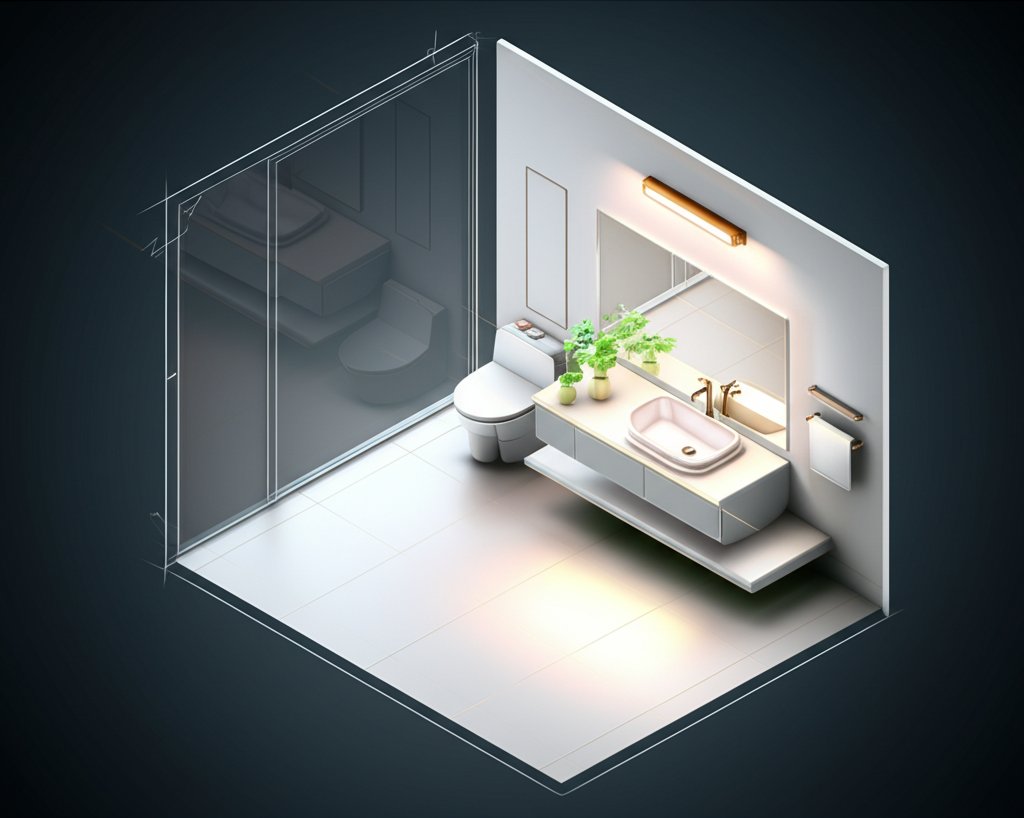
Let’s be honest: that moment in the mirror when you realize you’re working in your own shadow is beyond frustrating. Whether you’re trying to nail a perfect winged eyeliner, get a clean shave, or just see if that’s a new freckle, bad lighting is the enemy. Finding the best vanity lighting in bathroom spaces isn’t just about picking a fixture that looks good; it’s about reclaiming your routine with clear, flattering, and functional light.
This isn’t just another home decor choice—it’s a daily quality-of-life upgrade. Forget the harsh, buzzing overhead light that casts unflattering shadows. We’re going to walk through how to choose lighting that makes you look and feel great, turning a utilitarian space into a personal sanctuary.
At a Glance: Your Bathroom Lighting Cheat Sheet
In a hurry? Here are the key takeaways for getting your vanity lighting right:
- Placement is paramount. Where you put the lights matters more than how expensive they are. The goal is even, shadow-free light on your face.
- Side lighting is your best friend. Two sconces mounted on either side of the mirror at roughly eye level is the gold standard for flattering light.
- Aim for a “warm white” glow. Look for a color temperature around 3,000 Kelvin (K). It’s bright and clean without feeling sterile or overly yellow.
- Demand color accuracy. A Color Rendering Index (CRI) of 90 or higher ensures makeup shades and skin tones look true to life.
- Safety first. Any fixture in a bathroom must have a “damp” or “wet” rating to handle humidity safely.
Why Your Vanity Light Deserves More Thought
In the world of interior design, lighting is often called the “jewelry” of a room. But in the bathroom, it’s also the most important tool. Professionals think about bathroom lighting in layers, and your vanity fixture is the most critical one: task lighting.
- Ambient Lighting: This is the general, overall light in the room, often from a central ceiling fixture or recessed cans. It fills the space but isn’t great for detail work.
- Task Lighting: This is your vanity light. Its job is specific: to illuminate your face clearly and evenly for grooming tasks.
- Accent Lighting: This is the optional, “moody” layer, like a small light highlighting artwork or a waterproof can light in a shower.
The problem is, many bathrooms rely solely on a single overhead light to do everything. This is what creates those dreaded “raccoon eyes”—dark shadows under your eyes, nose, and chin. By focusing on dedicated vanity lighting, you eliminate those shadows and create a functional, beautiful focal point.
The Five Main Types of Vanity Lighting
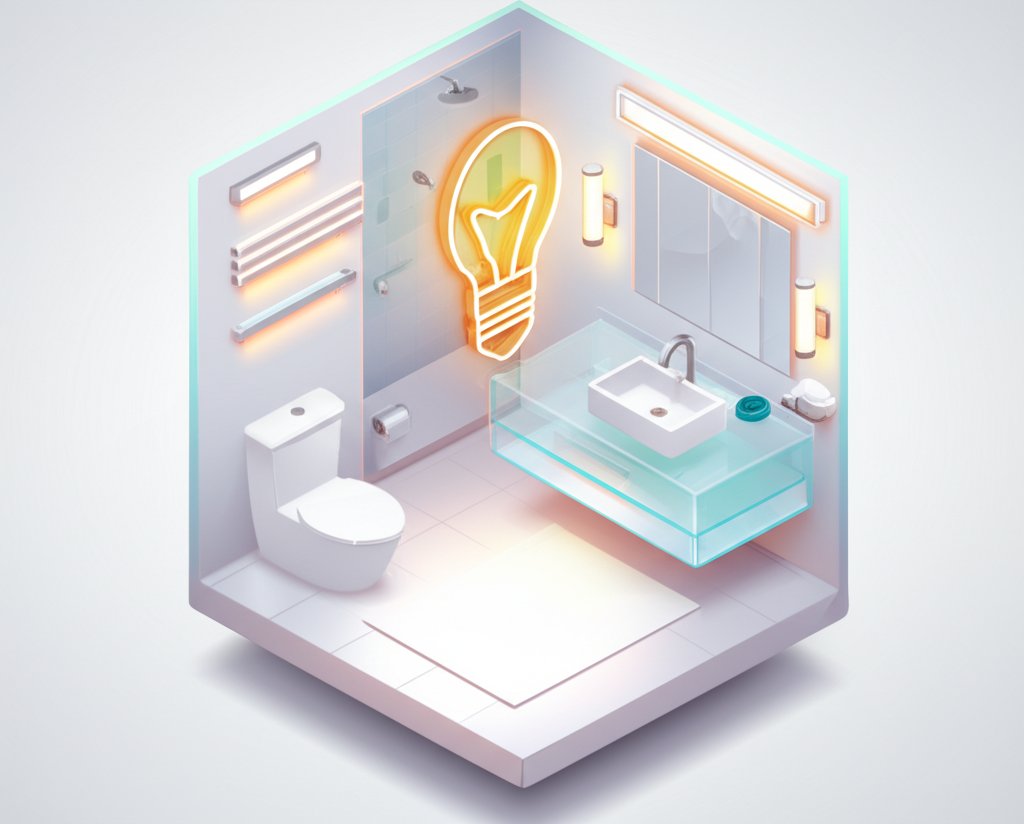
Choosing the right type of fixture is your first big decision. Each has its own strengths and is best suited for different layouts and styles.
Wall Sconces: The Gold Standard for Flattering Light
When designers talk about perfect vanity lighting, they almost always start with sconces. Placed on either side of the mirror, they cast an even wash of light across your face from left and right, effectively canceling out shadows.
- Best For: Creating the most flattering, shadowless light. Ideal for anyone serious about makeup application or shaving.
- Placement Pro-Tip: Mount them so the center of the light source is roughly at eye level, typically 57 to 65 inches from the floor. Keep them about 30-36 inches apart to frame your face.
- Keep in Mind: This setup requires adequate wall space on both sides of your mirror. It’s not always possible with extra-wide mirrors or tight corners.
Bath Bars: The Efficient, All-in-One Solution
A bath bar is a long, linear fixture, often with multiple bulbs, that is mounted horizontally above the mirror. It’s a classic, space-efficient choice that provides broad, even illumination from a single electrical junction box.
- Best For: Bathrooms with wide mirrors or limited wall space on the sides. Great for double vanities where one long bar can cover both sinks.
- Placement Pro-Tip: To avoid casting strong downward shadows, mount the bar just a few inches above the mirror frame, around 75-80 inches from the floor. The fixture’s width should be about 75% of the mirror’s width for a balanced look.
- Keep in Mind: While excellent, a single top-mounted light can still create some subtle shadowing under the chin. Look for bars with frosted glass or shades that diffuse the light well.
Pendant Lights: The Statement-Makers
Hanging one or two pendants in place of sconces adds a dramatic, decorative touch. They bring a dose of personality and are perfect for bathrooms with tall ceilings, allowing you to turn a functional area into a design moment.
- Best For: Adding a unique, high-design element. Works well in modern, farmhouse, or glam aesthetics.
- Placement Pro-Tip: The bottom of the pendant should hang just above your line of sight, ensuring the light source itself isn’t glaring into your eyes. Make sure they don’t obstruct the view or swing in the way of opening a medicine cabinet.
- Keep in Mind: Pendants create pools of downward light. If not diffused properly, they can be less flattering than sconces. Choose pendants with shaded or frosted bulbs to soften the glow.
Integrated Mirror Lights: The Sleek, Modern Choice
For a minimalist, high-tech look, nothing beats a mirror with built-in LED lighting. The light emanates directly from the mirror itself, often from a frosted strip around the perimeter or along the sides.
- Best For: Contemporary, minimalist, and small bathrooms where saving space is key.
- What to Look For: Many models come with bonus features like anti-fog heaters, built-in clocks, and adjustable color temperature, letting you switch from a bright morning light to a warm evening glow.
- Keep in Mind: The entire unit needs to be replaced if the LEDs fail (though they have a very long lifespan). The quality of the light can vary, so check the specs for CRI and Kelvin before buying.
Recessed Lighting: A Supporting Player, Not the Star
Recessed lights, or “can lights,” are installed flush with the ceiling. While they are fantastic for general ambient light, they are a poor choice for your primary vanity lighting when used alone.
- Why It’s a Mistake: Placing recessed lights directly over the vanity sink points a harsh spotlight straight down onto your head. This is the number one cause of deep, unflattering shadows on the face.
- How to Use It Correctly: Use recessed lighting to fill the rest of the bathroom, but pair it with wall-mounted sconces or a bath bar at the vanity to provide the necessary frontal illumination.
Decoding the Specs: Four Factors That Actually Matter
Once you’ve picked a style, it’s time to look at the numbers. Don’t be intimidated by the technical jargon on the box; these four details are all you really need to know to make a smart choice.
1. Size and Placement: The Rules of Flawless Illumination
Getting the scale and position right is non-negotiable. A beautiful fixture in the wrong spot won’t do its job.
| Fixture Type | Ideal Placement | Key Measurement |
|---|---|---|
| Side Sconces | Flanking the mirror | Center of light at eye level (approx. 57-65″ from floor). |
| Over-Mirror Bar | Centered above the mirror | About 75-80″ from floor; fixture width ~75% of mirror width. |
| Double Vanity | Use two separate lights over each mirror, or flank the entire setup with three sconces. | Maintain symmetry and consistent height across both sinks. |
2. Light Direction: Up, Down, or All Around?
The direction the light is cast dramatically changes its effect.
- Downward Lighting: Shines the light directly down onto the countertop and sink. This is excellent for task-focused activities like shaving or tweezing, providing bright, direct illumination.
- Upward Lighting: Bounces light off the ceiling, creating a soft, ambient, and natural-feeling glow. It’s less direct but can make a room feel larger and more serene.
- Diffused Lighting: Fixtures with glass or fabric shades that glow in all directions provide a mix of both. They are often the most versatile and flattering choice, softening shadows without sacrificing brightness.
3. Light Quality: Your Secret Weapon for Looking Great
This is where the magic happens. Two specs—Kelvin and CRI—determine how the light will actually look and feel.
Color Temperature (Kelvin)
Measured in Kelvin (K), this tells you if the light is warm (yellowish) or cool (bluish). For a bathroom vanity, you want the Goldilocks zone.
- 2,700K: Very warm and cozy, like a traditional incandescent bulb. Can be a bit too yellow for tasks like makeup application.
- 3,000K: The sweet spot. It’s a soft, warm white that’s bright, clean, and inviting. It mimics natural morning light and is flattering for all skin tones.
- 4,000K+: Cool white or daylight. This light can feel clinical and harsh in a residential setting, washing out skin tones and making your bathroom feel like an office.
Bottom Line: Stick to fixtures around 3,000K for the best balance of function and ambiance.
Color Rendering Index (CRI)
CRI is a scale from 0 to 100 that measures how accurately a light source reveals the true colors of objects. Natural sunlight has a CRI of 100. For a space where you’re matching foundation or picking out a tie, high CRI is crucial.
Think of it this way: A low-CRI light can make a red apple look dull and brownish. A high-CRI light shows its true, vibrant color. The same thing happens to your skin and makeup.
Look for a fixture with a CRI of 90 or higher. This ensures what you see in the mirror is what you’ll see outside in the real world.
4. Technical Must-Haves: Safety and Smarts
Finally, check a few practical specs to ensure your light is safe, efficient, and convenient.
- Damp or Wet Rating: This is a safety requirement from the Underwriters Laboratories (UL). Because bathrooms are high-humidity environments, any light fixture used must be UL-listed for damp locations. If it’s going inside a shower, it needs a wet location rating. Never install a “dry location” fixture in a bathroom.
- Dimmer Compatibility: Being able to dim your vanity lights is a game-changer. It allows you to have bright, functional light when you’re getting ready and a soft, relaxing glow for a nighttime bath. Check if the fixture and the bulbs (if separate) are “dimmable.”
- LED vs. Bulbs: Most modern fixtures use integrated LEDs, which are incredibly energy-efficient and can last for 50,000 hours or more. The downside? You can’t replace the “bulb”; you have to replace the whole fixture when it eventually dies. Traditional fixtures with replaceable bulbs offer more flexibility to change brightness or color temperature down the road.
Common Vanity Lighting Questions, Answered
Still have questions? You’re not alone. Here are crisp answers to some of the most common queries.
How many lumens do I need for a bathroom vanity?
For task lighting at a vanity, a good target is 700-800 lumens per sink area. Lumens measure brightness. For context, a standard 60-watt incandescent bulb is about 800 lumens. If you have side sconces, two 400-lumen bulbs would work perfectly.
Can I mix and match metal finishes in the bathroom?
Absolutely! Gone are the days of everything having to be a perfect match. Mixing a black vanity light with brushed nickel faucets can create a sophisticated, layered look. The key is to be intentional. A good rule of thumb is to stick to two, or at most three, metal finishes in one space.
What’s the single biggest mistake people make with vanity lighting?
The “Hollywood” or “interrogation room” effect. This is caused by a single, bare-bulb fixture placed directly over the mirror. It’s the fastest way to create harsh, unflattering shadows. The solution is always to provide light from the sides or use a well-diffused light bar from above.
Putting It All Together: Your Path to Perfect Lighting
Choosing the right vanity light doesn’t have to be overwhelming. By breaking it down into a few simple steps, you can confidently select a fixture that is both beautiful and perfectly functional.
- Measure Twice, Buy Once. Before you even start shopping, measure your mirror, your vanity, and the wall space around them. Know your constraints. This will immediately narrow down whether you should be looking for sconces, a bath bar, or pendants.
- Define Your Style. Look at your faucets, tile, and cabinet hardware. Are you going for a modern, traditional, industrial, or farmhouse look? Let your existing decor guide the style of the fixture you choose.
- Vet the Vitals. Now, filter your options by the technical specs that matter. Lock in your search for fixtures with a 3,000K color temperature, a CRI of 90+, and a UL Damp Location rating. Make sure it’s dimmer-compatible if you want that flexibility.
- Find Your Fixture. With your plan in place, you can confidently browse different options. Now is the time to explore some of the Top Bathroom Vanity Lighting available to see these principles in action and find a fixture that speaks to you.
Ultimately, the best vanity light is one you don’t even think about. It just works, seamlessly providing clear, comfortable light that helps you start and end your day feeling your best.

- DIY Bathroom Mirror Frame Designs on a Budget - October 12, 2026
- Creative Bathroom Mirror Border Ideas for Every Style and Budget - October 11, 2026
- Bathroom Finishes That Handle Moisture and Look Great - October 10, 2026