That shadowy corner by the pantry, the glare over the sink, the perpetual gloom that makes your beautiful countertops look dull—a poorly lit kitchen is more than an inconvenience; it’s a daily frustration. If you’re tired of fighting with bad lighting, you’ve probably realized that finding the best recessed lighting for kitchen spaces is the single most effective upgrade you can make. It’s the secret to a kitchen that’s not just functional, but truly inviting.
Recessed lights, often called can lights or pot lights, offer a clean, modern aesthetic while delivering powerful, targeted illumination exactly where you need it. But navigating the world of lumens, Kelvin temperatures, and canless fixtures can feel like a chore in itself.
That’s where we come in. We’ve done the research, deciphered the specs, and sorted through the options to create a clear, no-nonsense guide. This is everything you need to know to plan and purchase the perfect lighting system for your kitchen.
At a Glance: Your Kitchen Lighting Cheat Sheet
Short on time? Here are the key takeaways for creating a brilliantly lit kitchen:
- Brightness is Key: Aim for 50-75 lumens per square foot. For a standard 120-square-foot kitchen, that’s 6,000 to 9,000 total lumens.
- Color Matters: Choose a color temperature of 3000K (warm white) for an inviting feel or 4000K (neutral white) for crisp, true-to-life task lighting. Selectable color temperature fixtures offer the best of both worlds.
- Spacing is Strategic: A good rule of thumb is to space your lights half the distance of your ceiling height. For a 9-foot ceiling, place lights 4.5 feet apart.
- Beat the Shadows: Position lights 14 to 16 inches from your upper cabinets to light up your countertops without casting a shadow from your own body.
- Always Go Dimmable: Dimmers are non-negotiable in a kitchen. They allow you to go from bright task lighting for meal prep to a soft glow for a late-night snack.
- Modern is Easier: Canless LED fixtures are simpler to install, require less ceiling clearance, and are incredibly energy-efficient.
The Recessed Lighting Playbook: What Really Matters
Before you start adding products to your cart, let’s quickly break down the core concepts. Getting these right is the difference between a good kitchen and a great one.
How Much Brightness (Lumens) Do You Need?
Lumens measure a light’s brightness. Forget watts—with energy-efficient LEDs, lumens are the number you need to focus on.
- The Pro Formula: For task-heavy areas like kitchens, lighting designers recommend 50-75 lumens per square foot.
- In Practice: To calculate your needs, just multiply your kitchen’s square footage by 50. For a 10-foot by 12-foot kitchen (120 sq. ft.), you’d need at least 6,000 total lumens (120 x 50).
A typical 6-inch recessed LED fixture provides around 1000-1200 lumens. For our 120 sq. ft. kitchen, this means 5 or 6 well-placed fixtures would provide excellent, even coverage.
What’s the Right Color Temperature (Kelvin)?
Color temperature, measured in Kelvin (K), defines the color of the light, from a warm, candle-like glow to a cool, bluish daylight. This is a critical choice for setting your kitchen’s mood.
- 3000K (Warm White): This is the sweet spot for many homeowners. It’s bright and clean enough for cooking but has a warm, inviting quality that’s perfect for kitchens that double as social hubs.
- 4000K (Neutral White): This light is crisp, bright, and renders colors more accurately. It’s fantastic for serious cooks who want a professional-feeling workspace where they can easily distinguish between herbs and spices.
- 5000K (Daylight White): This temperature mimics bright daylight. While excellent for task clarity, some find it can feel clinical or harsh, especially in the evening.
The Fail-Safe Solution: Get fixtures with selectable color temperature. A small switch on the fixture or its junction box lets you choose between 3-5 different color temperatures before you finalize the installation. You can test which look you prefer in your own space.
Strategic Spacing and Placement
Where you put the lights is just as important as which lights you buy. The goal is to create overlapping pools of light for even, shadow-free illumination.
- General Spacing: A simple formula is to divide your ceiling height by two. For an 8-foot ceiling, space lights about 4 feet apart. For a 9-foot ceiling, aim for 4.5 feet apart.
- Countertop Task Lighting: This is the most important placement. Position the center of the fixtures 14-16 inches from the wall where your upper cabinets are mounted. This illuminates the front edge of your countertops, right where you work, and prevents your body from casting a shadow over your cutting board.
- Pathways and Center: Fill in the rest of the ceiling grid based on your general spacing rule to illuminate walkways and the center of the room.
Can vs. Canless: Why Modern LEDs are Winning
Traditionally, recessed lighting required a bulky metal housing (a “can”) to be installed in the ceiling first. Today, the game has changed.
Canless (or “Wafer”) LED lights are ultra-thin fixtures with an integrated junction box. They mount directly to the drywall with spring-loaded clips.
Why go canless?
- Easier Installation: They are much simpler and faster to install, making them a favorite for DIYers and pros alike.
- Less Space Needed: Requiring as little as 2 inches of ceiling clearance, they’re perfect for ceilings with tight joist spaces or obstructions.
- Air-Tight by Design: They create a natural air seal, improving your home’s energy efficiency.
Safety Ratings: Look for IC, UL, or ETL
Don’t overlook the fine print. These certifications are your assurance of safety and quality.
- IC-Rated: This means the fixture is rated for “Insulation Contact.” It’s a crucial safety feature that ensures the light can be safely buried in ceiling insulation without creating a fire hazard.
- UL/ETL Listed: These are independent certifications verifying that the product has met rigorous North American safety standards for electrical products.
Our Top Picks for the Best Kitchen Recessed Lighting
We analyzed the market’s top-rated options, focusing on performance, reliability, and features that matter in a kitchen.
Best Overall: Ensenior 6-inch LED Recessed Light
The Ensenior 6-inch fixture hits every mark for a modern kitchen renovation. It’s incredibly bright at 1200 lumens, ensuring your countertops are well-lit for any task. The five selectable color temperatures (2700K, 3000K, 3500K, 4000K, 5000K) give you complete control over the ambiance, though you do need to set it on the junction box before installation.
Its smooth dimming capability, down to 5%, is a standout feature, allowing you to fine-tune the brightness without any flicker or buzz. As a canless, IC-rated fixture, it’s safe, easy to install, and requires just 2 inches of ceiling clearance.
- Lumens: 1200
- Color Temperature: 5-Color Selectable
- Type: Canless
- Key Feature: Excellent brightness and smooth dimming.
Best Budget Pick: Amico 6-inch Ultra-Thin LED Light
For homeowners looking for great performance without a premium price tag, the Amico Ultra-Thin LED is a fantastic choice. It delivers a solid 1050 lumens while using only 12 watts of power. Like our top pick, it’s a canless, IC-rated design with five selectable color temperatures.
ETL certification ensures its safety, and its ultra-thin profile fits in nearly any ceiling. While the dimming might not be quite as flawlessly smooth as premium models at the very lowest levels, its overall value is unbeatable for a full kitchen overhaul on a budget.
- Lumens: 1050
- Color Temperature: 5-Color Selectable
- Type: Canless
- Key Feature: Exceptional value with high-end features.
Best for Late-Night Ambiance: Sunco 6-inch LED with Night Mode
Sunco’s fixture offers all the standard features you want—selectable color temperature, a glare-reducing baffle trim, and smooth dimming. But it has a clever trick up its sleeve: a 2000K amber night light mode.
By simply flipping your existing wall switch off and on again, the light shifts from its primary color to a soft, gentle amber glow. It’s the perfect amount of light for grabbing a glass of water at midnight without blinding yourself. It’s a thoughtful feature that adds a touch of luxury to your daily routine, and there are plenty more innovative Kitchen pot light ideas available to explore.
- Lumens: 1050 (standard mode)
- Color Temperature: 5-Color Selectable + 2000K Night Mode
- Type: Canless
- Key Feature: Built-in amber night light mode.
Best Smart Lighting: Cloudy Bay Smart Wi-Fi LED
If you want to control your lights with your voice or phone, the Cloudy Bay Smart Wi-Fi fixture is the way to go. It connects directly to your Wi-Fi network (no hub required) and works seamlessly with Amazon Alexa and Google Home.
The companion app unlocks a world of possibilities: choose from 16 million colors, schedule lights to turn on or off, and even sync them to music for a party. While you may not need a purple kitchen every day, the ability to fine-tune the exact shade and brightness of white light from your phone is a powerful feature for tech-savvy homeowners.
- Lumens: 1100
- Color Temperature: RGB + Tunable White (2700K-6500K)
- Type: Canless
- Key Feature: Full smart home integration and color-changing abilities.
Best Retrofit for Existing Cans: Feit Electric 6-inch Smart Downlight
Have old recessed cans you want to upgrade? The Feit Electric Smart Downlight is a brilliant retrofit solution. It screws into your existing light socket like a bulb and fits snugly into 5- or 6-inch housings.
It connects directly to Wi-Fi, offering smart control over dimming and color temperature through its app or voice assistants. It’s an incredibly easy way to bring smart, energy-efficient lighting to your kitchen without needing an electrician to replace the housings.
- Lumens: 800 (75W equivalent)
- Color Temperature: RGB + Tunable White
- Type: Retrofit Downlight
- Key Feature: Easiest way to make existing can lights smart.
A Quick Guide to Recessed Lighting Trim
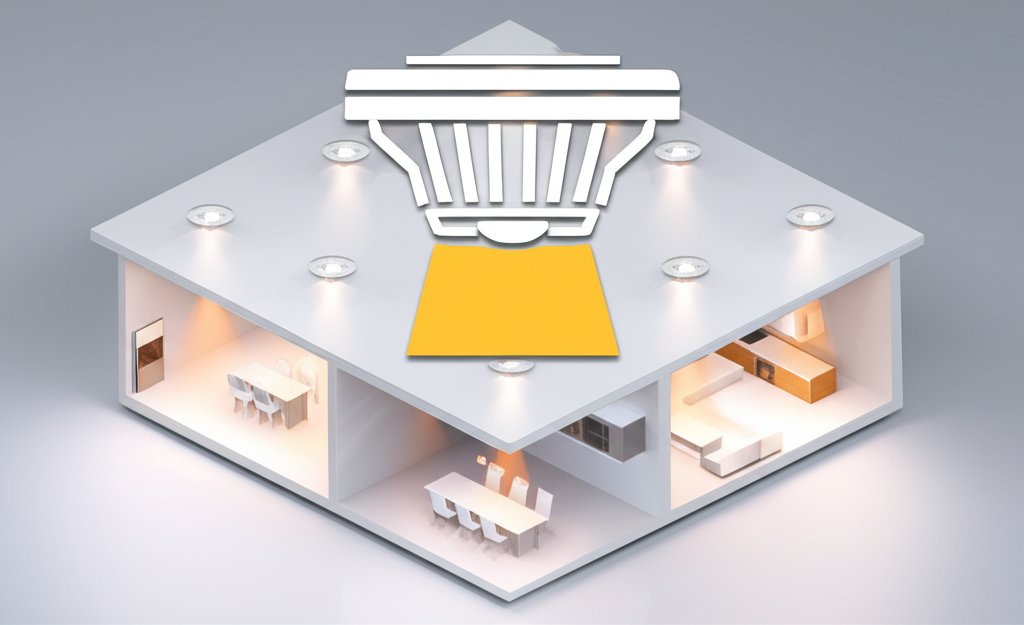
The trim is the visible part of the light that sits flush with your ceiling. While many modern canless fixtures have a simple, flat trim, it’s good to know the options, especially if you’re retrofitting.
- Baffle Trim: Features interior ribbing to absorb excess light and reduce glare. This is the most common and a great all-around choice.
- Reflector Trim: Has a smooth, mirror-like interior to maximize light output. Ideal for high ceilings or areas where you need every last lumen.
- Eyeball Trim (or Gimbal Trim): Allows you to pivot and direct the light toward a specific feature, like a piece of art or a workspace.
- Wall Wash Trim: Includes a shield on one side to cast a broad, even sheet of light down a nearby wall, making a room feel larger.
Your Kitchen Lighting Questions, Answered
Let’s tackle some of the most common questions that come up during a kitchen lighting project.
How many recessed lights do I need in my kitchen?
A good rule of thumb is to plan for one 6-inch recessed light for every 20-25 square feet of kitchen space. This ensures ample, overlapping coverage and prevents dark spots. Always lay out your plan on paper first to visualize the spacing.
What size recessed lights are best for a kitchen?
- 6-inch lights are the most popular choice for general kitchen illumination. They provide a wide beam of light and are cost-effective.
- 4-inch lights offer a more modern, refined look. They work well for general lighting if spaced a bit closer together (e.g., 3-4 feet apart). They are also excellent for focused task lighting over an island or sink.
Can I install recessed lighting myself?
If you have experience with basic home electrical work—like changing an outlet or a light fixture—installing canless LED lights is a very manageable DIY project. The process typically involves cutting a hole in the drywall, connecting the wires in the junction box, and snapping the fixture into place.
However, if you’re not 100% confident, or if your project involves running new wiring or adding a new circuit, hiring a licensed electrician is always the safest bet. Professional installation can cost anywhere from $200 to $500 per fixture, depending on the complexity of the job.
How much energy will I actually save?
The savings are significant. A modern 12-watt LED recessed light produces the same brightness as an old 110-watt halogen bulb. That’s nearly 90% less energy consumption per light. With lifespans of 25,000 to 50,000 hours, you won’t be changing bulbs for decades. One homeowner cited a utility bill reduction of over $50 per month after upgrading their home to LEDs, making it a wise investment among the many Top Recessed LED Fixtures available.
Your Blueprint for a Brighter Kitchen
Choosing the right recessed lighting isn’t just about illuminating a room; it’s about transforming the heart of your home. By focusing on the fundamentals—lumens, color temperature, and strategic placement—you can design a lighting plan that is both beautifully effective and deeply personal.
Start by measuring your space and calculating your lumen needs. Decide on the mood you want to create to pick your ideal Kelvin range (or better yet, choose a selectable fixture). Sketch out a placement grid that prioritizes your task areas first.
Whether you opt for a simple, budget-friendly setup or a full-featured smart system, the result will be a kitchen that feels more spacious, more functional, and infinitely more welcoming. You’ll wonder how you ever cooked without it.

- DIY Bathroom Mirror Frame Designs on a Budget - October 12, 2026
- Creative Bathroom Mirror Border Ideas for Every Style and Budget - October 11, 2026
- Bathroom Finishes That Handle Moisture and Look Great - October 10, 2026