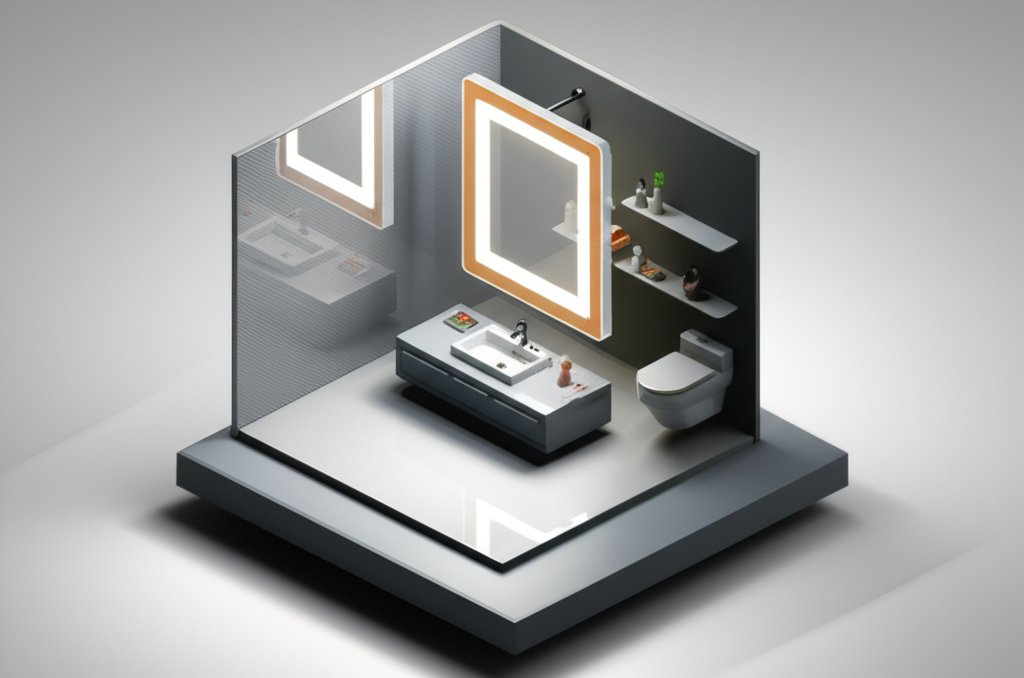
The wrong lighting can turn your morning routine into a frustrating chore. Shadows create blotchy makeup applications, and dim, yellow light makes it nearly impossible to get a clean shave. The solution is often found in dedicated led lights for bathroom mirror installations, which offer a clarity and consistency that older technologies simply can’t match. They transform a purely functional space into one that is efficient, flattering, and even relaxing.
This isn’t just about brightness; it’s about the quality of the light. Modern LEDs provide the truest color rendering, last for years without a single flicker, and consume a fraction of the energy. Getting it right means no more second-guessing if your foundation matches or if you missed a spot.
At a Glance: Your LED Lighting Upgrade
- Why LEDs Reign Supreme: Understand the non-negotiable benefits of LED technology, including energy efficiency, longevity, and superior light quality.
- Decode the Numbers: Learn what lumens, Kelvin, and CRI mean for your reflection and how to choose the right specs for your needs.
- Integrated vs. Bulb-Based: Decide between a sleek, all-in-one fixture and a traditional one where you can replace the bulbs.
- Sizing and Placement Rules: Get simple, actionable rules for selecting a fixture that’s proportional to your mirror.
- Essential Features: Discover the value of dimmers, adjustable color temperature, and proper moisture ratings for a bathroom environment.
Why Your Bathroom Demands LED Technology
For years, incandescent and fluorescent bulbs were the only options. Today, LED (Light Emitting Diode) technology has become the undisputed standard for task lighting, especially in the bathroom. The reasons are practical and profound.
While the overall strategy for choosing Vanity Lights Over Medicine Cabinet covers placement and style, focusing specifically on LED technology unlocks a new level of performance.
- Unmatched Energy Efficiency: LED fixtures use up to 80% less energy than their incandescent counterparts. A 24W LED light, like the SineRise Modern Vanity Light, can produce the same amount of light as a 120W incandescent bulb. This translates directly to lower electricity bills over the fixture’s lifetime.
- Incredible Longevity: The average LED has a lifespan of up to 50,000 hours. If you use your bathroom lights for three hours a day, that’s over 45 years. You’ll likely remodel the entire bathroom before you ever need to think about replacing the light source.
- Superior Light Quality: Unlike the buzzing and flickering of old fluorescent tubes, LEDs provide instant, consistent, and clean light. This is crucial for tasks requiring precision, from tweezing eyebrows to inserting contact lenses.
- Compact and Versatile Design: Because LEDs are so small, they allow for incredibly sleek and minimalist fixture designs that are impossible with bulky traditional bulbs. This opens up a world of modern, low-profile styles.
Decoding the Language of Light: Lumens, Kelvin, and CRI
Choosing the right LED fixture feels technical, but it boils down to understanding three key metrics. Getting these right is the difference between a clinical, unflattering glare and a perfectly illuminated space.
Lumens: How Bright Is It?
Lumens measure the total amount of visible light from a source. For a bathroom vanity, you need enough light to eliminate shadows on your face.
A good rule of thumb is to aim for 100-200 lumens per square foot for task areas. For a standard 3-foot wide vanity, this means you’re looking for a fixture that provides at least 700-800 total lumens. Most product descriptions list the lumen output, so you don’t have to guess.
Practical Example: If you’re choosing a light for a 24-inch wide medicine cabinet, a fixture that outputs around 1,200-1,600 lumens is ideal. This ensures your face is evenly and brightly lit without being blinding.
Kelvin (K): What Color Is the Light?
Color temperature, measured in Kelvin (K), describes the appearance of the light, from a warm, cozy yellow to a crisp, cool blue. This is perhaps the most important decision you’ll make.
- Warm White (2700K–3000K): This is the color of a traditional incandescent bulb. It creates a relaxing, spa-like atmosphere that’s great for unwinding in a bath. However, it can cast a yellowish hue, which may distort makeup colors.
- Neutral White (3500K–4000K): A fantastic middle ground. It’s bright and clean without feeling sterile or overly yellow. This range is excellent for general-purpose bathrooms used by multiple people for various tasks.
- Cool White / Daylight (5000K–6500K): This light mimics natural daylight. It is crisp, invigorating, and provides the highest contrast, making it the absolute best for precise tasks like makeup application and shaving. Fixtures like the SOLFART Black Modern Light, at 6000K, are specifically designed for this purpose.
| Color Temperature | Best For | Vibe |
| —————– | ——————————————- | ——————– |
| 2700K-3000K | Relaxing, general lighting, powder rooms | Cozy, Spa-like |
| 3500K-4000K | All-purpose task lighting, family bathrooms | Neutral, Clean |
| 5000K-6500K | Makeup application, shaving, detailed tasks | Crisp, Energizing |
Color Rendering Index (CRI): How True Are the Colors?
CRI measures how accurately a light source reveals the true colors of objects compared to natural sunlight. It’s a scale from 0 to 100, with 100 being perfect. For a bathroom mirror, a CRI of 90 or higher is non-negotiable.
A low CRI light can make your skin tones look washed out or off-color. It’s why a foundation that looked perfect in the bathroom suddenly seems wrong when you step outside. A high-CRI LED light ensures what you see in the mirror is what the world sees.
The Big Decision: Integrated LEDs vs. LED Bulbs
When you shop for led lights for bathroom mirror, you’ll encounter two main types of fixtures.
Integrated LED Fixtures
These fixtures have the LED diodes built directly into the housing. You don’t buy bulbs for them.
- Pros:
- Sleek, Modern Designs: The lack of bulky sockets allows for minimalist bars, slim profiles, and creative shapes.
- Optimized Performance: The entire system is engineered to work together, ensuring maximum light output and longevity.
- Zero Maintenance: With a 50,000-hour lifespan, you never have to worry about changing a bulb.
- Cons:
- The Whole Fixture is the “Bulb”: If the LED driver or diodes fail prematurely (which is rare with quality brands), you typically have to replace the entire fixture.
Best for: Those who want a modern, minimalist aesthetic and prefer a “set it and forget it” solution. The SOLFART and SineRise models from our research are perfect examples.
Fixtures That Use LED Bulbs
These look like traditional vanity lights but are designed to be used with screw-in LED bulbs (like an E26 base).
- Pros:
- Flexibility: You can easily change the bulbs to adjust brightness or color temperature down the road.
- Familiar Styles: This format is common for more traditional, transitional, or farmhouse-style fixtures.
- Easy Replacement: If a bulb burns out, it’s a simple and inexpensive fix.
- Cons:
- Bulb Quality Varies: The performance of the fixture depends entirely on the quality of the LED bulbs you buy. Mismatched or cheap bulbs can lead to flicker or poor color rendering.
- Less Streamlined: The design is limited by the need to accommodate a standard bulb and socket.
Best for: Those with traditional decor or anyone who wants the flexibility to experiment with different light temperatures over time. The PARTPHONER fixture is a classic example of this type.
A Practical Playbook for Selection and Installation

With the technical knowledge down, let’s focus on putting it into practice.
Step 1: Measure Your Mirror and Vanity
Proper proportion is key to a balanced look.
- Fixture Width: For a single light mounted over the mirror, choose a fixture that is roughly 75% of the mirror’s width. It should not be wider than the mirror or medicine cabinet.
- Placement Height: Mount the fixture about 75 to 80 inches from the floor, or a few inches above the mirror’s frame. This positions the light to illuminate your face, not the top of your head.
Step 2: Match the Finish to Your Hardware
Create a cohesive look by matching the fixture’s finish (e.g., matte black, brushed nickel, chrome) to your faucet, towel bars, and other hardware. A black fixture like the SOLFART light adds a bold, modern contrast, while a nickel or chrome finish offers a more timeless, classic feel.
Step 3: Check for a Damp-Location Rating
Bathrooms are high-moisture environments. Any electrical fixture installed in one must be rated for safety. Look for a UL or ETL listing that specifies “damp location” rated. An IP (Ingress Protection) rating like IP44 indicates the fixture is protected against splashes of water from any direction, making it ideal for placement over a sink.
Step 4: Consider Advanced Features
- Dimmability: A dimmer switch adds incredible versatility. You can have bright, intense light for your morning routine and soft, ambient light for a relaxing evening. Ensure both the fixture (or bulbs) and your wall switch are compatible.
- Adjustability: Some modern fixtures, like the Dimmable LED Vanity Lights Bar, feature rotating heads or adjustable arms. This allows you to aim the light exactly where you need it, eliminating stubborn shadows.
Quick Answers to Common Questions
Q: Aren’t LED lights always harsh and blue?
A: This is a common myth from early LED technology. Today, you can choose the exact color temperature you want. For a soft, warm glow, select a 2700K or 3000K fixture. For a clean, natural light that isn’t blue, a 4000K model is a perfect choice.
Q: What happens if a built-in LED light burns out?
A: With a lifespan of 20-45 years of typical use, it’s highly unlikely to happen. The internal driver is more likely to fail than the LEDs themselves. However, if it does, the entire fixture usually needs to be replaced. Look for products with a solid warranty (2-5 years) for peace of mind.
Q: Are all LED vanity lights dimmable?
A: No, not all of them are. The product specifications must explicitly state that the fixture is “dimmable.” You will also need to install a compatible LED dimmer switch (an older incandescent dimmer will likely cause buzzing or flickering).
Q: Can I install a bathroom vanity light myself?
A: If you are comfortable with basic electrical work—turning off power at the breaker, connecting wires with wire nuts, and mounting a fixture—it is a manageable DIY project. However, if you have any uncertainty, it is always safest to hire a licensed electrician.
Your Final Checklist Before You Buy
Choosing led lights for bathroom mirror is a high-impact upgrade that enhances your daily life. Before you make your final decision, run through this quick checklist.
- What is my primary need? Is it for flawless makeup application (prioritize 90+ CRI and 5000K+ light) or for creating a relaxing, spa-like atmosphere (prioritize dimmability and 3000K light)?
- What size do I need? Measure your mirror and select a fixture that is about 75% of its width.
- Do I prefer modern or traditional? This will guide you toward an integrated LED fixture (modern) or one that uses replaceable bulbs (traditional).
- Is it rated for bathroom use? Confirm it is UL/ETL listed for damp locations.
By focusing on the quality of light—not just the style of the fixture—you can create a bathroom that is not only beautiful but also perfectly functional for years to come.

- DIY Bathroom Mirror Frame Designs on a Budget - October 12, 2026
- Creative Bathroom Mirror Border Ideas for Every Style and Budget - October 11, 2026
- Bathroom Finishes That Handle Moisture and Look Great - October 10, 2026