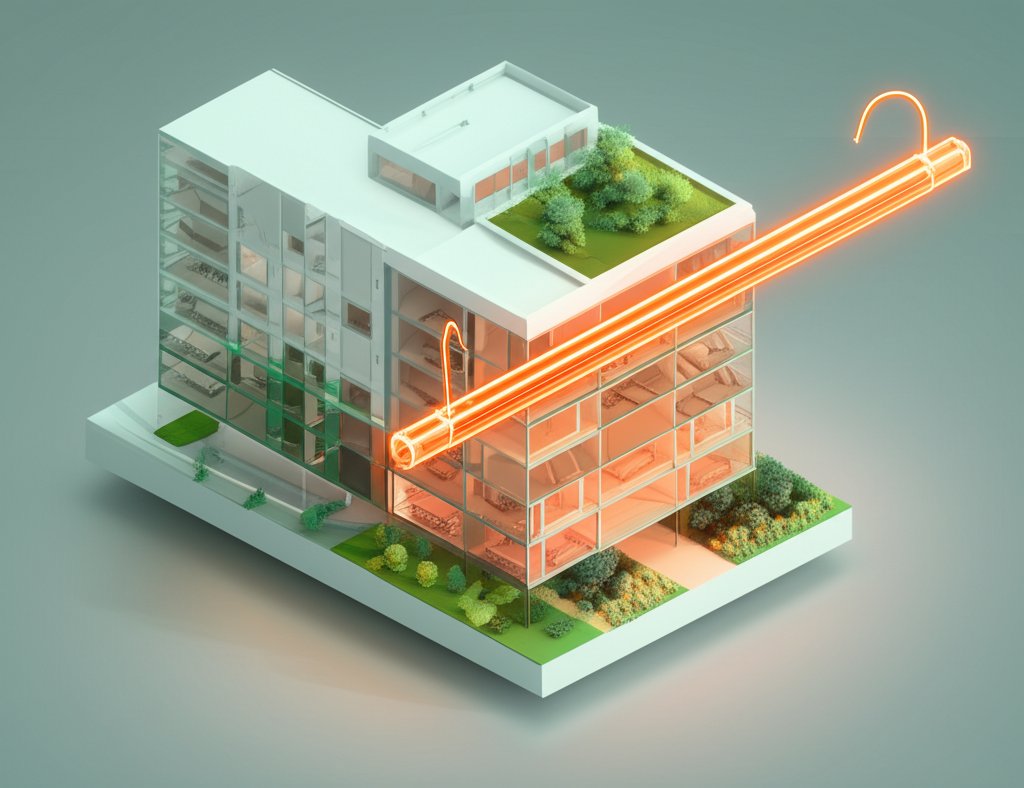
You have a long, narrow hallway that spot lighting just can’t conquer, leaving it with frustrating dark spots between pools of light. This is precisely where modern long lights ceiling fixtures, often called linear lights, make a dramatic difference. They don’t just illuminate a space; they define it with a clean, unbroken line of light that feels both intentional and effortlessly modern.
This approach moves beyond the simple utility of old fluorescent tubes and into the realm of architectural design, creating visual flow and eliminating shadows in places like galley kitchens, workshops, and corridors.
At a Glance: Your Linear Lighting Guide
- Understand when to choose a single linear fixture over multiple spot lights.
- Compare the real-world pros and cons of integrated LED versus swappable tube-style fixtures.
- Learn how to select the right color temperature (Kelvin) and brightness (lumens) for any room.
- Discover three practical methods for integrating long lights into your smart home ecosystem.
- Get a step-by-step guide for proper placement to maximize function and style.
- Avoid the common installation mistakes that lead to flickering or poor light quality.
Ditching the “Airport Runway” Look: Why Go Linear?
The default for lighting a large or long room has often been a series of recessed can lights. While effective, this can create a cluttered ceiling and a “polka dot” effect on the floor. A long lights ceiling fixture offers a more streamlined and often more effective alternative.
The Power of Unbroken, Even Light
The primary advantage of a linear fixture is its ability to cast a wide, even plane of light. Imagine a galley kitchen where a single 4-foot or 8-foot fixture illuminates the entire workspace from end to end. There are no harsh shadows cast by your own body as you move between the sink and the stove.
This continuous illumination makes spaces feel larger and more cohesive. In a long hallway, it guides the eye forward, creating a clear and welcoming path. This is a fundamentally different approach from the targeted pools of light created by smaller fixtures. While excellent for specific tasks or accenting art, exploring Smart 4-inch ceiling light options provides a more focused solution better suited to smaller rooms or defined zones. For broad, seamless coverage, a long light fixture is unparalleled.
Superior Efficiency and Simpler Installation
From an installation perspective, one long light is far simpler than many small ones. You’re dealing with a single electrical junction box and one fixture to mount. Compare that to cutting, wiring, and installing six, eight, or even ten individual can lights to achieve similar coverage.
Modern LED linear lights are also incredibly efficient. According to the U.S. Department of Energy, LED lighting uses at least 75% less energy and lasts 25 times longer than incandescent lighting. A single 4-foot LED fixture can easily produce over 4000 lumens while consuming just 40 watts of power—a level of output that would require multiple energy-hungry older bulbs.
The Anatomy of a Modern Long Light Ceiling Fixture

Choosing the right fixture involves more than just picking a length. The technology inside and the color of the light it produces are critical decisions that will affect your space for years to come.
Integrated LED vs. Swappable Tubes: A Critical Choice
This is the first major decision you’ll face. Do you want a sleek, all-in-one unit or a more traditional fixture that uses replaceable bulbs?
- Integrated LED Fixtures: These are the most modern option. The LEDs are built directly into the fixture’s housing. This allows for incredibly slim and minimalist designs that are impossible with bulky tubes. The trade-off? When the LEDs eventually fail (after a very long time, typically 50,000+ hours), the entire fixture must be replaced.
- Swappable Tube Fixtures: These are the successors to the old fluorescent shop lights, now designed for LED T8 or T5 tubes. They offer the flexibility of replacing a single tube if it fails and allow you to change the color temperature or brightness by simply swapping bulbs. However, they are often bulkier and may not offer the same seamless, diffused look as a high-quality integrated fixture.
| Feature | Integrated LED Fixture | Swappable Tube Fixture |
| :— | :— | :— |
| Design | Sleek, slim, minimalist profiles | Bulkier, more utilitarian |
| Lifespan | Very long (30,000-70,000+ hrs) | Depends on the tube (15,000-50,000 hrs) |
| Maintenance | None; replace entire unit at end-of-life | Replace individual tubes as they fail |
| Light Quality | Often better diffusion, more even light | Can have “hot spots” from individual tubes |
| Upfront Cost | Can be higher | Generally lower |
Case Snippet: A homeowner renovating their 1970s kitchen chose an integrated 8-foot LED linear fixture to hang over their new island. The slim, suspended design provided perfect task lighting without visually obstructing the open-concept view into the living room, a feat a bulkier tube-based fixture couldn’t have achieved.
Getting the Color Right: A Kelvin (K) Primer for Long Spaces
The color of white light, measured in Kelvin (K), dramatically impacts the mood of a room. Choosing the wrong color temperature can make a space feel cold and clinical or dingy and yellow.
- 2700K–3000K (Warm White): This is the color of a traditional incandescent bulb. It’s cozy, inviting, and perfect for hallways, living areas, and bedrooms where you want a relaxing atmosphere.
- 3500K–4000K (Neutral or Cool White): This crisp, bright white is fantastic for task-oriented spaces. It’s the top choice for kitchens, home offices, laundry rooms, and garages because it renders colors accurately and promotes alertness.
- 5000K+ (Daylight): This light mimics bright, direct daylight. It’s excellent for high-detail work in basements, workshops, and craft areas. Use it with caution in living spaces, as it can feel sterile and harsh in the evening.
Many modern long lights ceiling fixtures come with a built-in switch that lets you select from three or even five color temperatures during installation, giving you the flexibility to get it just right.
Lumens, Not Watts: How Much Light Do You Actually Need?
Forget thinking in watts; brightness is measured in lumens. To find out how many lumens you need, you can use a simple formula:
Room Square Footage x Recommended Foot-Candles = Total Lumens Needed
“Foot-candles” are a measure of light intensity. Here are some common recommendations:
- Hallway: 10–20 foot-candles
- Kitchen (General): 30–40 foot-candles
- Kitchen (Task Areas like counters): 70–80 foot-candles
- Workshop/Garage: 80–100 foot-candles
Practical Example: For a 12-foot by 4-foot hallway (48 sq ft), you’d want a minimum of48 x 15 = 720 lumens. A standard 4-foot LED fixture producing 2000-4000 lumens would be more than sufficient, allowing you to use a dimmer to set the perfect level.
From Box to Ceiling: A Placement and Installation Guide
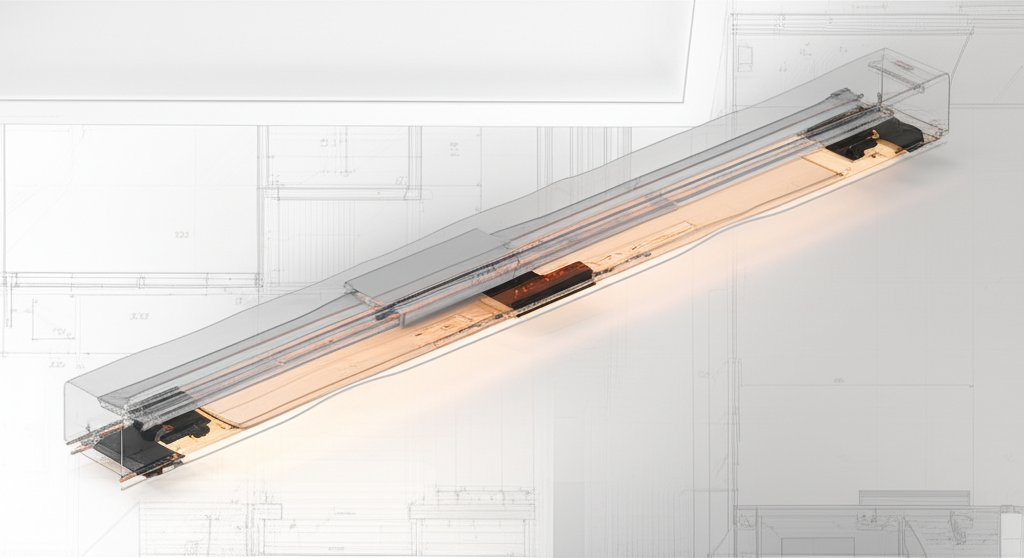
Proper placement is key to leveraging the full power of a long lights ceiling fixture. It’s not just about brightness; it’s about directing that light where it’s most useful.
Mapping Your Layout: Where to Place Long Lights
- Galley Kitchens: The classic placement is a single fixture running down the center of the main walkway, parallel to the counters. This provides even, shadow-free illumination for both sides.
- Workshops & Garages: For full coverage, plan a grid. For task lighting, place a fixture directly over your primary workbench. If you have two workbenches against opposite walls, two parallel fixtures will ensure neither spot is in shadow.
- Long Hallways: Center the fixture along the length of the hall to create a visual runway that draws you through the space.
- Home Offices: A suspended linear fixture hanging directly over your desk provides perfect task lighting without creating glare on your computer screen.
Surface Mount vs. Suspended: What’s the Difference?
- Surface Mount: The fixture sits flush or nearly flush with the ceiling. This provides a clean, unobtrusive look that’s ideal for standard 8-foot or 9-foot ceilings.
- Suspended (Pendant): The fixture hangs from adjustable aircraft cables. This is perfect for rooms with high or vaulted ceilings, as it brings the light source closer to the usable space. It also adds a strong architectural element to a room, making the light itself a design feature.
Smart Home Integration for Your Linear Fixture
Adding smart control to your long lights is easier than ever. You have three primary paths:
- Fixtures with Built-in Smarts: Some high-end brands offer linear fixtures with integrated Wi-Fi or Bluetooth control. This gives you the most functionality, including dimming, scheduling, and often color-tuning, all from an app.
- Use a Smart Dimmer Switch: This is the most common and versatile method. Install a compatible smart dimmer switch (like those from Lutron Caséta, Leviton, or TP-Link Kasa) to control any “dimmable” LED linear fixture. You gain remote on/off, dimming, and scheduling, but you can’t change the color temperature from your phone.
- Use Smart LED Tubes: If you have a fixture that uses swappable tubes, you can sometimes find smart T8 tubes. This is the least common approach and can be finicky, as compatibility between the fixture’s ballast and the smart tube isn’t always guaranteed.
Quick Answers to Common Questions About Long Ceiling Lights
Can I cut a long LED light fixture to a custom length?
Generally, no. Integrated LED fixtures are sealed units manufactured to specific lengths (e.g., 2ft, 4ft, 8ft). Attempting to cut one will destroy the internal circuitry. Instead, look for modular systems that allow you to link multiple fixtures together for a custom run.
Are all long LED lights dimmable?
Absolutely not. You must verify that the fixture is explicitly labeled as “dimmable.” Furthermore, you need to pair it with a compatible LED dimmer switch, typically an ELV (Electronic Low Voltage) or TRIAC type. Using an old incandescent dimmer will almost certainly cause buzzing or flickering.
How do I clean a long lights ceiling fixture?
First, always turn off the power at the circuit breaker. For most fixtures with a plastic or acrylic diffuser lens, a gentle wipe with a dry or slightly damp microfiber cloth is all that’s needed. Avoid harsh chemical cleaners, which can haze the plastic.
What’s the difference between a “shop light” and an “architectural linear light”?
Function and form. A “shop light” is a utility-first fixture. It prioritizes high lumen output and low cost, often with exposed tubes and a simple metal housing. An “architectural” linear light is design-focused. It features a sleeker profile, a high-quality diffuser for smooth, dot-free light, and better color rendering (CRI), meaning it makes colors in your space look more accurate and vibrant.
Your Next Step: From Plan to Perfect Illumination
Choosing the right long lights ceiling fixture transforms a room from simply being lit to being well-designed. To make the right choice, follow this quick decision path:
- Define the Space & Purpose: Is this for a cozy hallway (Warm White, lower lumens) or a functional workshop (Cool White, high lumens)?
- Measure and Plan: Determine the ideal length. Do you need a single 4-foot fixture or two 8-foot fixtures linked together to span a large garage?
- Choose Your Technology: Do you prefer the ultra-sleek look and longevity of an integrated LED fixture, or the serviceability of a fixture with swappable tubes?
- Decide on Control: Will a standard wall switch work, or do you want the flexibility of a smart dimmer for scheduling and voice control?
By focusing on these key decisions, you can select a long lights ceiling fixture that provides flawless, functional light and elevates the design of your entire space. You’ll move beyond simple utility and create an environment that’s not just bright, but truly brilliant.

- Bathroom Decor Ideas for an Instant Style Refresh - September 16, 2026
- Retro Bathroom Lighting Ideas for Timeless Charm and Warmth - September 15, 2026
- Vintage Bathroom Light Fixtures Bring Timeless Character To Your Home - September 14, 2026