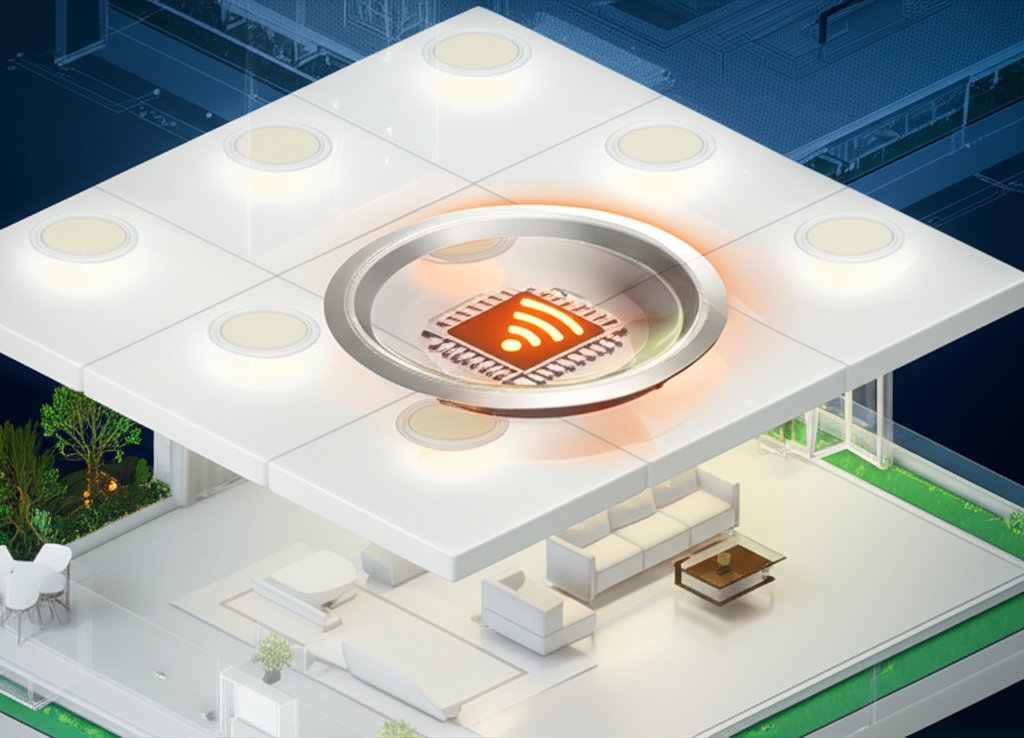
The wrong lighting can make a stunning room feel sterile and a cozy nook feel like an interrogation cell. And when it comes to getting it right, many of us overlook the small but mighty heroes of modern design: ceiling lights 4 inches in diameter. They’re the secret weapon in a designer’s toolkit, delivering clean lines and powerful, targeted light without screaming for attention. But pair that classic size with today’s smart home technology, and you unlock a new level of control over the look and feel of your entire home.
This isn’t just about flipping a switch from your phone. It’s about lights that wake you up gently in the morning, create the perfect focus for your home office, and dim to a warm, cinematic glow for movie night—all automatically. This guide is your roadmap to choosing, planning, and installing 4-inch smart ceiling lights that will fundamentally change how you experience your space.
At a Glance: Your 4-Inch Smart Lighting Cheat Sheet
Don’t have time for the full deep dive? Here are the essential takeaways for your project:
- The “Goldilocks” Size: Four-inch lights are popular because they’re versatile. They are large enough to provide significant light but small enough to look clean and modern, fitting perfectly in hallways, kitchens, bathrooms, and as accent lighting.
- Recessed is King, But Not Your Only Option: While canless 4-inch recessed LEDs are the modern standard for their ease of installation, don’t forget about smart flush mounts and directional gimbal lights for specific needs.
- “Smart” Means More Than Voice Control: The most impactful features are tunable white (changing from cool to warm light), seamless dimming, and reliable ecosystem integration (Alexa, Google Home, Apple HomeKit).
- Plan Your Layout Before You Buy: Proper spacing is crucial. A common rule of thumb is to place 4-inch lights about four feet apart, but this varies based on ceiling height and the room’s purpose.
- Don’t Skimp on Light Quality: Look for a Color Rendering Index (CRI) of 90 or higher. This ensures the light shows colors in your home accurately, making your paint, furniture, and even food look their best.
Why the 4-Inch Light Dominates Modern Design
For decades, home lighting was an afterthought—a single, boring flush mount plopped in the center of the ceiling. But as our homes have become more open and multi-functional, our lighting has had to get smarter and more flexible. The 4-inch fixture, particularly the recessed LED, has emerged as the perfect tool for the job.
It’s a matter of scale and subtlety. A larger 6-inch light can feel clunky and dated in a modern home, creating a “Swiss cheese” effect on the ceiling. Smaller 3-inch lights are great for pinpoint accents but often lack the power to be a room’s primary light source. The 4-inch light hits the sweet spot. It provides a clean, architectural look while delivering a substantial, high-quality beam of light.
This size is incredibly versatile. You can line a hallway with them for a runway effect, group them over a kitchen island for brilliant task lighting, or use a single directional one to highlight a piece of art. When you add smart controls, this physical versatility is matched by digital flexibility, giving you complete command over the ambiance of your space.
Decoding Your 4-Inch Ceiling Light Options

Not all 4-inch lights are created equal. The type you choose depends on your ceiling structure, your aesthetic goals, and how you plan to use the light.
The Modern Champion: Recessed & Canless Lights
This is the style you probably picture when you think of modern ceiling lighting. Recessed lights sit flush with the ceiling, providing a seamless, minimalist look. Historically, they required a bulky metal “can” housing to be installed in the ceiling joists—a major headache for remodelers.
Enter the canless LED wafer light. These ultra-thin fixtures are a game-changer. They are often less than an inch thick and have a separate junction box that sits above the drywall. You just cut a 4-inch hole, connect the wires, and snap the light into place with its spring-loaded clips. They are incredibly easy to install in existing ceilings without needing to worry about joist placement. For a clean, modern aesthetic, it’s hard to beat these fixtures, so it’s a great idea to Explore 4-inch recessed lighting options early in your planning phase.
The Classic Reimagined: Flush & Semi-Flush Mounts
A flush mount light sits directly against the ceiling, while a semi-flush mount hangs down a few inches on a short stem. While you might associate these with dated “boob lights,” modern 4-inch versions offer sleek, stylish designs.
A 4-inch smart flush mount can be a perfect solution for a small entryway, a walk-in closet, or a powder room where a single, central light source is all you need. They are also a good choice for concrete ceilings or areas where you can’t cut holes for recessed lighting.
The Specialist: Gimbal & Eyeball Lights
These are a type of recessed light with a twist: the inner lamp can be tilted and swiveled. A gimbal light pivots on an axis, while an eyeball light pulls down slightly to offer an even greater range of motion.
Why would you need this?
- Highlighting Artwork: Aim the light directly at a painting or sculpture.
- Wall Washing: Tilt them to cast a broad, even wash of light down a feature wall, making a room feel larger.
- Sloped Ceilings: Keep the housing straight but angle the light to point directly downwards.
- Task Lighting: Position them over a kitchen counter and aim the light exactly where you chop vegetables.
| Light Type | Best For | Look & Feel | Installation Note |
| :— | :— | :— | :— |
| Canless Recessed | General ambient lighting, kitchens, hallways | Minimalist, clean, modern | Easiest for remodels; requires cutting holes. |
| Flush Mount | Closets, small entries, concrete ceilings | Decorative, visible fixture | Uses an existing ceiling junction box; no cutting. |
| Gimbal/Eyeball | Accent lighting, sloped ceilings, task areas | Functional, architectural | Installs like a recessed light but offers flexibility. |
The “Smart” in Smart Lighting: Features That Actually Matter
Adding smarts to your 4-inch ceiling lights isn’t a gimmick. It’s about tailoring the light in your home to fit your life. Here are the features that deliver real value.
Tunable White: Light That Follows the Sun
This is arguably the most important smart lighting feature. Tunable white lights let you adjust the color temperature of the white light, measured in Kelvin (K).
- 2700K: This is the warm, cozy, yellowish glow of a traditional incandescent bulb. Perfect for relaxing in the evening.
- 4000K: A neutral, bright white. Great for task-oriented spaces like kitchens and home offices during the day.
- 5000K+: A cool, blue-tinted white that mimics daylight. It’s excellent for boosting energy and focus but can feel harsh at night.
With tunable white, you can automate a “circadian rhythm” schedule. Your lights can start the day with a cool, energizing white and gradually transition to a warm, calming glow as bedtime approaches. It makes your home feel more natural and can even help regulate your sleep cycle.
Full-Color RGB: More Than a Party Trick
RGB (Red, Green, Blue) lights can produce millions of colors. While you can certainly set them to purple for a party, their practical uses are often overlooked.
- Notifications: Set a light to flash blue when your Uber arrives or turn green when your smart oven has preheated.
- Ambiance: Create subtle color scenes that complement your decor or the season. Think a soft gold for autumn or a pale blue for a calming bathroom.
- Entertainment: Sync your lights with movies, games, or music for an immersive experience using apps like Philips Hue Sync.
Ecosystem Compatibility: The Most Important Choice You’ll Make
Your smart lights need a way to talk to your phone, your smart speaker, and each other. This is handled by a smart home ecosystem. The big three are Amazon Alexa, Google Home, and Apple HomeKit. Most smart lights work with one or more of these.
Before you buy, decide which ecosystem you’ll use. It’s frustrating to have half your lights controlled by the Alexa app and the other half by the Google Home app. The connection method also matters:
Quick Primer: Wi-Fi vs. Zigbee/Matter
- Wi-Fi: Each light connects directly to your home’s Wi-Fi router. This is simple to set up, but adding dozens of lights can clog your network.
- Zigbee/Z-Wave: These are low-power mesh networks designed for smart home devices. They require a separate hub (like a Philips Hue Bridge or an Amazon Echo with a built-in hub). They are incredibly reliable and don’t slow down your Wi-Fi.
- Matter: This is the new universal standard designed to make devices from different brands work together seamlessly. A Matter-certified light will work with Apple, Google, Amazon, and others, making it a future-proof choice.
Planning Your Layout: A Practical Guide to Placement
Where you put your lights is just as important as which lights you buy. A bad layout can create a runway effect, leave dark corners, or cast annoying shadows on your workspace.
General Rules of Thumb for 4-Inch Lights
- Spacing: A good starting point is to space 4-inch lights about 4 to 6 feet apart. For an 8-foot ceiling, a 4-foot spacing is common. For taller ceilings, you can space them a bit wider.
- Distance from Walls: Place the first row of lights about 2 to 3 feet away from the walls. Placing them too close can create harsh “scallops” of light on the wall. If you want to highlight the wall, use gimbal lights and aim them for a “wall wash” effect.
- Task Lighting: In kitchens, position lights directly above the edge of your countertops, not in the central walkways. This ensures your own body doesn’t cast a shadow on your cutting board or sink.
A Mini Case Study: Lighting a Kitchen
Let’s say you have a 12′ x 14′ kitchen with 8-foot ceilings. Here’s a potential layout:
- Ambient Lighting: Create a grid of four to six 4-inch recessed lights in the main ceiling area, spaced about 4-5 feet apart, to provide overall illumination.
- Task Lighting: Place three or four 4-inch lights directly over the perimeter countertops, about 24 inches from the wall. This lights up your primary workspace.
- Island Lighting: If you have an island, hang two stylish pendants or Explore long ceiling lights as a decorative centerpiece. You can supplement this with two 4-inch recessed lights over the island for when you need bright, functional light.
This “layering” approach—combining ambient, task, and accent lighting—is the key to a professional-feeling result.
Common Questions and Misconceptions Answered

Navigating the world of smart lighting can be confusing. Here are crisp answers to some of the most frequent questions.
Can I install smart 4-inch lights myself?
It depends. If you’re replacing an existing fixture and are comfortable with basic wiring (turning off the breaker, connecting black/white/ground wires), installing a canless LED or a flush mount is a very manageable DIY project. However, if you’re cutting new holes and running new electrical lines, it’s often best to hire a licensed electrician.
Do I need a special “smart” switch too?
Not necessarily. Most smart lights are designed to be controlled via an app or voice command. However, if someone flips the physical wall switch off, the light loses power and becomes “dumb.” Installing a smart switch or dimmer ensures the light always has power and can be controlled both from the wall and your smart home system. It’s the best of both worlds.
Are all 4-inch LED lights dimmable?
No! This is a critical point. Cheaper, non-smart LEDs are often not dimmable. If you try to use them with a dimmer switch, they will likely flicker or hum. All smart lights are inherently dimmable via their app, but always check the product specifications to be sure.
How many lumens do I need from a 4-inch light?
Lumens measure brightness. For a 4-inch light, a range of 500-800 lumens is typical.
- Ambient Lighting (Living Room, Bedroom): Aim for around 600 lumens per light.
- Task Lighting (Kitchen, Office): Look for 700-800 lumens or more per light.
The beauty of smart lights is that you can always dim them down, so it’s better to have a little more brightness than you need than not enough.
Pitfalls to Avoid When Upgrading Your Lighting
A successful smart lighting project is about more than just buying lights that work with Alexa. Avoid these common mistakes to save yourself time, money, and frustration.
Mistake #1: Ignoring Color Rendering Index (CRI)
We’ve talked about color temperature (Kelvin), but CRI is the unsung hero of light quality. CRI is a scale from 0 to 100 that measures how accurately a light source reveals the true colors of objects. A low-CRI light can make your beautiful beige walls look sickly green and your red apples look dull and brown.
For homes, always look for a CRI of 90 or higher. This is especially important in kitchens, where you want food to look fresh, and in bathrooms, where you apply makeup. Most reputable brands will list the CRI rating clearly on the box or online specifications.
Mistake #2: Forgetting About the Trim
The trim is the visible ring and inner part of a recessed light. It’s not just decorative; it shapes the light.
- Baffle Trim: These have interior ribbing designed to absorb excess light and reduce glare. They are a popular choice for general lighting.
- Reflector Trim: These have a smooth, mirror-like interior that maximizes light output. They produce a brighter, more focused beam.
- Trimless: For the ultimate minimalist look, trimless fixtures are spackled and painted directly into the ceiling, making the light source appear as a clean hole with no visible edge.
Consider the trim style that best suits your design. Many smart recessed lights come with a simple, smooth white trim that blends into most ceilings.
Mistake #3: Mixing and Matching Brands Randomly
While the dream of the smart home is universal compatibility, the reality is often more complicated. A light from Brand A and a switch from Brand B might both work with Google Home, but their dimming performance might not be perfectly matched, leading to flickering or buzzing.
Whenever possible, try to stick with a single, well-regarded brand for your lights, especially within the same room. This ensures consistent color, brightness, and performance. Thinking about the entire system upfront is key, so take your time to Explore LED ceiling fixtures from reputable ecosystems like Philips Hue, Lutron, or Govee before you commit.
Your Next Move: From Planning to Perfect Light
Upgrading your ceiling lights is one of the highest-impact changes you can make to your home. You’re not just installing hardware; you’re taking control of the atmosphere. The right lighting can make small rooms feel spacious, large rooms feel intimate, and every space feel more intentional and alive.
Here’s your action plan:
- Audit One Room: Don’t try to do the whole house at once. Pick a room that would benefit most—the kitchen is a great place to start.
- Sketch a Layout: Grab a piece of paper and draw the room’s dimensions. Mark where your furniture is and where you perform key tasks. Use the spacing rules above to pencil in a potential layout.
- Choose Your Ecosystem: Decide if you’re building around Alexa, Google, Apple, or another system. This will narrow down your product choices significantly.
- Select Your Lights: Based on your layout and ecosystem, choose your 4-inch fixtures. Pay close attention to lumens for brightness and a CRI of 90+ for color quality.
- Install and Automate: Whether you DIY or hire a pro, get your lights in the ceiling. Then, spend some time in the app creating scenes and schedules. Set up a “Focus” scene for your office, a “Relax” scene for the living room, and a “Good Morning” routine that slowly brightens your bedroom.
This is where the magic happens. When your lights adapt to you instead of the other way around, your home becomes less of a container and more of a partner in your daily life. And it all starts with that small, unassuming, and brilliantly smart 4-inch circle in the ceiling.

- Bathroom Decor Ideas for an Instant Style Refresh - September 16, 2026
- Retro Bathroom Lighting Ideas for Timeless Charm and Warmth - September 15, 2026
- Vintage Bathroom Light Fixtures Bring Timeless Character To Your Home - September 14, 2026