That old, buzzing fluorescent tube in the garage or the dim, yellowed flush mount in the hallway isn’t just dated—it’s inefficient. Modern led ceiling lights fixtures have completely rewritten the rules, moving beyond simple bulb replacements to offer integrated, powerful, and incredibly versatile lighting solutions. These fixtures are no longer just a housing for a light source; they are the light source, and understanding how to choose the right one can fundamentally change the look and feel of your home.
At a Glance: Your Quick Guide to LED Fixtures
- Think Lumens, Not Watts: Learn to measure brightness by lumens to get the light output you actually need.
- Master Color Temperature: Understand how the Kelvin (K) scale dictates the mood, from warm and cozy (2700K) to cool and energizing (5000K).
- Integrated vs. Bulb-Based: Differentiate between fixtures with built-in LEDs and those that use replaceable bulbs, and know the pros and cons of each.
- Smart Features Matter: Explore how built-in smart technology offers control over brightness, color, and scheduling right from your phone or voice assistant.
- The Right Fixture for the Right Space: Match fixture types—like flush mount, semi-flush, or recessed—to your ceiling height and room function for optimal results.
Beyond the Bulb: Why the Fixture Itself is the New Focus
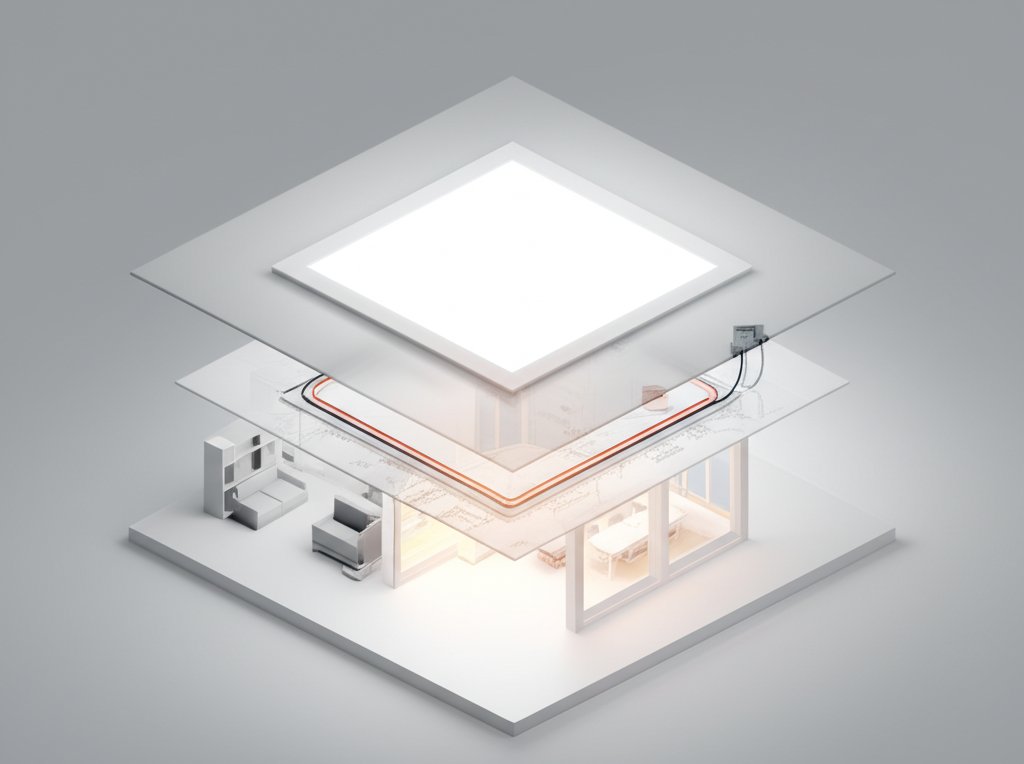
For decades, a ceiling fixture was just a decorative shell. You bought it for its style and then screwed in whatever incandescent or CFL bulb fit. The arrival of Light Emitting Diodes (LEDs) changed everything. Initially, we just had LED bulbs designed to fit old sockets, but the real revolution is the integrated LED fixture.
In an integrated fixture, the LEDs are built directly into the unit’s design. This isn’t just a minor change; it unlocks massive benefits:
- Unmatched Lifespan: An integrated LED fixture is designed as a complete system. With proper heat management (a critical part of fixture design), these units can last 25,000 to 50,000 hours. For a light used 5 hours a day, that’s over 13 years before you even need to think about a replacement.
- Superior Efficiency: Because the electronics and LEDs are engineered to work together, they convert more electricity into light and less into wasted heat. Many high-quality led ceiling lights fixtures are ENERGY STAR® certified, meaning they meet strict efficiency and performance standards set by the EPA.
- Total Design Freedom: Designers are no longer constrained by the need to accommodate a bulky, hot, A19-style bulb. This has led to an explosion of ultra-thin panel lights, minimalist wafer lights, and creative geometric shapes that were previously impossible.
This shift to integrated systems makes choosing the right fixture more critical than ever. While this guide covers the broad landscape of fixture types and features, if you are planning for smaller, more targeted installations in areas like hallways, closets, or over a kitchen island, it’s worth diving deeper. For those specific applications, you can Read about 4-inch smart options that pack a punch in a compact form factor.
Decoding the Specs: Your Guide to Choosing the Right LED Fixture

Walking down the lighting aisle can feel like deciphering a secret code. Lumens, Kelvins, CRI—these terms are your key to getting lighting that works for you, not against you.
Lumens, Not Watts: Measuring True Brightness
The biggest mental shift is moving away from watts as a measure of brightness. Watts measure energy consumption, not light output. A 60-watt incandescent bulb and a 9-watt LED bulb can produce the exact same amount of light. That light output is measured in lumens.
Think of it like this: watts are the “gallons of gas” the light uses, while lumens are its “horsepower.” You want the most horsepower for the fewest gallons.
| Old Incandescent Watts | Equivalent LED Lumens (Approx.) | Best For |
|---|---|---|
| 40W | ~450 lumens | Ambient, accent, small lamps |
| 60W | ~800 lumens | General room lighting, hallways |
| 75W | ~1100 lumens | Kitchens, bathrooms, home offices |
| 100W | ~1600 lumens | Large rooms, garages, task areas |
| For a standard 10×10 foot bedroom, a fixture providing around 1,000-1,500 lumens is a good starting point. For a kitchen where you need bright, clear light for tasks, aim for 3,000-4,000 lumens, often achieved with multiple fixtures. |
Setting the Mood with Color Temperature (Kelvin Scale)
Color temperature describes the “warmth” or “coolness” of the white light, measured on the Kelvin (K) scale. This is purely about ambiance and has nothing to do with how hot the fixture gets.
- 2700K – 3000K (Warm White): This is the cozy, inviting glow of a traditional incandescent bulb. It’s perfect for living rooms, dens, and bedrooms. It promotes relaxation and creates a comfortable atmosphere.
- 3500K – 4000K (Neutral or Cool White): A brighter, more vibrant white light. It’s a great all-rounder, excellent for kitchens, bathrooms, and basements where you need clear visibility without the harshness of daylight.
- 5000K+ (Daylight): This intense, bluish-white light mimics natural daylight. It enhances focus and is ideal for task-oriented spaces like garages, workshops, and home offices where detail and color accuracy are paramount.
Practical Scenario: A homeowner wants to update their open-plan living and kitchen area. They choose 3000K recessed led ceiling lights fixtures for the living room to create a welcoming vibe. For the kitchen, they install 4000K under-cabinet and ceiling fixtures to ensure food prep areas are bright and clear, creating a functional yet cohesive lighting scheme.
Color Rendering Index (CRI): Seeing Colors as They Truly Are
Have you ever put on socks in a dim bedroom, only to walk into the sunlight and realize they don’t match? That’s the effect of a low Color Rendering Index (CRI). CRI is a scale from 0 to 100 that measures how accurately a light source reveals the true colors of objects.
The sun has a CRI of 100. For home use, a CRI of 80 is considered acceptable, but for the best results, look for fixtures with a CRI of 90 or higher. This is especially important in:
- Kitchens: To judge the freshness of food.
- Bathrooms: For applying makeup accurately.
- Closets: To coordinate outfits without surprises.
- Art studios or craft rooms: Where color work is critical.
A high-CRI fixture ensures that a red apple looks vibrantly red, not dull and brownish. It’s a subtle spec that makes a huge difference in daily life.
A Practical Look at Common LED Ceiling Fixture Types
With an understanding of the specs, you can now choose the physical form. The right fixture type depends on your ceiling height, room size, and desired aesthetic.
The Workhorse: Flush Mount and Semi-Flush Mount Fixtures
These are the most common led ceiling lights fixtures for general-purpose lighting.
- Flush Mounts: These sit directly against the ceiling. They are the perfect solution for rooms with lower ceilings (8 feet or less), as they maximize headroom. Modern LED flush mounts are incredibly sleek, some appearing as simple, glowing discs or squares.
- Semi-Flush Mounts: These hang a few inches below the ceiling on a short stem. This small gap allows light to spill upwards and reflect off the ceiling, creating a softer, more ambient glow and reducing shadows. They are ideal for ceilings between 8 and 10 feet high and add a touch of decorative flair.
For High Ceilings and Impact: LED Pendants and Chandeliers
LED technology has transformed these traditionally heavy fixtures. Integrated LEDs allow for incredibly slender, minimalist pendants and complex chandeliers that would be impossible with bulky bulbs. They serve as both a primary light source and a major design statement, perfect for dining rooms, foyers, and living rooms with vaulted ceilings.
The Modern Solution: Recessed and Wafer LED Lights
Recessed lighting (or “can lights”) offers a clean, architectural look by embedding the fixture within the ceiling. Wafer lights are a newer, ultra-thin variation that can be installed in tight spaces without a traditional housing can. They provide broad, even illumination and are fantastic for kitchens, basements, and modern living spaces where you want the light, not the fixture, to be the focus.
Your Installation and Smart Home Playbook

Once you’ve chosen your fixture, proper installation and integration are key to unlocking its full potential.
Pre-Installation Checklist
Safety and preparation are non-negotiable. Before you start, always:
- Kill the Power: Turn off the corresponding breaker at your electrical panel. Use a voltage tester to confirm the power is off at the fixture location.
- Inspect the Junction Box: Ensure the electrical box in the ceiling is secure and can support the weight of your new fixture.
- Gather Your Tools: You’ll typically need a Phillips head screwdriver, a flathead screwdriver, wire strippers, wire nuts, and a sturdy ladder.
- Read the Instructions: Every fixture is slightly different. A quick read-through of the manufacturer’s guide can save you a major headache.
The Smart Integration Step
Many modern led ceiling lights fixtures come with smart capabilities built-in, connecting via Wi-Fi, Zigbee, or Bluetooth. This offers far more than a simple on/off switch.
- Full-Range Dimming: Adjust brightness levels with precision using an app or voice command.
- Color Tuning: Change the color temperature on demand. A single fixture can produce warm 2700K light for relaxing in the evening and shift to a crisp 4000K for working from home during the day.
- Scheduling and Automation: Program your lights to turn on when you arrive home, dim in the evening to prepare for sleep, or simulate presence when you’re on vacation.
Case Snippet: An owner of a small apartment replaced the single, dull fixture in their main living area with a smart, color-tunable LED flush mount. They created scenes in their smart home app: a “Movie Night” scene that dims the light to 20% and warms it to 2700K, and a “Focus” scene that brightens it to 100% at 4500K. This single fixture now adapts to every activity, making the small space feel more versatile and dynamic.
Quick Answers to Common LED Fixture Questions
Can I use a dimmer with any LED fixture?
No. The fixture must be explicitly labeled as “dimmable.” Furthermore, you must use a dimmer switch that is rated for LEDs (often called a CL or LED+ dimmer). Using an old incandescent dimmer with a dimmable LED fixture can cause flickering, buzzing, or premature failure.
How long do integrated LED fixtures really last?
A rating of 50,000 hours is common for high-quality fixtures. If you use the light for an average of 6 hours per day, that translates to over 22 years. The longevity of integrated led ceiling lights fixtures is one of their most significant advantages over traditional bulbs.
What happens when the LED in an integrated fixture burns out?
Unlike a bulb, you can’t just replace the light source. The entire fixture needs to be replaced. While this sounds like a drawback, their extreme lifespan means you’ll likely renovate the room before the fixture ever fails. The “no-maintenance” aspect is a major selling point.
Are LED ceiling light fixtures more expensive upfront?
Yes, the initial purchase price is often higher than a basic fixture that requires a separate bulb. However, the total cost of ownership is significantly lower. You save money on your electricity bill every month and eliminate the cost and hassle of buying replacement bulbs for a decade or more.
Making Your Final Decision
Choosing the right led ceiling lights fixtures is about defining your needs first. Don’t start by browsing endless styles. Instead, start with function.
Use this quick decision tree to guide your choice:
- Define the Space & Purpose: Is it a low-traffic hallway or a high-activity kitchen? This will determine your required lumens and fixture type (flush mount for low ceilings, multiple recessed lights for a large kitchen).
- Set the Desired Mood: Are you aiming for a cozy, relaxing atmosphere or a bright, energizing one? This points you to the right Kelvin temperature (3000K for cozy, 4000K+ for energy).
- Assess Your Control Needs: Do you just need a simple on/off switch, or do you want the flexibility of dimming and smart control? This decides whether you need a dimmable or smart-enabled fixture.
- Prioritize Color Accuracy: Is this for a space where seeing true-to-life color is important, like a closet or bathroom? If so, make a CRI of 90+ a mandatory feature.
By following this framework, you move from being overwhelmed by options to making a confident, informed choice that will illuminate your home beautifully and efficiently for years to come.

- Bathroom Decor Ideas for an Instant Style Refresh - September 16, 2026
- Retro Bathroom Lighting Ideas for Timeless Charm and Warmth - September 15, 2026
- Vintage Bathroom Light Fixtures Bring Timeless Character To Your Home - September 14, 2026