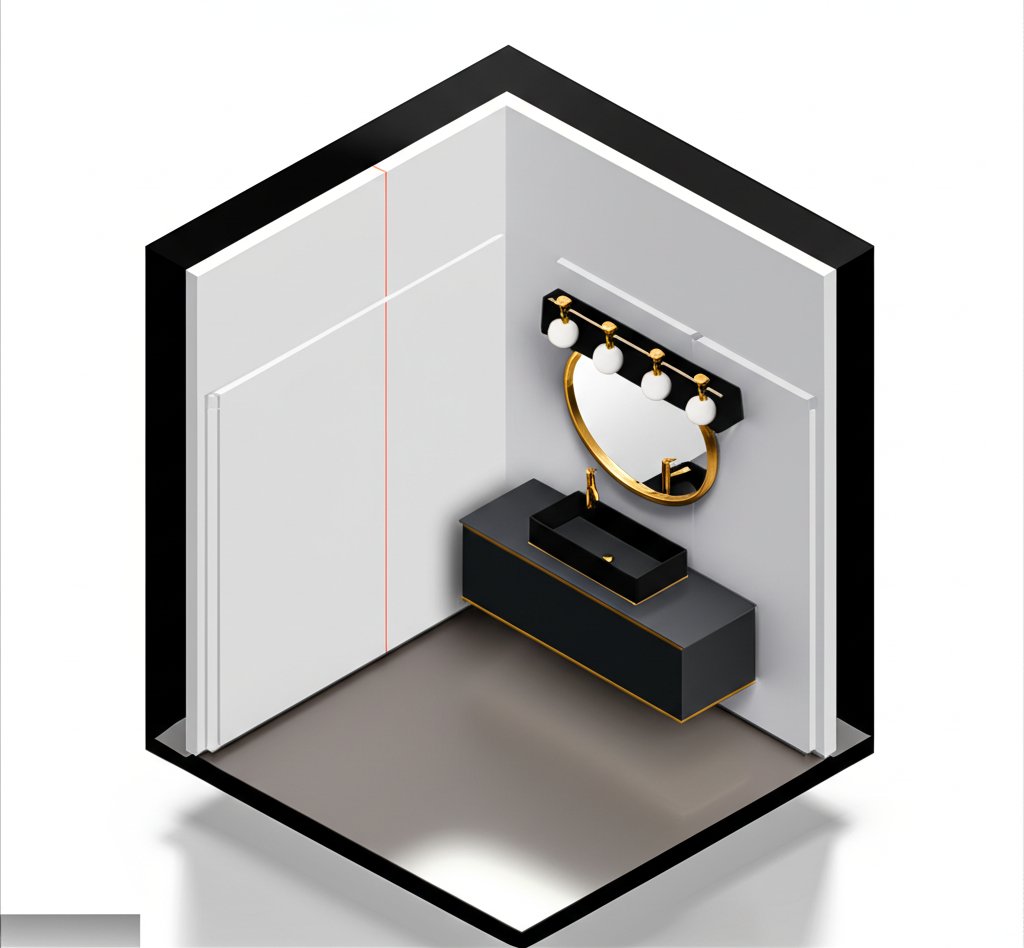
You’ve curated the perfect tile, selected a vanity with clean lines, and even found a faucet that feels just right. Yet, something is missing. The space feels flat, lacking a final, defining touch. This is where the striking contrast of a black and brass vanity light comes in, acting as the sophisticated focal point that ties a modern bathroom together with effortless confidence. It’s more than just illumination; it’s a piece of functional jewelry for your walls.
This combination of matte black and warm brass isn’t just a trend; it’s a versatile design statement. It offers the boldness of modern industrial design softened by the timeless warmth of classic brass, creating a fixture that feels both current and enduring. Getting it right, however, means moving beyond just picking a pretty light.
At a Glance: Your Guide to Black and Brass Fixtures
- Understand the “Why”: Learn how the contrast between matte black and warm brass creates visual depth and sophistication.
- Match Style to Space: Identify whether Modern Farmhouse, Industrial Chic, or Art Deco Revival best suits your bathroom’s aesthetic.
- Master Sizing & Placement: Get clear rules for selecting the right size fixture for single or double vanities and where to mount it.
- Decode the Finishes: Differentiate between polished, brushed, and antique brass to perfectly match your hardware.
- Choose the Right Shade: See how glass types (clear, frosted, seeded) and metal shades dramatically alter the light and mood.
- Get Answers: Find quick solutions to common questions about trends, cleaning, and coordination.
The Power of Contrast: Why This Duo Works
The magic of a black and brass vanity light lies in its inherent balance. Matte black provides a strong, grounding anchor—a neutral backdrop that feels clean, modern, and unassuming. It absorbs light, creating a sense of depth and allowing other elements to pop.
Brass, on the other hand, does the opposite. It reflects light, introducing warmth, glamour, and a touch of organic luxury. This isn’t the shiny, lacquered brass of the 1980s; modern brass finishes are often softer, richer, and more complex. Together, black provides the structure while brass adds the soul. This dynamic pairing allows the fixture to bridge multiple design styles without feeling out of place. While the fixture itself is a statement, the broader world of brass lighting offers incredible versatility. For a deeper look at how this metal can transform your space, our comprehensive guide can help you Elevate with Brass Vanity Lights.
Find Your Style: Matching the Fixture to Your Bathroom’s Vibe
A black and brass vanity light is not a one-size-fits-all solution. Its final look is heavily influenced by its shape, the type of glass used, and the specific finish of the brass. Here’s how to align the fixture with three popular aesthetics.
Modern Farmhouse: Rustic Charm Meets Clean Lines
In a modern farmhouse bathroom, the goal is to balance rustic comfort with contemporary simplicity. A black and brass fixture acts as the perfect bridge.
- What to look for: Seek out fixtures with simple, utilitarian shapes. Think gooseneck arms, barn-style or bell-shaped metal shades, and exposed bulbs. The black element often forms the main structure (the backplate and arms), while brass appears as subtle accents on sockets or joints.
- Case Snippet: For a client’s shiplap-walled bathroom, we chose a 3-light vanity fixture with matte black bell shades and antique brass gooseneck arms. The dark metal connected with the black slate floor tile, while the warm brass echoed the pulls on the reclaimed wood vanity, creating a cohesive, layered look.
Industrial Chic: Raw and Refined
Industrial design celebrates raw materials and mechanical details. The black and brass combo adds a layer of refinement to an otherwise gritty aesthetic.
- What to look for: Fixtures with exposed hardware, cage-style shades, and clear glass are hallmarks of this style. Look for visible Edison bulbs, knurled details on the sockets, and a focus on the fixture’s construction. Here, the black is often a powder-coated steel, and the brass is typically unlacquered or has a brushed finish for a less-polished feel.
- Example: A linear bar light with five exposed Edison bulbs in brass sockets, all mounted on a stark matte black backplate, is quintessentially industrial. It’s functional, honest, and stylish.
Art Deco Revival: Glamour and Geometry
This style is all about bold geometric patterns, luxury, and a touch of drama. A black and brass vanity light fits in perfectly, providing both the strong lines and the luxe finish Art Deco demands.
- What to look for: Look for fixtures with strong geometric shapes—globes, cylinders, and sharp angles. The black provides the graphic outline, while polished brass adds the necessary glamour. Frosted or opal glass shades are common, as they diffuse light beautifully and contribute to the soft, sophisticated glow associated with the era.
- Example: Imagine a fixture with two frosted glass globes held by sleek, L-shaped matte black arms, anchored to a circular polished brass backplate. It’s elegant, sculptural, and undeniably glamorous.
The Practical Framework: Choosing Your Fixture with Confidence
Once you’ve identified your style, it’s time to get technical. Answering these four questions will ensure you select a fixture that is not only beautiful but also perfectly functional for your space.
1. What Size and Placement Are Right for My Vanity?
Sizing is the most critical technical decision. A light that’s too small will look lost and provide inadequate task lighting, while one that’s too large can overwhelm the mirror and vanity.
- For a Single Vanity:
- Rule of Thumb: Your vanity light should be about 75% of the width of your vanity mirror, not the vanity cabinet itself.
- Placement: Mount the fixture centered over the mirror, approximately 78-82 inches from the floor. This places the light source just above eye level, minimizing harsh shadows on your face.
- For a Double Vanity or Wide Vanity (over 48 inches):
- Option A (One Long Fixture): Choose a single linear fixture that is, again, about 75% of the total mirror width. This creates a clean, cohesive look.
- Option B (Two Separate Fixtures): Flank a single large mirror or place one fixture over each of two smaller mirrors. Each fixture should be roughly one-third the width of the vanity cabinet. Mount them centered over each sink basin, maintaining that 78-82 inch height from the floor.
2. Up-Light or Down-Light: Which Way Should the Shades Face?
The orientation of the shades dramatically impacts the type of light you get.
- Down-lighting (Shades face down): This is the best choice for task lighting. It directs a focused cone of light downward onto the countertop and sink, which is ideal for shaving, applying makeup, or any other close-up task. Most black and brass vanity lights are designed for down-lighting.
- Up-lighting (Shades face up): This provides ambient, or general, illumination. The light bounces off the ceiling and diffuses throughout the room, creating a softer, more relaxed atmosphere. It’s a great option for powder rooms or guest baths where intense task lighting is less critical.
- Reversible Fixtures: Many modern designs are reversible, allowing you to install them facing either up or down. This offers fantastic flexibility if you’re unsure or want to change the mood later.
3. Which Brass Finish Complements My Hardware?
Not all brass is created equal. The finish you choose should coordinate with your faucet, shower fixtures, and cabinet pulls for a polished look.
| Brass Finish | Description | Best Paired With |
|---|---|---|
| Polished Brass | Bright, shiny, and highly reflective. Offers a classic, glamorous feel. | Glossy black finishes, marble countertops, and traditional or Art Deco styles. |
| Satin Brass | Smooth, matte surface with a soft sheen. Modern and understated. | Matte black finishes, concrete or quartz countertops, and contemporary designs. |
| Brushed Brass | Has visible, fine brush lines for a textured, slightly industrial appearance. | Matte black finishes, wood vanities, and Modern Farmhouse or Industrial styles. |
| Antique Brass | Chemically aged to have a darker, richer patina. Looks warm and established. | Matte black, natural stone, and vintage-inspired or rustic bathroom designs. |
| Pro Tip: It’s perfectly acceptable to mix metals, but the key is intention. If your faucet is polished chrome, a satin black and brass vanity light can still work beautifully. The black element acts as a neutral bridge between the two metallic finishes. |
4. What Type of Shade Delivers the Right Light?
The shade material dictates the quality and feel of the light.
- Clear Glass: Offers the brightest, most direct light. It’s perfect for task-heavy bathrooms but can cause glare. Using a vintage-style Edison bulb or a frosted bulb can mitigate this.
- Frosted or Opal Glass: Diffuses light evenly, providing a soft, flattering glow with no harsh shadows or glare. This is an excellent all-around choice for vanity lighting.
- Seeded Glass: Contains tiny air bubbles trapped within the glass, which creates a beautiful, textured light pattern. It offers a vintage or artisanal feel while still providing ample brightness.
- Metal Shades: These direct all light downwards, creating a highly focused task light. They are common in farmhouse and industrial styles and create a moody, dramatic effect.
Quick Answers to Common Questions
Getting the details right can feel daunting. Here are some rapid-fire answers to frequent concerns.
Q: Is black and brass vanity lighting just a trend that will look dated soon?
A: Unlikely. Both black and brass are timeless finishes. Black is a foundational neutral, and brass has been used in homes for centuries. The combination feels modern now, but its classic roots give it strong staying power, much like a black tuxedo with gold cufflinks. It’s an enduringly stylish pairing.
Q: Can I use a black and brass light if my faucet and shower are chrome or nickel?
A: Absolutely. Mixing metals is a hallmark of modern design. The key is to create balance. Having the black element in the light fixture acts as a bridge. To make it look intentional, repeat each metal at least once more. For example: chrome faucet, black and brass light, and black cabinet pulls.
Q: What kind of light bulbs are best for these fixtures?
A: For fixtures with clear or exposed shades, consider vintage-style LED Edison bulbs (around 2700K-3000K color temperature) for a warm, inviting glow. For frosted shades, a standard A19 LED bulb works perfectly. Always choose dimmable bulbs and install a dimmer switch—it’s the single best way to control the mood of your bathroom.
Q: How do I clean a fixture with two different finishes?
A: Use a soft, dry microfiber cloth for regular dusting. For smudges, slightly dampen the cloth with water. Avoid all abrasive cleaners, chemical sprays, and polishes, as they can strip the lacquer from the brass and damage the matte black finish. Treat it gently.
Your Final Decision Checklist
Choosing a black and brass vanity light is about creating a focal point that is both functional and beautiful. Before you buy, run through this final checklist:
- Confirm Your Style: Is it more Industrial, Farmhouse, or Art Deco?
- Measure Twice: Is the fixture width about 75% of your mirror’s width?
- Check the Height: Will the mounting point be 78-82 inches from the floor?
- Define the Function: Do you need focused down-lighting for tasks or ambient up-lighting for mood?
- Match the Finish: Does the brass (satin, polished, antique) complement your other hardware?
- Consider the Glow: Will the shades (clear, frosted, metal) provide the quality of light you need?
By thoughtfully considering these elements, you move from simply picking a light to designing a cohesive and elevated space. The right black and brass vanity light doesn’t just illuminate your reflection; it reflects your impeccable style.

- Bathroom Decor Ideas for an Instant Style Refresh - September 16, 2026
- Retro Bathroom Lighting Ideas for Timeless Charm and Warmth - September 15, 2026
- Vintage Bathroom Light Fixtures Bring Timeless Character To Your Home - September 14, 2026