Of course. Here is the comprehensive pillar article on vanity light bars, written in the voice of a seasoned journalist and subject-matter expert.
The bathroom mirror is an honest place. It’s where you start your day, trusting the reflection to guide your razor, eyeliner, or toothbrush. But if your lighting is wrong, that reflection lies. Harsh overhead lights create ghoulish shadows, and weak side lights can make you look perpetually tired. The right vanity light bar isn’t just a fixture; it’s the difference between a frustrating morning and a confident start.
It’s the unsung hero of the bathroom, a single decision that impacts the room’s function, mood, and style every single day. But with endless options—long, short, LED, traditional, chrome, black—choosing one can feel surprisingly complex.
This guide will change that. We’ll cut through the noise and give you the clear, practical framework for finding the perfect light for your space.
Your Lighting Plan at a Glance
No time to spare? Here are the key takeaways for choosing your ideal vanity light bar:
- Size It Right: Your light bar should be about 75% of your mirror’s width, or slightly narrower than your vanity cabinet. Never wider.
- Placement is Key: Mount a horizontal bar 2-4 inches above the mirror, with the center of the fixture about 75-80 inches from the floor for optimal, shadow-free light.
- Think in Lumens, Not Watts: For most bathroom vanities, aim for a total of 1,600 to 2,400 lumens for bright, functional task lighting.
- Get the Color Right: Look for a color temperature between 2700K and 3500K. This range mimics soft, natural light and provides excellent color accuracy without feeling sterile.
- Style and Finish Matter: Coordinate your light fixture’s finish (like matte black, brushed nickel, or brass) with your faucet and other hardware for a cohesive look.
Why Your Vanity Light is More Than Just a Pretty Fixture
Before we dive into measurements and bulb types, let’s get one thing straight: bathroom lighting is a team sport. Most bathrooms suffer from having only one central ceiling light, which casts shadows down your face—a phenomenon designers call “monster lighting.”
A vanity light bar is your star player, providing the essential task lighting you need directly in front of you. It works with your room’s ambient (overall) lighting to create a layered, functional, and flattering environment.
Proper vanity lighting achieves two critical goals:
- Eliminates Shadows: By casting even light across your face, it allows for flawless makeup application, a clean shave, and other detailed grooming tasks.
- Enhances Ambiance: The right light can make a small bathroom feel larger and a sterile space feel warmer and more inviting.
Getting this wrong means squinting, second-guessing your foundation shade, and starting your day in a poorly lit space. Getting it right is a small upgrade with a massive daily payoff.
The Core Four: Nailing Down Size, Placement, Style, and Direction
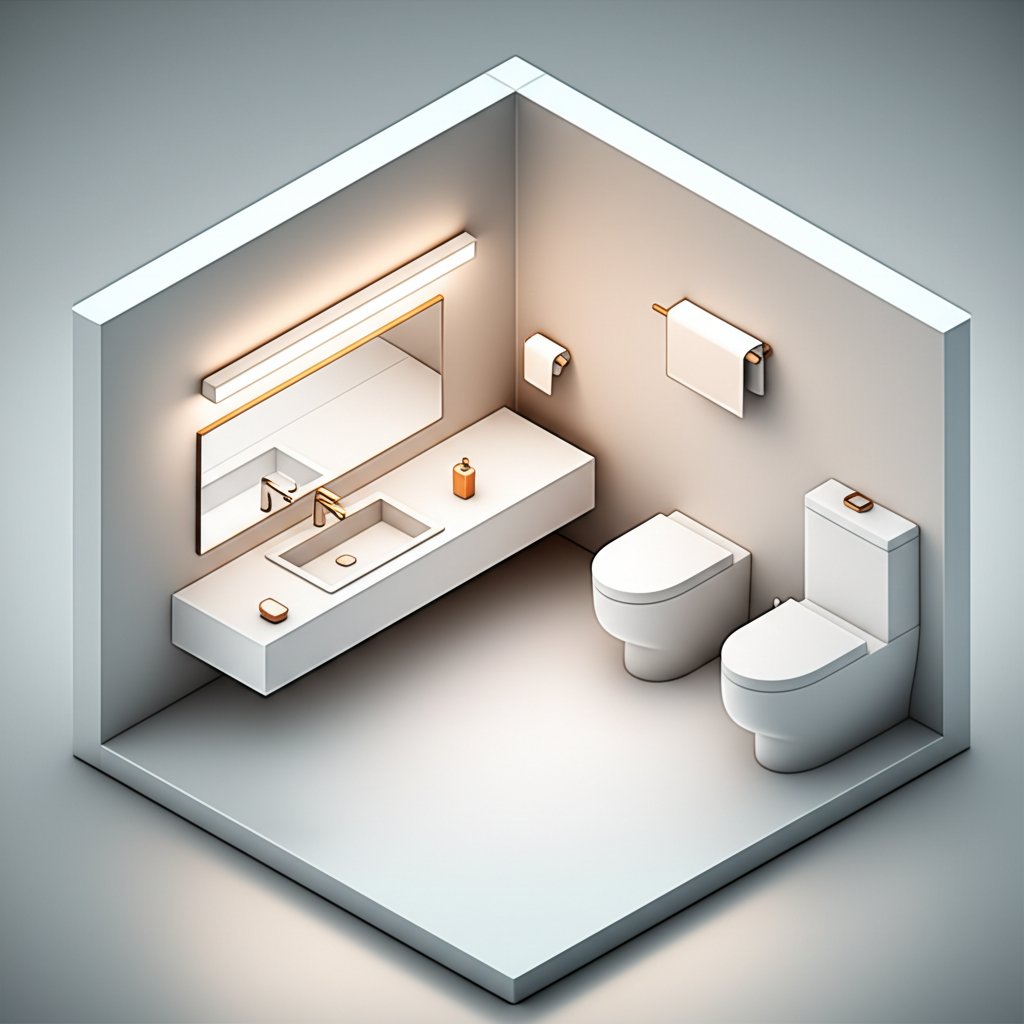
Think of these four elements as the pillars of your decision. Get them right, and you’re 90% of the way to the perfect fixture.
1. Sizing Your Vanity Light Bar for a Balanced Look
Size is the most common mistake people make. A light that’s too small looks awkward and provides poor light coverage. One that’s too large overpowers the mirror and vanity.
The Golden Rule: The light bar should not be wider than your vanity mirror. Ideally, aim for a fixture that is roughly 75% of the mirror’s width.
If you don’t have a framed mirror, use your vanity cabinet as a guide. The light bar should be slightly narrower than the cabinet.
Here’s a simple cheat sheet:
| Vanity/Mirror Width | Recommended Light Bar Width |
|---|---|
| 24 inches | 18-22 inches |
| 30 inches | 22-28 inches |
| 36 inches | 28-34 inches |
| 48 inches | 36-46 inches |
| 60+ inches (Double Vanity) | Two 24-30 inch lights (one over each sink) or one 48+ inch bar |
| For a double vanity, you have two great options: install a separate, smaller light bar over each mirror, or use one extra-long bar that spans most of the combined width for a clean, modern look. |
2. Placement is Everything: Above the Mirror vs. Side Sconces
Where you place your light is just as important as its size. You have two primary options for a vanity area:
- Horizontal Bar Above the Mirror: This is the most common and practical application for a vanity light bar. It provides broad, even light from above.
- Ideal Height: Mount the fixture so its center is between 75 and 80 inches from the finished floor. This places the light source high enough to illuminate your whole face without being so high that it creates deep shadows under your eyes.
- Spacing: Leave about 2-4 inches of space between the top of the mirror and the bottom of the light fixture.
- Vertical Bars or Sconces on Each Side: While not technically a single “bar,” this is the gold standard for perfectly shadowless light. Placing lights on either side of the mirror fills in all the angles.
- Ideal Height: The midpoint of the fixtures should be at roughly eye level, or about 60-66 inches from the floor.
- Spacing: Mount them a few inches from the sides of the mirror, about 28-36 inches apart from each other.
For most renovations and standard setups, a single, well-placed horizontal bar is an excellent and efficient choice. This is a fundamental step in Choosing bathroom light bars because it dictates where the light originates and how it interacts with your face.
3. Finding Your Style: From Modern Farmhouse to Sleek Minimalism
Now for the fun part. Your vanity light is a key decorative element. The goal is to choose a style and finish that complements your existing hardware, like your faucet, towel racks, and cabinet pulls.
- Finishes:
- Matte Black: Bold, modern, and excellent at hiding fingerprints. Pairs well with almost any color scheme.
- Brushed Nickel/Chrome: A timeless classic. Chrome is shinier and more contemporary, while brushed nickel offers a softer, more traditional feel.
- Brass/Gold Tones: Brings warmth and a touch of luxury. Works beautifully in both vintage-inspired and ultra-modern bathrooms.
- Bronze: Offers a rustic, warm feel perfect for farmhouse or traditional decor.
- Shade Styles:
- Clear Glass: Clean and modern, but shows dust and bulb imperfections. Works best with decorative Edison-style bulbs.
- Frosted or Alabaster Glass: Diffuses the light beautifully, reducing glare and creating a soft, even glow. Highly practical for task lighting.
- Exposed Bulbs: An industrial or rustic look. Be sure to choose bulbs that aren’t overly harsh on the eyes.
- Integrated Bar/Tube: The most minimalist option, where the light source is a seamless part of the fixture itself (often LED).
4. Up or Down? The Great Light Direction Debate
Many vanity light bars give you the option to mount them with the shades pointing up toward the ceiling or down toward the counter.
- Down-Lighting: This is the best choice for task lighting. It directs the light exactly where you need it—on your face and the countertop. This is the most functional orientation for a primary vanity light.
- Up-Lighting: This creates more ambient, indirect light by bouncing it off the ceiling. It’s softer and reduces glare but is less effective for grooming tasks. It’s a great option for a powder room where ambiance is more important than function.
Some fixtures are reversible, giving you the flexibility to choose. When in doubt, aim for down-lighting for your main bathroom vanity.
Decoding the Tech: Bulbs, Brightness, and Color
The technical specs of a light can feel intimidating, but they’re simple once you know what to look for. Focus on these three things.
Lumens, Not Watts: The New Way to Measure Brightness
For decades, we bought bulbs based on watts, which measures energy use. Today, the key metric is lumens, which measures actual brightness.
How many lumens do you need? The Illuminating Engineering Society (IES) recommends at least 1,600 lumens for a primary bathroom vanity. For a larger double vanity, you might want closer to 3,200 lumens (1,600 per sink area).
Think of it this way: a typical 60-watt incandescent bulb produces about 800 lumens. So, a three-light vanity bar using three 60-watt equivalent bulbs would provide a healthy 2,400 lumens.
Pro Tip: It’s always better to have slightly too much light than not enough. You can always install a dimmer switch to adjust the brightness down, but you can’t make a dim light brighter.
Color Temperature (Kelvin): Getting the Light Color Just Right
Color temperature, measured in Kelvin (K), describes how warm (yellow) or cool (blue) the light appears. This is arguably the most important factor for creating a flattering environment.
- 2700K (Warm White): The color of a traditional incandescent bulb. It’s cozy, warm, and relaxing—great for a powder room or general ambiance, but can be a bit too yellow for precise makeup application.
- 3000K–3500K (Soft White/Neutral White): This is the sweet spot for bathrooms. It’s a clean, bright white light that renders colors accurately without feeling cold or clinical. It mimics natural daylight well.
- 4000K+ (Cool White/Daylight): This light has a noticeable blueish tint. While it feels very bright and energetic, it can be harsh and unflattering in a bathroom setting, making spaces feel sterile like a hospital.
For the most versatile and flattering light, stick to the 3000K-3500K range.
The LED Revolution: Why Integrated Fixtures Are Taking Over
You’ll see two main types of light bars: those that use replaceable bulbs (like A19 or G9 bulbs) and those with integrated LED arrays.
In an integrated fixture, the LEDs are built directly into the bar. You don’t ever change a bulb. While that might sound strange, the benefits are huge:
- Longevity: Integrated LEDs last for 30,000–50,000 hours. That’s potentially 15-25 years of daily use without ever thinking about a replacement.
- Energy Efficiency: LEDs use up to 80% less energy than incandescent bulbs to produce the same number of lumens, saving you money on your electricity bill.
- Sleek Designs: Because there’s no need for a bulky socket, designers can create incredibly slim, minimalist, and modern fixtures.
If you’re tired of changing bulbs and want maximum efficiency, it’s a great time to Explore LED vanity light bars. The upfront cost can be slightly higher, but the long-term convenience and energy savings are often worth it.
Common Pitfalls and How to Avoid Them
Even with the best intentions, a few common mistakes can derail your lighting project. Here’s what to watch out for.
- Ignoring the CRI: The Color Rendering Index (CRI) is a scale from 0 to 100 that measures how accurately a light source reveals the true colors of objects. For a bathroom, where you match clothes and apply makeup, a high CRI is crucial. Look for a fixture with a CRI of 90+. Most reputable brands list this in the specs.
- Creating a “Light Tunnel”: If your vanity light is too narrow or focused, it can create a bright spot in the middle of the counter while leaving the ends in shadow. Ensure your bar is wide enough to cast light across the entire vanity surface.
- Forgetting a Dimmer: A dimmer switch is a game-changer. It allows you to have bright, energizing light for your morning routine and soft, relaxing light for an evening bath. Just ensure your fixture and bulbs (especially LEDs) are “dimmable.”
- Mismatched Finishes (When You Don’t Mean To): A polished chrome light with a brushed nickel faucet can look like a mistake. Try to match the “sheen” of your metals. If you do want to mix metals, do so intentionally—for example, using matte black fixtures with brass accents throughout the room.
Your Vanity Light Bar Questions, Answered
Let’s tackle some of the most frequently asked questions about choosing and installing these fixtures.
How many bulbs should a vanity light have?
The number of bulbs (e.g., a 2-light vs. a 4-light bar) is less important than the total lumen output and the overall length of the fixture. A 2-light bar with very bright bulbs might be brighter than a 4-light bar with dim ones. Focus on the fixture’s total length relative to your mirror and its total lumen output.
Can I install a vanity light bar myself?
If you are comfortable with basic electrical work—like turning off power at the breaker, connecting wires with wire nuts, and safely mounting a fixture—it is a manageable DIY project. However, if you have any uncertainty, it is always safest to hire a licensed electrician. Safety is paramount.
What’s the difference between a “vanity light” and a “bath bar”?
The terms are often used interchangeably. “Vanity light” is a broad category that includes sconces and multi-light fixtures. A “bath bar” or “vanity light bar” specifically refers to the linear, bar-style fixture that is the focus of this guide.
How do I clean my vanity light bar?
Turn the light off and wait for the bulbs to cool. For glass shades, use a soft, damp microfiber cloth with a bit of glass cleaner or a simple vinegar-water solution. For the metal base, a dry microfiber cloth is usually enough to remove dust. Avoid abrasive cleaners that could damage the finish.
From Overwhelmed to Illuminated: Your Next Steps
Choosing a vanity light bar doesn’t have to be a shot in the dark. By focusing on a few key principles, you can confidently select a fixture that is functional, beautiful, and perfectly suited to your space.
Here’s your final checklist before you buy:
- Measure Your Space: Get the width of your mirror and/or vanity cabinet. Note the distance from the floor to the ceiling.
- Define Your Needs: How bright do you need it? Aim for at least 1,600 lumens. Do you need perfect color accuracy? Prioritize a CRI of 90+.
- Set Your Style: Look at your faucet and hardware. Choose a complementary finish and a style that fits your bathroom’s aesthetic.
- Check the Tech: Decide between replaceable bulbs or the long-lasting convenience of an integrated LED. Make sure it’s dimmable.
With this framework in hand, you’re ready to transform your bathroom from a place of shadowy uncertainty into a space of clarity and style. You’ll not only see better—you’ll feel better starting every single day.

- DIY Bathroom Mirror Frame Designs on a Budget - October 12, 2026
- Creative Bathroom Mirror Border Ideas for Every Style and Budget - October 11, 2026
- Bathroom Finishes That Handle Moisture and Look Great - October 10, 2026