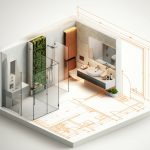
The wrong light at your bathroom mirror can ruin a morning routine, casting strange shadows and making colors look completely off. This daily frustration is precisely what the modern led vanity light bar was designed to solve. Unlike bulky, multi-bulb fixtures of the past, these sleek, integrated lights deliver exceptionally even, high-quality illumination that transforms your vanity from a functional-but-flawed space into a pristine grooming station.
This isn’t just about a style upgrade; it’s about getting the light right.
At a Glance: Your LED Vanity Light Bar Cheat Sheet
Here’s what you’ll be able to do after reading this article:
- Understand why “integrated LED” is a massive upgrade over traditional bulbs.
- Confidently choose the right color temperature (CCT) for tasks like makeup application or shaving.
- Demand a high Color Rendering Index (CRI) to ensure you see skin tones and colors accurately.
- Properly size your light bar to your mirror for a balanced, professional look.
- Decide between horizontal and vertical mounting to eliminate unflattering shadows.
- Avoid common pitfalls, like buying a light that’s too dim or has a non-replaceable light source without a good warranty.
Beyond the Bulb: Why an Integrated LED Light Bar is a Smarter Choice
When we talk about an led vanity light bar, we’re typically referring to a fixture with “integrated” LEDs. This simply means the light source is built directly into the fixture itself—there are no traditional bulbs to buy, screw in, or replace.
While this might sound strange at first, it’s the key to their superior performance and design.
- Unmatched Longevity: An integrated LED fixture is designed as a complete system. The LEDs are engineered to last for 30,000 to 50,000 hours. If you use your vanity light for three hours a day, that’s a lifespan of 25 to 45 years.
- Superior Light Quality: Because the LEDs are precisely placed within the fixture, they work with the diffuser (the acrylic or glass cover) to spread light evenly across your face. This drastically reduces the “hot spots” and harsh shadows created by individual bulbs.
- Sleek, Minimalist Designs: Without the need to accommodate bulky screw-in bulbs, designers can create incredibly slim, low-profile fixtures. This opens up a world of minimalist and modern styles that are impossible to achieve with traditional designs.
- Energy Efficiency: LEDs consume a fraction of the energy of incandescent or even CFL bulbs, saving you money on your electricity bill over the fixture’s long life.
The one consideration is that the light source isn’t user-replaceable. This makes it crucial to buy from a reputable brand with a solid warranty (look for 3-5 years), but given their extreme longevity, it’s a trade-off that overwhelmingly favors the integrated design.
Decoding the Light “Recipe”: CCT, CRI, and Lumens Explained
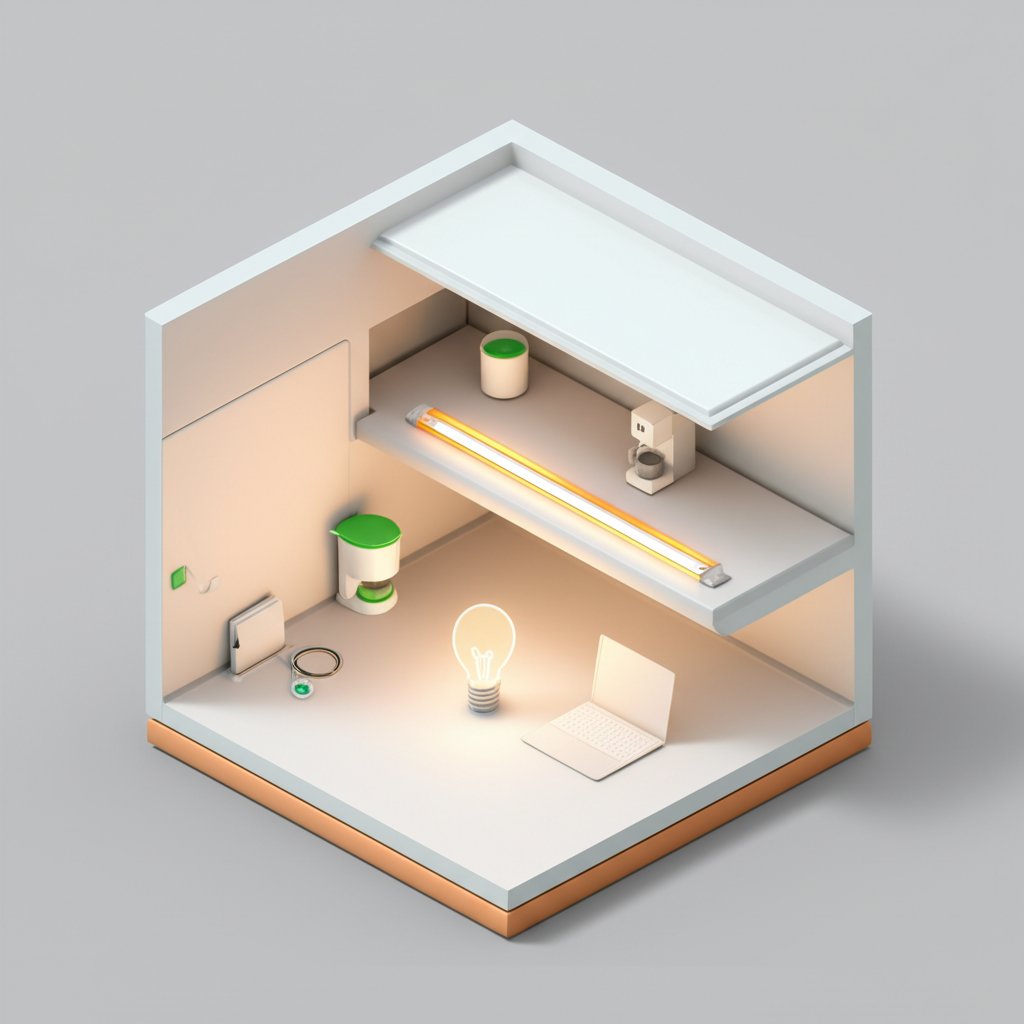
Choosing an LED fixture involves looking at a few key specs that determine the quality and character of the light. Getting these right is the difference between a functional, beautiful space and one that just feels “off.”
Color Temperature (CCT): From Warm Glow to Crisp Daylight
Correlated Color Temperature (CCT) measures how “warm” (yellowish) or “cool” (bluish) the white light appears. It’s measured in Kelvin (K). For a bathroom, you’ll generally choose between three main options:
- 2700K – 3000K (Warm to Soft White): This is the color of a traditional incandescent bulb. It’s warm, cozy, and flattering, making it excellent for a powder room or a primary bathroom where you want a more relaxing, spa-like ambiance. 3000K is often considered the sweet spot for general-purpose use.
- 3500K – 4000K (Neutral to Cool White): This range produces a brighter, more neutral white light. It’s fantastic for task lighting—think precise shaving or detailed makeup application—because it renders colors more crisply without being harsh or sterile. 4000K is a popular choice for modern, clean-lined bathrooms.
- 5000K+ (Daylight): This is a very cool, blue-tinted light that mimics direct daylight. While it’s excellent for pure task accuracy, many people find it too clinical or harsh for a residential bathroom.
Pro Tip: Many modern LED vanity light bars now come with selectable CCT. A small switch on the fixture allows you to choose between 3000K, 4000K, and sometimes 5000K during installation, giving you the flexibility to find the perfect setting for your space.
Color Rendering Index (CRI): The Secret to Seeing True Colors
CRI is arguably the most important, and most overlooked, metric for bathroom lighting. It measures a light source’s ability to faithfully reveal the true colors of objects compared to natural light. The scale goes up to 100 (which is natural sunlight).
Have you ever put on makeup, thought it looked great, and then walked outside to find it was completely the wrong shade? That was likely due to a low-CRI light source.
For a bathroom vanity, look for a CRI of 90 or higher. This is the gold standard. A high CRI ensures that your skin tones, makeup colors, and even your clothing look accurate in the mirror. Most cheap, low-quality LED fixtures cut costs by using low-CRI (often ~80) chips, which can result in a dull, washed-out reflection. Don’t compromise here.
Lumens: Measuring Brightness for a Functional Space
Forget watts—lumens are the true measure of a light’s brightness. For a vanity, you need enough light to see clearly without creating glare. A good rule of thumb is to aim for 700 to 1600 total lumens for a single-sink vanity area.
- A 24-inch bar might produce around 900-1200 lumens.
- A 36-inch bar could be in the 1400-1800 lumen range.
- A 48-inch bar can produce 2000+ lumens.
These numbers provide bright, functional light. If you have other light sources in the room, like recessed cans, you can lean toward the lower end of the range. Once you’ve defined these core lighting needs, you can explore fixture styles and finishes in our comprehensive Vanity Light Bar Guide.
The Practical Playbook: Sizing and Placing Your Fixture Like a Pro

How you size and position your led vanity light bar is just as important as its technical specs. Follow these two simple rules for a flawless, professional installation.
Rule #1: Match the Bar Length to Your Mirror
The goal is visual balance and even light distribution. A light that’s too small will look awkward and create shadows on the edges of your face. One that’s too large will overpower the mirror.
- Best Practice: Choose a light bar that is approximately 75% of the width of your mirror, but not wider than it.
- Example: For a 36-inch wide mirror, a bar between 28 and 36 inches is ideal. For a 24-inch mirror, an 18 to 24-inch bar works perfectly.
Here’s a quick reference table:
| Mirror Width | Recommended LED Bar Length |
| :— | :— |
| 24 inches | 18-24 inches |
| 30 inches | 24-30 inches |
| 36 inches | 28-36 inches |
| 48 inches | 36-48 inches |
| 60+ inches (Double Vanity) | Two vertical bars OR one 48″+ bar |
Rule #2: Choose Your Mounting Style—Horizontal vs. Vertical
You have two primary options, each with distinct advantages.
Horizontal (Above the Mirror):
This is the most common placement. It provides good overall illumination for the vanity area.
- Pros: Easy to center, requires only one electrical junction box, works well in rooms with standard 8-foot ceilings.
- Cons: Can cast shadows under your chin, nose, and eyes if the light is too focused downward.
- Placement: Mount the fixture 3-5 inches above the mirror frame.
Vertical (Sconces on the Sides):
Placing two shorter vertical LED bars on either side of the mirror provides the absolute best light for grooming tasks. - Pros: Delivers perfectly even, shadowless cross-illumination on your face. This is the preferred method for makeup artists and designers.
- Cons: Requires two junction boxes, more complex planning, and sufficient wall space on both sides of the mirror.
- Placement: Mount the fixtures so the midpoint of each bar is roughly at eye level (around 66 inches from the floor).
Real-World Scenarios: Putting It All Together
Let’s see how these rules apply in practice.
Snippet 1: The Sleek Single Vanity
A homeowner is installing a 48-inch floating vanity with a matching 48-inch-wide frameless mirror. They want a clean, modern look.The Solution: A 36-inch slim profile led vanity light bar in a matte black finish. It meets the 75% sizing rule, creating a balanced aesthetic. They choose a model with selectable CCT and set it to 4000K for crisp, true-to-life light, and its 90+ CRI ensures their morning routine is flawless. It’s mounted horizontally, 4 inches above the mirror.
Snippet 2: The Functional Double Vanity
A couple is renovating their primary bathroom, which features a 72-inch double vanity with two 30-inch-wide mirrors separated by a small gap. They both need excellent task lighting in the morning.The Solution: They opt for four 18-inch vertical LED bars. One is placed on the outer edge of each mirror, and two are placed in the center gap between the mirrors. This provides perfect cross-lighting for both individuals, eliminating any chance of facial shadows. They choose a dimmable 3000K model with a 93 CRI, giving them bright task light that can be dimmed for a relaxing evening ambiance.
Quick Answers to Common Questions
What is the best color temperature for a bathroom vanity light?
For the most versatile and functional light, 3000K (soft white) or 4000K (neutral white) are the best choices. 3000K offers a comfortable, flattering light, while 4000K provides a cleaner, more energizing light that is excellent for detail-oriented tasks. If you can, get a CCT-selectable model to test which you prefer.
Can you replace the bulbs in an integrated LED vanity light bar?
No, the LED diodes are built directly into the fixture and are not designed to be replaced by the consumer. However, they are designed to last for tens of thousands of hours (often 15-25+ years of normal use), so you won’t need to. Always buy from a brand that offers a multi-year warranty for peace of mind.
Are LED vanity lights dimmable?
Many are, but not all. You must check the product specifications. If a fixture is listed as dimmable, you also need to pair it with a compatible LED dimmer switch (an ELV-type dimmer is often recommended) to avoid flickering or buzzing.
How long do LED vanity light bars really last?
Most are rated for 30,000 to 50,000 hours. This means if you use the light for 3 hours per day, it will last between 27 and 45 years. The fixture itself will likely be stylistically dated long before the LEDs fail.
Your 3-Point Action Plan
Ready to choose the perfect fixture? Don’t get overwhelmed. Focus on these three steps, and you’ll make a great decision.
- Measure and Size First: Before you even start browsing, measure the width of your mirror. Determine your ideal bar length (around 75% of the mirror width) and decide if a horizontal or vertical orientation works best for your space and needs.
- Define Your Light “Recipe”: Decide on your ideal CCT (3000K for ambiance, 4000K for tasks) and commit to only looking at fixtures with a CRI of 90 or higher. This non-negotiable step guarantees high-quality light.
- Check for Dimmability and Warranty: Finalize your choice by confirming if you need a dimmable fixture and ensuring it comes with at least a 3-year warranty. This protects your investment and ensures you get the performance you paid for.
By focusing on these fundamentals, you can confidently select an led vanity light bar that not only looks stunning but provides professional-grade lighting for years to come.

- DIY Bathroom Mirror Frame Designs on a Budget - October 12, 2026
- Creative Bathroom Mirror Border Ideas for Every Style and Budget - October 11, 2026
- Bathroom Finishes That Handle Moisture and Look Great - October 10, 2026