That awkward, shadowy corner in your hallway. The tiny nook next to your favorite armchair that’s too small for a floor lamp. The powder room where a bulky vanity light would feel overwhelming. These are the places where small wall sconces don’t just shine—they transform. Far from being a mere footnote in lighting design, these compact fixtures are the unsung heroes of well-layered, functional, and stylish interiors.
They prove that you don’t need sprawling square footage to make a big impact. With the right small sconce, you can add a pool of welcoming light, highlight a piece of art, or create a cozy reading spot without sacrificing a single inch of floor or table space. It’s about being smart, strategic, and seeing the potential in every vertical surface.
At a Glance: Your Guide to Small Sconces
Pressed for time? Here’s the big picture on bringing compact lighting into your home:
- Problem Solvers: Small sconces are perfect for tight spaces like hallways, entryways, small bedrooms, and powder rooms where floor and surface space is at a premium.
- Plug-In vs. Hardwired: Your primary choice. Plug-in sconces offer flexibility and are renter-friendly, while hardwired options provide a cleaner, more integrated look.
- Placement is Key: The height and spacing of your sconces dictate their function and feel. Flanking a mirror, lighting a hallway, or creating a reading nook each have different ideal placements.
- Light Quality Matters: Look beyond the fixture’s style to its light output (lumens) and color temperature (Kelvin). Warm white light (around 2700K) is cozy, while cool white (3000K+) is more energizing.
- Style and Scale: The sconce should complement your room’s decor, not overpower it. A small space doesn’t automatically mean a tiny sconce; it’s about proportional balance.
More Than Just Light: The Case for Thinking Small
Why dedicate an entire guide to small sconces? Because their strategic use is one of the most effective ways to elevate a home’s design and functionality. When you have limited room to work with, every choice counts, and compact lighting offers a trifecta of benefits.
Solving the “No-Floor-Space” Problem
This is the most obvious advantage. In a narrow entryway, a floor lamp is a tripping hazard. In a small bedroom, a bedside table might be cluttered with a book, a glass of water, and an alarm clock—leaving no room for a lamp. Wall sconces reclaim that precious real estate.
By moving your light source onto the wall, you free up surfaces and walkways. This not only makes a room feel larger and less cluttered but also opens up new possibilities for furniture arrangement. Suddenly, that tiny corner can fit a small plant stand or a decorative basket because it’s not competing with a lamp base.
Creating Ambiance, Not Overload
Overhead lighting can be harsh and one-dimensional. Small wall sconces are masters of ambiance. They provide soft, indirect pools of light that create a warm, inviting atmosphere—a concept interior designers call “layered lighting.” Instead of one bright source blasting down from the ceiling, you have multiple, gentler sources at human height.
This approach eliminates stark shadows and makes a space feel more considered and comfortable. Think of them as the lighting equivalent of a dimmer switch for your room’s entire mood. You can find a huge variety of Mini wall sconce ideas that excel at creating this soft, layered effect.
The Perfect Accent for Art and Architecture
A small, directional sconce—often called a picture light or an accent light—can turn a favorite painting or photograph into a true focal point. It draws the eye and gives the piece the attention it deserves. Similarly, you can use sconces to highlight interesting architectural details, like a brick accent wall, a built-in bookshelf, or the space above a fireplace mantel. This technique adds depth and character, making your home feel custom-designed.
Hardwired vs. Plug-In: The First Big Decision
Before you fall in love with a specific style, you need to decide how your sconce will get its power. This is the most fundamental choice, and it depends on your home, your budget, and your DIY comfort level.
| Feature | Hardwired Sconces | Plug-In Sconces |
|---|---|---|
| Appearance | Clean, seamless look with no visible cords. | Visible cord that runs down the wall to an outlet. |
| Installation | Requires electrical work; best done by a licensed electrician. | DIY-friendly; mounts to the wall like a picture frame. |
| Control | Typically controlled by a wall switch. | Usually has an on/off switch on the cord or fixture itself. |
| Permanence | Considered a permanent fixture of the home. | Easy to move and take with you when you leave. |
| Best For | New builds, renovations, bathrooms, and a polished look. | Renters, flexible spaces, and avoiding electrical work. |
The Case for Hardwired
A hardwired sconce is connected directly to your home’s electrical system. The result is a clean, professional finish with no cords to manage. This is the gold standard for bathrooms, kitchens, and formal living spaces where a seamless look is desired. The main drawback is the installation, which usually requires an electrician to run wiring to a junction box inside the wall.
The Freedom of Plug-In
Plug-in wall sconces offer incredible flexibility. You can install one almost anywhere there’s a nearby outlet. This makes them a favorite for renters or for anyone who likes to rearrange furniture frequently. Many modern designs even incorporate the cord into the aesthetic, using fabric-wrapped cables or decorative clips to make it a feature rather than a flaw. They are the perfect solution for adding a reading light beside a bed or a touch of light to a living room corner without calling an electrician.
Placement is Everything: Where to Install Your Small Sconces
A beautiful sconce in the wrong spot is a design miss. Proper placement ensures the light is functional, flattering, and integrated with the room’s flow. Here are the tried-and-true guidelines for the most common applications.
In the Hallway: A Pathway of Light
Hallways are often narrow and dark, making them prime candidates for space-saving sconces. They provide illumination without obstructing the path.
- Height: A good rule of thumb is to mount them at eye level, roughly 60 to 66 inches from the finished floor. If you have very high ceilings (10+ feet), you can go slightly higher, up to 72 inches.
- Spacing: If you’re using multiple sconces, space them about 8 to 10 feet apart. Stagger them on opposite walls in a long, narrow hallway to create a balanced rhythm of light. For these areas, it’s often best to Explore low profile sconces to ensure they don’t stick out too far and get bumped.
Beside the Bed: Your New Favorite Reading Light
Replacing bedside table lamps with wall sconces is a game-changing move for small bedrooms. It frees up your entire nightstand surface.
- Height: Sit up in bed in your normal reading position. The bottom of the sconce shade should be just above your shoulder height, typically 24 to 30 inches above the mattress. This puts the light on your book without shining directly in your eyes.
- Position: Mount them slightly outside the width of your headboard, or about 6 to 12 inches from the side of the bed, to create a cozy, defined space.
Flanking a Mirror: Bathroom & Vanity Brilliance
This is the single best way to light a bathroom vanity. Sconces mounted on either side of a mirror provide even, flattering light across your face, eliminating the harsh shadows created by a single overhead fixture.
- Height: The center of the light source should be right at eye level, again around 60 to 65 inches from the floor. This ensures the light hits your face directly.
- Spacing: Place the sconces a few inches to the side of the mirror’s edge, roughly 30 to 36 inches apart from each other. This cross-illumination is what makes you look your best.
Finding a Style That Speaks to You
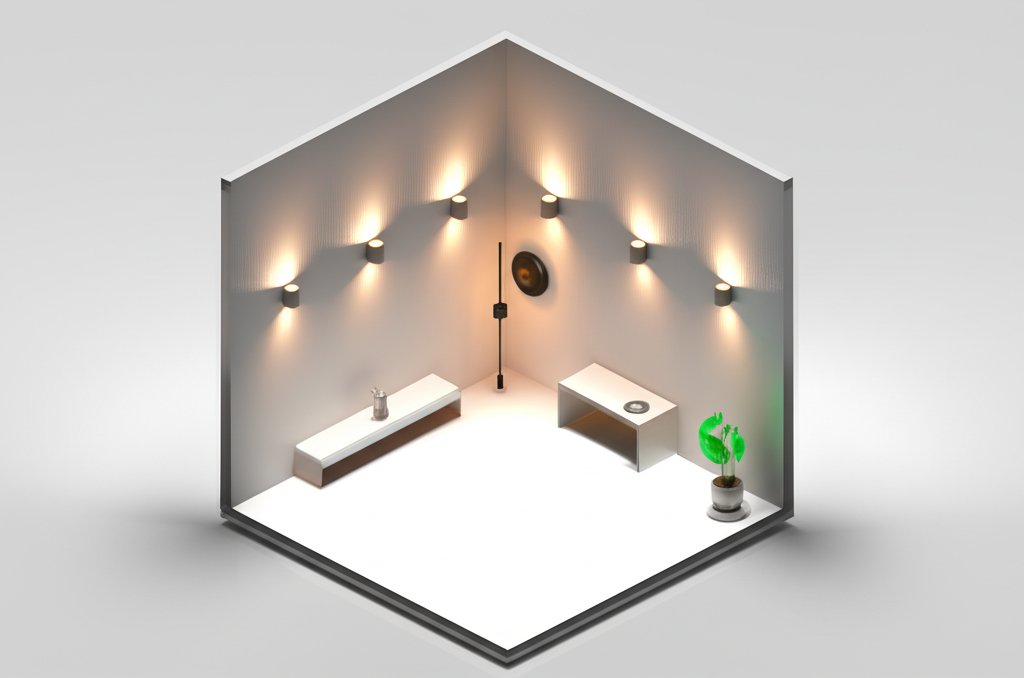
Once you’ve sorted out the practicalities of power and placement, it’s time for the fun part: choosing a style. Small sconces come in a dizzying array of designs, from barely-there minimalist fixtures to ornate, traditional pieces. The goal is to find something that complements your existing decor.
Sleek and Simple: The Modernist’s Choice
Modern design prioritizes clean lines, simple geometry, and unadorned materials. Think sleek cylinders, simple globes, or sharp-angled fixtures in finishes like matte black, brushed nickel, or polished chrome. These sconces are designed to blend in seamlessly, providing light without adding visual clutter. They are perfect for minimalist, Scandinavian, or mid-century modern interiors. You can discover a wide range of Modern & Contemporary Sconce Designs that fit this exact aesthetic.
Warm and Welcoming: Farmhouse and Rustic Charm
Farmhouse and rustic styles lean into natural materials and a sense of history. Look for sconces with weathered wood accents, oil-rubbed bronze or antiqued brass finishes, and classic shapes like goosenecks or lantern-style frames. Clear or seeded glass shades that show off an Edison-style bulb are also a hallmark of this cozy, inviting look.
Timeless Elegance: Traditional and Transitional Designs
Traditional sconces often feature more ornate details: curved arms, fabric shades, and decorative backplates. Finishes like polished brass or bronze lend a classic, formal feel. Transitional style bridges the gap between traditional and modern, taking a classic shape and simplifying it for a more updated, less fussy look that works with a wide range of decor. There are many Compact sconce options that offer this versatile, timeless appeal.
Your Sconce Questions, Answered
Navigating the world of lighting can bring up a lot of questions. Here are crisp answers to some of the most common ones.
Do I need a dimmer for my wall sconces?
While not strictly necessary, a dimmer is highly recommended. It gives you ultimate control over the ambiance, allowing you to go from bright, functional light for tasks to a soft, warm glow for relaxing. It’s a small upgrade that makes a huge difference.
What if I’m a renter? Can I still use wall sconces?
Absolutely! This is where plug-in sconces are your best friend. They mount to the wall with a couple of screws, just like a heavy picture frame, and require no electrical work. When you move out, you can patch the small screw holes and take your beautiful lights with you.
Are battery-operated sconces a good idea?
Battery-powered “puck light” sconces have become popular for their extreme ease of installation. They are a fantastic solution for purely decorative accent lighting in a spot with no outlet. However, they are not ideal for primary or task lighting. The light output is generally lower, and you’ll have to change or recharge the batteries regularly, which can become a hassle in a high-use area.
Mistakes to Sidestep When Installing Small Sconces
- Going Too Small: Just because the space is small doesn’t mean the sconce has to be minuscule. A fixture that is too tiny can look lost and insignificant. Consider the overall scale of the wall and surrounding furniture.
- Ignoring Glare: Position your sconce so the bare bulb isn’t in your direct line of sight. Look for fixtures with shades, diffusers, or an upward-facing design to cast a softer, more pleasant light.
- The Wrong Height: This is the most common mistake. A sconce mounted too high can feel disconnected from the room, while one mounted too low can be in the way or cast awkward shadows. Revisit the placement guidelines and measure twice!
- Forgetting the Function: Before you buy, ask yourself: “What do I need this light to do?” A directional sconce is great for reading, while an ambient, up-light sconce is better for setting a mood in a hallway. Let function guide your form.
Ready to Light Up Your Space?
Choosing the right small wall sconce isn’t about finding the smallest possible fixture. It’s about finding the right light for the right job, in a package that fits your space and speaks to your style. By thinking through your needs—from the power source to the placement, from the brightness to the design—you can unlock the hidden potential in your home’s coziest corners.
Don’t let a compact space feel like a limitation. See it as an opportunity to be creative and intentional with your lighting. A well-placed sconce is more than just a utility; it’s a piece of functional art that adds warmth, character, and a touch of brilliance to the places you live in every day.

- DIY Bathroom Mirror Frame Designs on a Budget - October 12, 2026
- Creative Bathroom Mirror Border Ideas for Every Style and Budget - October 11, 2026
- Bathroom Finishes That Handle Moisture and Look Great - October 10, 2026