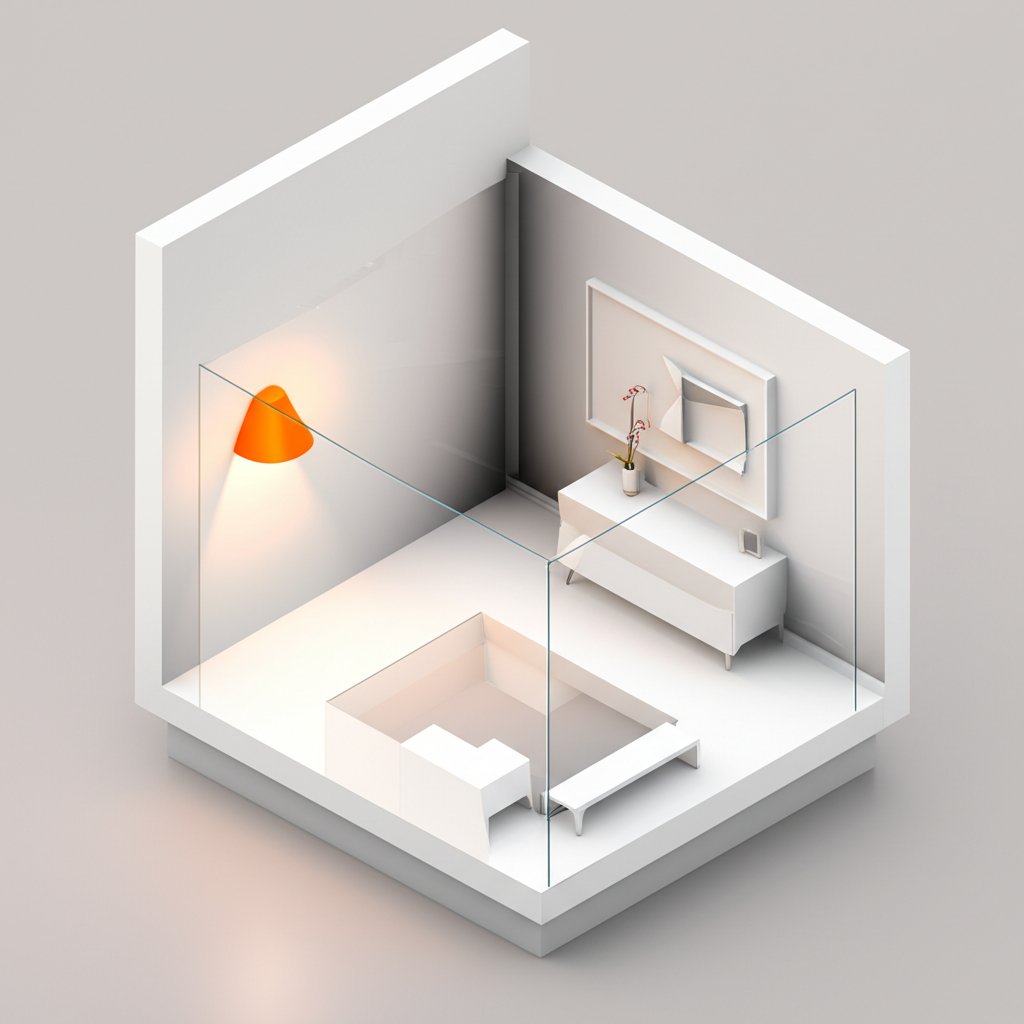
The wrong lighting can make a thoughtfully designed room feel flat and uninspired. While overhead fixtures are functional, it’s the strategic layers of light that create depth, mood, and sophistication. This is where modern contemporary wall sconces shine—acting not just as light sources, but as deliberate architectural elements that transform a wall from a simple boundary into a design feature. They are the ultimate expression of form meeting function, offering a streamlined solution that saves space without sacrificing style.
At a Glance: Your Guide to Modern Sconces
- Decode the Nuances: Understand the subtle but important differences between “modern” and “contemporary” styles to find the perfect fit for your home.
- Identify Core Elements: Learn to spot the key characteristics of a great modern sconce: clean lines, geometric forms, and authentic materials.
- Master Strategic Placement: Discover the professional’s rules for placing sconces in hallways, bedrooms, and bathrooms for maximum impact.
- Choose the Right Glow: Go beyond the fixture to select the correct light temperature (Kelvins) and brightness (lumens) to set the perfect mood.
- Avoid Common Pitfalls: Sidestep frequent mistakes like incorrect height, poor scaling, and neglecting the power of a dimmer switch.
Defining the Aesthetic: Modern vs. Contemporary Sconces
While the terms “modern” and “contemporary” are often used interchangeably in design showrooms, they have distinct origins. Understanding the difference helps you refine your search and articulate your vision.
Modern design refers to a specific historical period, primarily the early to mid-20th century (think Bauhaus and Mid-Century Modern). Modern sconces rooted in this tradition emphasize:
- Clean, unadorned lines.
- Simple geometric shapes like circles, squares, and straight lines.
- Natural and industrial materials, including wood, leather, steel, and plastic.
- A belief that form should follow function.
Contemporary design, on the other hand, is dynamic—it reflects the trends of right now. While it borrows heavily from modernism’s love for simplicity, it also incorporates: - Softer, more rounded lines and organic curves.
- Asymmetrical or sculptural forms that feel like art installations.
- Cutting-edge materials and innovative finishes, from concrete to matte black and brushed brass.
- A playful approach to structure and form.
The term modern contemporary wall sconces captures the beautiful overlap where these two styles meet. It describes fixtures that are clean, uncluttered, and forward-thinking, making them incredibly versatile for today’s interiors.
The Anatomy of a High-Impact Modern Sconce
When you’re evaluating options, look past the initial “wow” factor and analyze the core components. The best designs excel in four key areas.
1. Form and Shape: From Minimalist to Sculptural
The silhouette of the sconce is its most defining feature. Modern contemporary designs celebrate structure, often through bold geometry or futuristic shapes. Look for linear bars that cast light up and down, perfect globes that seem to float off the wall, or asymmetrical arrangements that create visual tension. As noted by industry experts, these fixtures are designed to be “artfully streamlined,” instilling functionality within a striking form.
2. Materials and Finishes: The Foundation of Quality
Materials do more than just hold the bulb; they communicate a specific feeling.
- Matte Black: A versatile classic that grounds a space and pairs well with any color palette.
- Brushed Brass & Soft Gold: Adds warmth, luxury, and a touch of vintage glamour.
- Polished Chrome & Nickel: Delivers a sleek, cool, and highly reflective finish ideal for bathrooms and kitchens.
- Concrete & Plaster: Provides an organic, textural quality for a Japandi or wabi-sabi aesthetic.
- Natural Wood: Introduces warmth and a biophilic element, often seen in Scandinavian and Mid-Century Modern designs.
3. Light Direction: Crafting the Atmosphere
How a sconce casts light is just as important as how it looks.
- Uplighting: Bounces light off the ceiling for soft, ambient illumination. Great for making a room feel larger.
- Downlighting: Creates pools of light, ideal for task-oriented areas or highlighting a console table.
- Up/Down Lighting: The most versatile option, washing the wall above and below for a dramatic, layered effect.
- Diffused Lighting: Emits a gentle, all-over glow through a frosted or fabric shade, perfect for ambient light.
While these aesthetic principles apply to fixtures of all sizes, they become particularly impactful in smaller designs. Choosing the right form and function is key for effective Small sconces for compact spaces, where every detail counts.
A Practical Playbook for Sconce Placement
Where you hang your sconce determines its success. Follow these room-by-room guidelines to get it right every time.
The Hallway Runway
Long, narrow hallways can feel like tunnels. A series of modern sconces breaks up the monotony and turns the passage into a gallery-like experience.
- Spacing: Hang one sconce every 8 to 10 feet in a long hallway. Stagger them on opposite walls to create a balanced rhythm.
- Height: Place the center of the fixture between 60 and 66 inches from the floor—roughly at eye level.
- Style Tip: Choose a slim, low-profile design (like a vertical bar or a flush-mounted disc) to avoid obstructing the walkway.
The Bedside Upgrade
Free up your nightstand by replacing bulky table lamps with sleek wall sconces. This creates a clean, hotel-inspired look.
- Height: Mount them so the bottom of the sconce is about 20-24 inches above the mattress, placing the light source just above your shoulder when you’re sitting up to read.
- Controls: Ensure each sconce has its own switch, either on the fixture itself or on the wall within easy reach from the bed.
- Mini-Case Snippet: For a client’s compact primary bedroom, we installed two articulating arm sconces in a brushed brass finish. This allowed them to direct light precisely for reading without disturbing their partner, and the warm metal finish added a touch of luxury that elevated the entire room.
The Bathroom Vanity Frame
The key to good vanity lighting is eliminating shadows. Sconces are superior to a single overhead fixture for this.
- Placement: The ideal setup is a pair of sconces flanking the mirror. Mount them 36 to 40 inches apart, centered on the faucet, with the midpoint of each fixture at eye level (again, 60-66 inches from the floor).
- Safety Rating: Crucially, ensure any sconce used in a bathroom is rated “Damp” or “Wet,” depending on its proximity to the shower or tub.
- Above the Mirror: If wall space is limited, a single horizontal, linear sconce mounted above the mirror is an excellent modern alternative.
Beyond the Fixture: Choosing the Right Light
The sconce is the body, but the bulb is the soul. The light it emits will define your room’s mood.
Kelvin Temperature: The Color of Light
Color temperature is measured in Kelvins (K) and determines if the light feels warm (yellowish) or cool (bluish).
| Kelvin Range | Light Appearance | Best For |
|---|---|---|
| 2700K | Warm, Cozy White | Bedrooms, living rooms, and dens for a relaxing, intimate feel. |
| 3000K | Soft, Neutral White | Kitchens and bathrooms for a crisp, clean light that’s still inviting. |
| 4000K-5000K | Cool White / Daylight | Garages, workshops, and home offices where energizing task light is needed. |
| For most residential applications, staying between 2700K and 3000K provides the most flattering and comfortable atmosphere. |
Lumens and Dimmers: The Brightness Equation
Forget watts; modern lighting is measured in lumens, which indicates brightness. For a wall sconce, the ideal lumen count depends on its job:
- Ambient/Accent Light: 150–300 lumens is often sufficient.
- Task Light (e.g., bedside reading): Aim for 400–800 lumens.
A dimmer switch is non-negotiable for modern sconces. It is the single most important tool for controlling your lighting. A dimmer allows a single fixture to serve multiple purposes—bright for cleaning or tasks, and low for relaxing or entertaining. Always check that both your sconce (especially if it has an integrated LED) and the bulb are “dimmable.”
Quick Answers: Your Sconce Questions, Solved
Q: Can I use modern contemporary wall sconces in a traditional or transitional home?
A: Absolutely. This is a classic designer move to create sophisticated contrast. A minimalist black or brass sconce can instantly update a traditional foyer or powder room. The key is to find a common thread—perhaps the metal finish matches your door hardware or faucet—to create a cohesive look.
Q: Are plug-in modern sconces a good option?
A: Yes, they are a fantastic solution for renters or anyone who wants to avoid the cost and hassle of hiring an electrician. Many high-end designers now offer plug-in versions of their most popular hardwired sconces. Look for designs that feature a stylish cord (like a fabric-wrapped one) to make it a deliberate part of the aesthetic.
Q: How high should I hang my wall sconces?
A: The standard guideline is to center the fixture at 60-66 inches from the finished floor. However, rules are made to be broken. In a room with very high ceilings (10+ feet), you may want to hang them a bit higher, around 72 inches. For bedside sconces, function dictates height—position them for easy reach and glare-free reading. Always consider the scale of the room and surrounding furniture.
Q: What’s the biggest mistake people make with these sconces?
A: Choosing the wrong scale. A tiny, delicate sconce will get lost on a large, empty wall, while a massive, sculptural piece will overwhelm a small hallway or nook. Before you buy, use painter’s tape to mark the sconce’s height and width on the wall. This simple trick helps you visualize its presence and ensure it feels balanced in the space.
Your Modern Lighting Quick-Start Guide
Choosing the right modern contemporary wall sconces doesn’t have to be complicated. They are powerful design tools that add layers and sophistication with minimal footprint. Follow this simple decision path to find the perfect fixture.
- Start with Purpose: First, define the light’s job. Is it for general ambient glow in a living room, focused task lighting by a reading chair, or dramatic accent light on an architectural feature?
- Assess Your Style: Do you prefer the strict geometry and warm woods of true Mid-Century Modern, or the fluid, sculptural forms of the contemporary aesthetic?
- Select a Cohesive Finish: Look at the existing hardware in your room (faucets, cabinet pulls, door knobs). Match them for a seamless, integrated look, or choose a bold, contrasting finish like matte black to make your sconces a statement piece.
- Check the Technical Specs: Finalize your choice by confirming the Kelvin temperature (2700K is a safe bet for cozy spaces) and ensuring the fixture is compatible with a dimmer switch.
The right sconce doesn’t just illuminate a room—it completes it. By focusing on form, material, and placement, you can use these elegant fixtures to bring a professional, polished touch to any interior.

- DIY Bathroom Mirror Frame Designs on a Budget - October 12, 2026
- Creative Bathroom Mirror Border Ideas for Every Style and Budget - October 11, 2026
- Bathroom Finishes That Handle Moisture and Look Great - October 10, 2026