That dark, slightly forgotten space beneath your feet? It’s not just a basement; it’s a blank canvas. But without the right lighting, it’s a canvas you can’t see. The single bare bulb hanging from a rafter isn’t cutting it anymore. Transforming this potential-filled area into a bright, functional, and inviting part of your home starts with one crucial decision: choosing the right led basement lights.
Forget the flickering, buzzing fluorescent tubes of the past. Modern LED technology offers a universe of options that are more efficient, versatile, and stylish than ever before. This guide will walk you through everything you need to know to make your basement feel less like a dungeon and more like a destination.
At a Glance: Your Basement Lighting Cheat Sheet
Don’t have time to read every detail? Here are the key takeaways for a brilliantly lit basement:
- Brightness is Measured in Lumens, Not Watts. Aim for 30-40 lumens per square foot for general living areas and 70-80 lumens per square foot for task-heavy spaces like workshops or laundry rooms.
- Color Temperature Creates Mood. Warm White (around 3000K) is cozy for dens and home theaters. Cool White (4000K-5000K) is crisp and clear, perfect for workspaces and gyms.
- Fixture Type Defines Function. Recessed lights provide clean, overall light. Track lights offer flexibility. Strip lights create ambiance. The right fixture depends entirely on your basement’s layout and purpose.
- Don’t Forget the Details. Dimmers offer incredible versatility, and a “damp” rating is non-negotiable for most basements to ensure safety and longevity.
Why Your Basement Lighting Plan Is So Important
Lighting a basement presents a unique set of challenges. Unlike an upstairs bedroom or kitchen, you’re often starting with a deficit of the best light source there is: the sun. This lack of natural light means your artificial lighting has to work harder and smarter.
Most basements also contend with lower ceilings, exposed ductwork, and specific zones that serve wildly different purposes—a laundry area might be ten feet away from a home theater. A one-size-fits-all approach just won’t work.
This is where LED (Light Emitting Diode) technology shines. LEDs are the undisputed champions for basement illumination because they:
- Are incredibly energy-efficient, using up to 80% less energy than traditional bulbs and lowering your electricity bill.
- Produce very little heat, a significant benefit in a space that can already have temperature and humidity challenges. This also reduces the load on your HVAC system.
- Last for years, often decades, meaning you won’t be climbing a ladder to change bulbs in an awkward corner anytime soon.
Your goal isn’t just to make the basement brighter; it’s to make it better. The right lighting strategy can make low ceilings feel higher, small spaces feel larger, and divided areas feel like intentional, distinct rooms.
The “Big Three” of Light: Decoding Lumens, Kelvin, and CRI
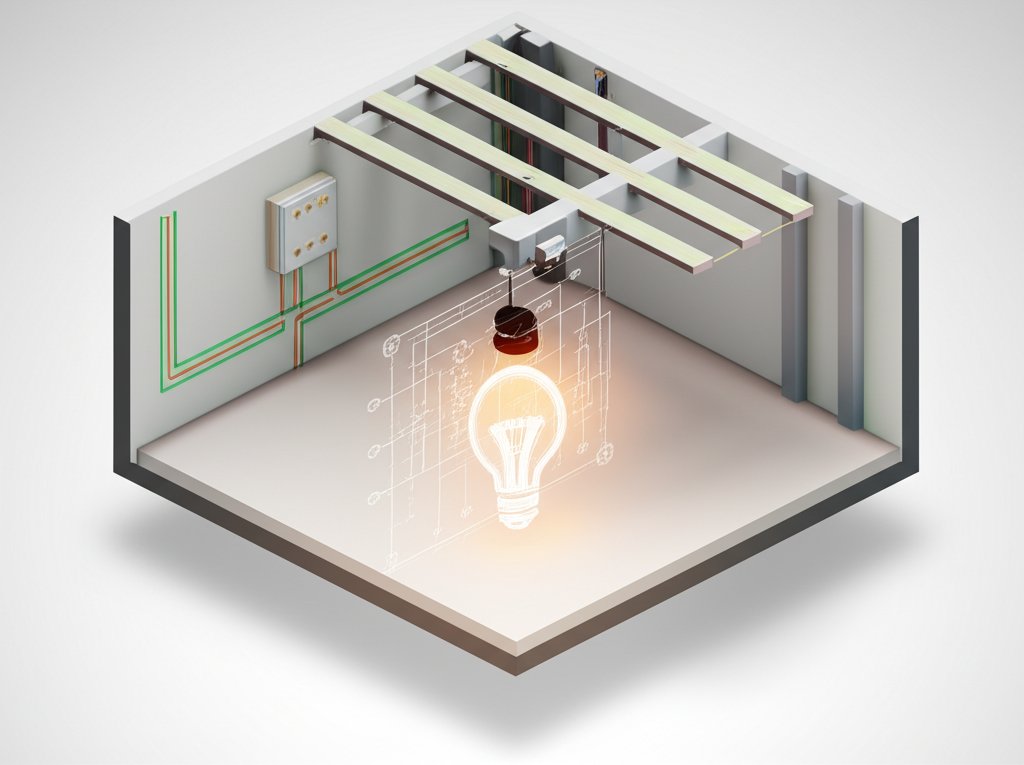
Before you even think about fixtures, you need to understand the language of light. Getting these three concepts right is the foundation of a successful lighting plan.
Lumens: How Bright is Bright Enough?
For decades, we bought bulbs based on watts, which is actually a measure of energy consumption. Lumens measure the actual brightness of a light source. For a basement, where you’re creating light from scratch, getting the lumen count right is critical.
A good rule of thumb is to plan your lighting based on the room’s function:
| Basement Area | Recommended Lumens per Square Foot | Example (10′ x 12′ Room = 120 sq. ft.) |
|---|---|---|
| Home Theater / Lounge | 20-30 lumens | 2,400-3,600 total lumens |
| Home Gym / Playroom | 30-40 lumens | 3,600-4,800 total lumens |
| Laundry Room / Workshop | 70-80 lumens | 8,400-9,600 total lumens |
| How to use this: Simply multiply the square footage of your space by the recommended lumen value to get your total brightness target. Then, you can combine fixtures to reach that number. An 800-lumen recessed light, for example, would mean you need 4-5 of them to light your playroom. |
Kelvin: Crafting the Perfect Mood with Color
Color temperature, measured in Kelvin (K), describes how warm (yellowish) or cool (bluish) the light appears. This isn’t about style; it’s about psychology and function. The wrong color temperature can make a cozy den feel like a sterile clinic.
- Warm White (2700K–3000K): This is the color of a classic incandescent bulb. It’s warm, inviting, and relaxing. It’s perfect for entertainment areas, home bars, or any space designed for comfort.
- Cool White / Neutral White (4000K–5000K): This light is crisp, vibrant, and closer to natural daylight. It enhances focus and energy, making it ideal for a home office, workout space, craft area, or laundry room where you need to see clearly.
- Daylight (5000K–6500K): This is a very cool, blue-tinted light that closely mimics bright, direct sunlight. While intense, it’s excellent for high-detail tasks in a workshop or for boosting alertness in a home gym.
For a multi-purpose basement, consider using different color temperatures in different zones to visually separate the spaces.
CRI: Seeing True Colors
Color Rendering Index (CRI) is a scale from 0 to 100 that measures how accurately a light source reveals the true colors of objects. The sun has a CRI of 100. Cheap, poor-quality LEDs can have a low CRI, which makes everything look washed out and slightly “off.”
For most of the basement, a CRI of 80+ is fine. But for a workshop where you’re painting, a craft room where you’re matching fabric, or even a bar area where you want your decor to pop, look for LEDs with a CRI of 90 or higher.
Choosing the Right Fixture for the Job
Once you know the quality of light you need, you can choose the hardware to deliver it. The type of fixture you install dictates how light is distributed, shaping the look and feel of your basement.
Recessed Lights: The Clean, Modern Standard
Also known as can lights or pot lights, these fixtures are installed directly into the ceiling, sitting flush with the surface. They provide a clean, minimalist look that’s especially valuable in basements with low ceilings, as they don’t hang down and obstruct the space.
- Best For: General ambient lighting across the entire basement. They create broad, even pools of light.
- Things to Consider: Spacing is everything. Poorly planned recessed lights can create a “runway” effect or leave dark spots. If you’re planning a full renovation, our detailed Basement recessed lighting guide can help you map out the perfect layout for your space.
Flush Mounts & Panel Lights: The Powerhouses of Illumination
If you don’t want to cut dozens of holes in your ceiling, flush-mount and panel lights are your best friends. These low-profile fixtures mount directly to the ceiling surface and are designed to spread bright, uniform light over a large area.
- Best For: Replacing old, boxy fluorescent lights in a workshop, laundry room, or home gym. A single large LED panel can illuminate an entire room.
- Things to Consider: While incredibly functional, some designs can be more utilitarian than decorative. However, modern styles offer sleek, edge-lit designs that blend seamlessly into a finished basement. They are consistently ranked among the Best basement light fixtures for their combination of brightness and easy installation.
Track and Monorail Lighting: Flexible and Focused
Track lighting consists of multiple light “heads” that can be positioned and aimed anywhere along a mounted track. This gives you ultimate flexibility to adapt your lighting as the room’s function changes.
- Best For: Highlighting specific features like a piece of art, a brick wall, or a bar. They also work well over a workbench where you need to direct light precisely.
- Things to Consider: The track and heads hang down from the ceiling, so they may not be suitable for very low ceilings (under 7.5 feet). The aesthetic is also more industrial, which can be a pro or a con depending on your style.
Strip Lights & Cove Lighting: The Secret to Ambiance
LED strip lights are flexible, adhesive-backed ribbons of tiny LEDs. They are the ultimate tool for adding layers and creating an indirect, high-end glow.
- Best For: Accent lighting. Install them under cabinets in a kitchenette, behind a TV for bias lighting (which reduces eye strain), inside a bookshelf, or along a tray ceiling for elegant cove lighting.
- Things to Consider: Strip lights are rarely bright enough to be the primary light source for a room. Think of them as the supporting cast that makes your whole lighting scheme look more professional and inviting.
Wall Sconces & Pendant Lights: Adding Style and Layers
Don’t forget the walls! Wall sconces add a much-needed layer of light at eye level, making a space feel cozier and more complete. Pendants are hanging lights that act as both a light source and a major style element.
- Best For: Sconces are great for hallways, stairwells, or flanking a media center. Pendants are a perfect fit over a bar, a game table, or a small kitchenette island.
- Things to Consider: You’ll need adequate ceiling height for pendants to hang comfortably without becoming a head-bumping hazard. Both require dedicated electrical wiring within the wall or ceiling.
Essential Features You Shouldn’t Overlook
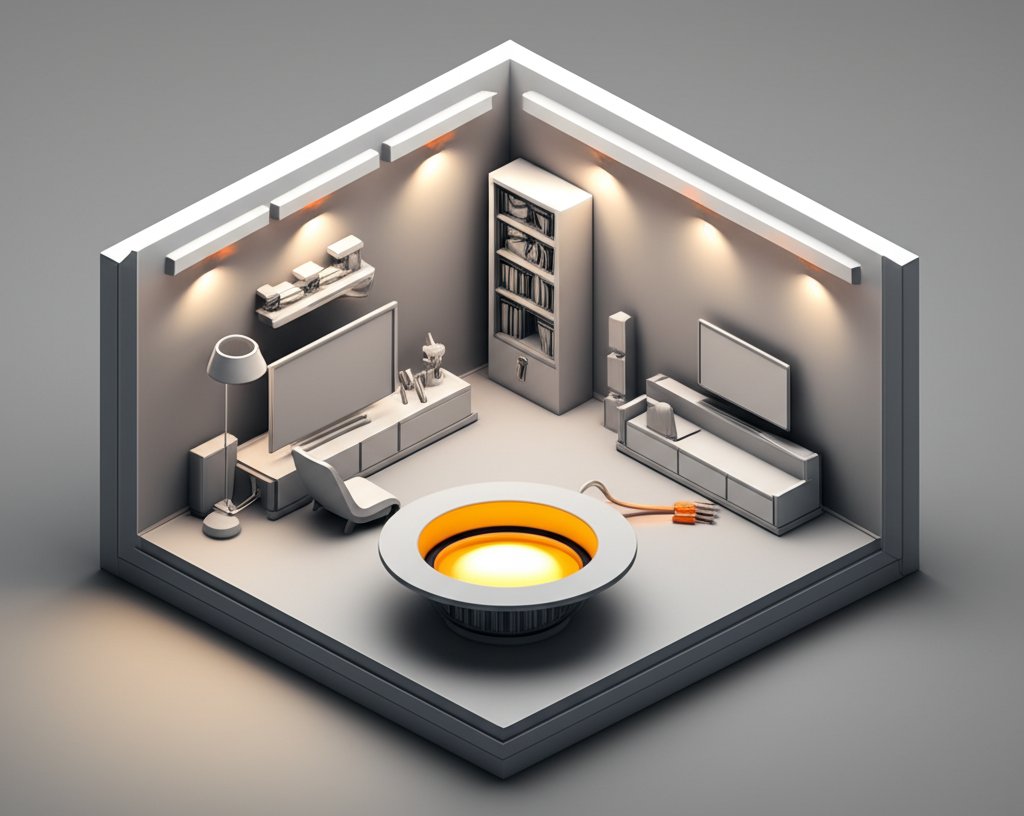
The devil is in the details. Choosing a fixture is half the battle; ensuring it has the right features will make all the difference in daily use.
Dimming Capability: Total Control Over Brightness
A basement is often a multi-purpose room. The bright, energetic light you need for a workout is the exact opposite of what you want for a movie night. Dimmers are the solution. They allow you to adjust the brightness to match the activity, giving you one room with many moods.
Crucial Tip: Not all LED fixtures are dimmable, and not all dimmer switches are compatible with LEDs. To avoid frustrating flicker or buzzing, buy a fixture that is explicitly labeled “dimmable” and pair it with a modern CL-type (CFL/LED) dimmer switch.
Damp & Wet Ratings: A Must for Basements
Basements, by their nature, can be humid or prone to moisture. From laundry room steam to foundation dampness, it’s a reality you can’t ignore. Electrical fixtures are rated for safety in different environments.
- Dry-Rated: For use only in completely dry locations. Not recommended for most basement applications.
- Damp-Rated: Can withstand moisture and condensation. This should be your minimum standard for any light fixture in a basement.
- Wet-Rated: Built to handle direct exposure to water. You’d only need this for a basement shower or a walk-out area exposed to rain.
Always check for an IP (Ingress Protection) rating. For a damp environment, you’ll want something like IP65, which is sealed against dust and can handle water jets—more than enough for a typical basement.
Energy Efficiency: Saving Money in the Long Run
While nearly all LEDs are efficient, some are better than others. Look for fixtures with the ENERGY STAR certification. This is a government-backed symbol for energy efficiency, meaning the product has met strict standards for performance and savings. An ENERGY STAR-certified LED light not only uses less electricity but has also been tested for quality and longevity.
Answering Your Top Basement Lighting Questions
Q: What’s the best overall color temperature for a finished basement?
If your basement serves multiple functions, a neutral white light around 3500K to 4000K is a fantastic, versatile choice. It’s clean and bright enough for general activities but not so cool that it feels sterile. If you install dimmers, you can warm up the feel of the space just by lowering the intensity.
Q: How far apart should I space recessed lights in a basement?
A common rule of thumb is to divide the ceiling height by two. For an 8-foot ceiling, you would space your recessed lights about 4 feet apart. For more focused task lighting, you can place them closer together. Remember to keep them about 2-3 feet away from the walls to avoid casting harsh shadows.
Q: Can I just replace my old 4-foot fluorescent bulbs with LED tubes?
Absolutely. This is a popular and efficient upgrade. You have two main options: “plug-and-play” tubes that work with the existing fluorescent ballast, or “direct-wire” tubes that require you to remove the ballast. Direct-wire is a bit more work upfront but is more efficient and eliminates a future point of failure (the ballast).
Q: Are LED shop lights a good option for a finished basement?
For an unfinished workshop, utility room, or storage area, high-output LED shop lights are an excellent, cost-effective choice. However, their industrial look and often harsh, direct light make them less suitable for a finished living space like a den or playroom. For those areas, recessed lights or sleek panel lights provide a more polished and comfortable illumination.
Your 5-Step Basement Lighting Plan
Feeling ready to go from dark and dreary to bright and beautiful? Follow this simple process to create a plan that works for you.
- Define Your Zones. On a simple sketch of your basement, map out the different areas. Label the TV lounge, the kids’ play area, the laundry nook, and the workshop bench. This is your foundation.
- Assign Lighting “Layers” to Each Zone. For each zone, think in terms of three layers.
- Ambient: The main, overall light (e.g., recessed lights).
- Task: Focused light for an activity (e.g., a pendant over the workbench).
- Accent: Mood lighting to add depth (e.g., strip lights behind the TV).
- Calculate Your Lumen Needs. Use the table from earlier to calculate the total lumens needed for each zone. This ensures you have enough raw brightness to work with.
- Select Your Fixtures. Now, match the fixture types to your zones and layers. Recessed lights for ambient in the playroom, a track light for task in the gym, and wall sconces for accent in the theater area.
- Check the Specs. Before you buy, double-check your list. Is the color temperature right for each zone? Are the fixtures dimmable? Are they all at least damp-rated?
By breaking it down, the seemingly complex task of lighting a basement becomes a series of simple, manageable decisions. The result will be more than just a brighter room; it will be a fully realized, functional, and welcoming extension of your home.

- DIY Bathroom Mirror Frame Designs on a Budget - October 12, 2026
- Creative Bathroom Mirror Border Ideas for Every Style and Budget - October 11, 2026
- Bathroom Finishes That Handle Moisture and Look Great - October 10, 2026