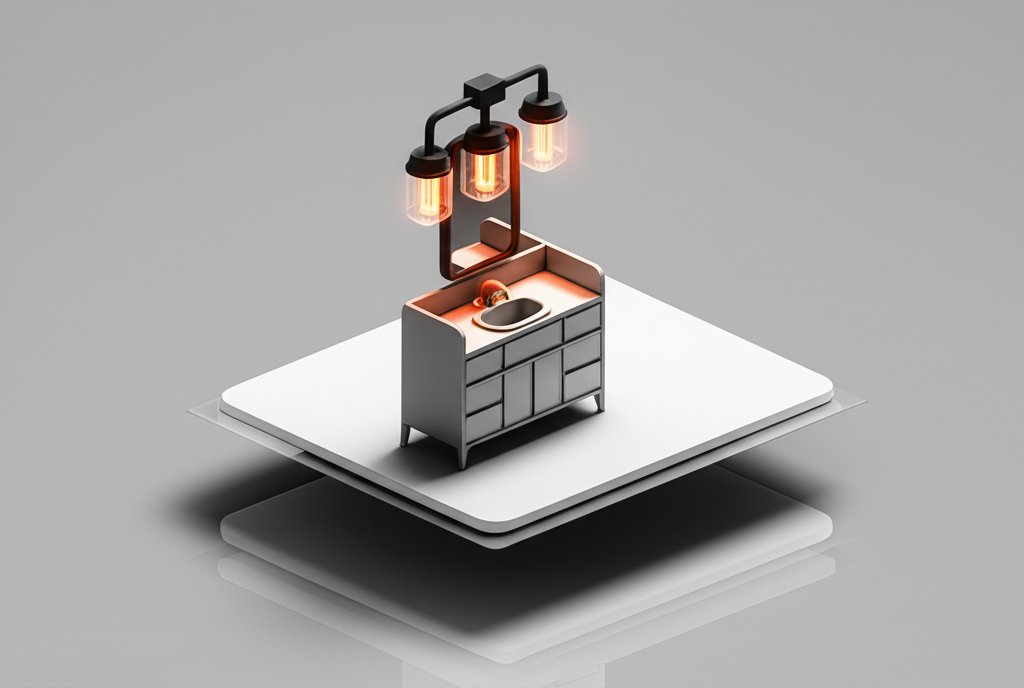
That half-finished bathroom has been staring back at you for weeks. The shiplap is up, the new vanity is in, but something is missing. It’s the finishing touch, the single element that bridges the gap between a functional room and a cozy, inviting retreat. More often than not, that missing piece is a set of perfectly chosen farmhouse vanity lights. They do more than just illuminate your morning routine; they infuse the space with character, warmth, and a sense of timeless style that feels both nostalgic and refreshingly modern.
But navigating the world of goosenecks, wire cages, and distressed wood can feel overwhelming. How do you find a fixture that’s just the right size, offers flattering light, and perfectly complements your specific take on the farmhouse aesthetic?
You’ve come to the right place. We’re breaking down everything you need to know to choose, size, and install the perfect farmhouse vanity light with confidence.
At a Glance: Your Farmhouse Lighting Cheat Sheet
- It’s All in the Materials: Farmhouse style leans heavily on authentic, hardworking materials. Look for matte black or oil-rubbed bronze metal, natural or distressed wood accents, and clear or seeded glass shades.
- Shape Defines the Vibe: Common silhouettes include gooseneck arms, linear bar styles, protective wire cages, and fixtures inspired by mason jars or barn lanterns.
- Size Is Not an Afterthought: A vanity light should be roughly 75% of your mirror’s width. For double vanities, use two smaller fixtures or one long one that spans most of the length.
- Light Direction Matters: Downward-facing lights are best for task-oriented lighting (think makeup and shaving). Upward-facing lights provide softer, ambient illumination. Most farmhouse styles point down.
- Safety First: Always choose a fixture that is “damp-rated” for bathroom use to ensure it can withstand the moisture and humidity.
Beyond Shiplap: The Anatomy of a Farmhouse Vanity Light
So, what transforms a regular bathroom light into a farmhouse one? It’s a specific blend of form and function, a nod to utilitarian design principles of the past, updated for today’s homes. Think less ornate, more authentic.
These fixtures tell a story through their materials and shapes, evoking a sense of handcrafted quality and rustic simplicity.
Core Materials: From Worn Wood to Matte Black Metal
The soul of farmhouse design lies in its textures. Vanity lights in this style are rarely shiny or polished. Instead, they champion materials that feel substantial and honest.
- Metal Finishes: Matte black is the reigning champion of modern farmhouse design, offering a crisp, graphic contrast against white tile or shiplap. Oil-rubbed bronze provides a warmer, more traditional feel, while galvanized steel lends an industrial edge.
- Wood Accents: A touch of wood—be it a reclaimed-style backplate or a structural beam—instantly adds warmth and an organic feel. Finishes range from light, natural pine to deep, rich walnut.
- Glass Shades: Simplicity is key. You’ll often see clear glass, which proudly displays the bulb within (hello, Edison bulbs). Seeded glass, with its tiny, trapped air bubbles, offers a vintage, handcrafted look that diffuses light beautifully.
Signature Silhouettes: Goosenecks, Cages, and Trough Lights
While materials set the mood, the fixture’s shape defines its personality. Farmhouse vanity lights often borrow their forms from classic barn, factory, or homestead lighting.
- Gooseneck Lights: Featuring a distinct curved arm, these fixtures direct light downward, making them excellent for task lighting over a mirror. They are a true icon of barn-inspired design.
- Caged Fixtures: Metal cages around the bulb add an industrial, protective element. They’re a great way to add texture and visual interest without obstructing the light.
- Linear & Trough Styles: A long bar or “trough” holding multiple bulbs is a fantastic solution for wider vanities. These can look like a series of individual lights on a wood or metal backplate.
- Jar-Inspired Shades: From mason jars to simple bell shapes, these glass shades offer a touch of rustic charm and a nod to repurposed, resourceful country living.
Not All Farmhouse Is the Same: Matching a Light to Your Vibe
“Farmhouse” isn’t a single, monolithic style. It’s a spectrum, and your lighting choice should reflect where you fall on it. Pinpointing your specific aesthetic is the key to creating a cohesive and intentional design.
Classic & Traditional Farmhouse
This is the cozy, nostalgic style that feels like a warm hug. It’s rooted in comfort and tradition.
- What it looks like: Think warm wood tones, oil-rubbed bronze or aged brass finishes, and soft, inviting details.
- Light fixtures to match: Look for gooseneck lights with deep, bell-shaped shades or fixtures with seeded glass and gentle curves. A vanity light with a warm, distressed wood backplate fits perfectly here.
Modern Farmhouse
Clean, crisp, and contemporary, this is the most popular interpretation today. It pairs rustic elements with modern minimalism for a look that’s sophisticated yet unpretentious.
- What it looks like: High contrast is king—think matte black metal against white walls. Lines are clean, and clutter is minimal.
- Light fixtures to match: Matte black linear vanity bars with clear glass shades are a go-to. Simple, unadorned sconces with exposed Edison bulbs also work beautifully. The focus is on strong, simple geometry.
Industrial Farmhouse
This style borrows from the hardworking aesthetic of old factories and warehouses. It’s a bit edgier, with a focus on raw materials and mechanical details.
- What it looks like: Exposed brick, concrete countertops, galvanized steel, and visible hardware like bolts and piping.
- Light fixtures to match: Caged vanity lights are the quintessential choice. Fixtures with pulley systems, dark metal tones, and a slightly “unfinished” look will feel right at home.
Coastal Farmhouse
Imagine a breezy seaside cottage. This style is light, airy, and relaxed, blending rustic charm with coastal ease.
- What it looks like: Whitewashed woods, light blue and sandy tones, and natural textures like rope and woven fabrics.
- Light fixtures to match: Seek out fixtures with a whitewashed or light, natural wood finish. Details like rope-wrapped arms or clear glass that feels like sea glass can complete the look.
Getting the Details Right: How to Choose and Place Your Vanity Light

You’ve found a style you love. Now for the practical part. Getting the size, placement, and brightness right will make the difference between a fixture that looks “off” and one that feels perfectly integrated into the space.
Rule of Thumb for Sizing: Matching Your Light to Your Mirror
An incorrectly sized light can throw off the balance of your entire vanity area. Luckily, there’s a simple guideline designers use.
- For a Single Mirror: Your vanity light fixture should be about 75% of the width of the mirror frame. It should never be wider than the mirror itself. For a 32-inch mirror, look for a light that is around 24 inches wide.
- For a Double Vanity with Two Mirrors: The easiest solution is to treat each mirror as a separate unit. Place one smaller sconce or fixture (again, about 75% of that mirror’s width) above each mirror.
- For a Double Vanity with One Large Mirror: You have two great options. You can use one long vanity bar that spans about 75% of the total mirror width. Alternatively, you can place three individual sconces: one on the far left, one on the far right, and one in the center between the sinks.
Pro Tip: Mount your fixture about 75 to 80 inches from the floor, or a few inches above the mirror frame. This places the light source at an ideal height to illuminate your face without casting harsh shadows.
Up or Down? The Great Light Direction Debate
Should your light shades point toward the ceiling or down at the counter? For a bathroom vanity, the answer is almost always down.
- Downlighting (Task Lighting): This directs a focused beam of light downward, which is exactly what you need for tasks like applying makeup, shaving, or styling your hair. It minimizes shadows on your face. The vast majority of farmhouse vanity lights are designed as downlights for this reason.
- Uplighting (Ambient Lighting): This bounces light off the ceiling, creating a soft, general glow. While lovely for overall room ambiance, it’s not practical as the primary light source for a vanity.
Let There Be (the Right) Light: Bulb Choice Matters
The fixture is only half the equation; the light bulb brings it to life. The wrong bulb can make your beautiful bathroom feel like a sterile clinic or a dim cave.
- Color Temperature (Kelvins): This determines if the light feels warm (yellowish) or cool (bluish). For a bathroom’s cozy, inviting farmhouse feel, stick to Warm White (2700K to 3000K). Anything higher (like “Daylight” bulbs at 5000K+) can feel harsh and unflattering.
- Brightness (Lumens): The vanity is a task area, so you need adequate brightness. Aim for a total of 700-800 lumens per sink area. If you have a three-light fixture, three 450-lumen bulbs (totaling 1350 lumens) would be a good starting point for a single vanity. It’s always better to go a bit brighter and install a dimmer switch for ultimate control.
- The Edison Bulb Question: Vintage-style Edison bulbs are a hallmark of the farmhouse look. Their warm glow and visible filaments are beautiful, but be aware: they often produce fewer lumens and can cast a very warm, amber light. They are fantastic for aesthetics but consider high-lumen LED versions designed to look like classic filaments for the best of both worlds.
Before You Buy: What to Know About Installation
A little planning before you click “purchase” can save you a major headache later. Understanding the installation requirements ensures a safe and successful project.
Is This a DIY Job? Assessing Your Skill Level
If you are simply replacing an existing fixture and the wiring is in good shape, this is often a manageable DIY project for someone with basic electrical knowledge. You’ll need to turn off the power at the breaker, test that it’s off, and connect the corresponding wires (hot, neutral, ground).
However, if you are:
- Installing a fixture where there wasn’t one before
- Dealing with old or frayed wiring
- Unsure about any step in the process
…it is always best to hire a licensed electrician. Safety is paramount, and electrical work is not the place to learn through trial and error. While you’re planning the installation, it’s also a great time to browse more Farmhouse bathroom lighting ideas to ensure your final choice fits the overall vision.
The Importance of a “Damp” Rating
Bathrooms are humid, steamy environments. Your electrical fixtures need to be built to handle that moisture safely. This is where UL (Underwriters Laboratories) ratings come in.
- Dry-Rated: For use in dry indoor locations only. Not for bathrooms.
- Damp-Rated: Designed to withstand moisture and condensation. This is the minimum rating you should look for in a bathroom vanity light. It’s safe for placement above a sink.
- Wet-Rated: Built to withstand direct contact with water (rain, hose spray). This is overkill for a vanity light but is required for lighting inside a shower enclosure.
Always check the product specifications for a UL Damp Rating before purchasing. Reputable retailers like Home Depot and Lowe’s make this information easy to find on their product pages.
Your Farmhouse Lighting Questions, Answered
Let’s tackle some of the most common questions that pop up when choosing farmhouse vanity lights.
Q: Can I mix metal finishes in my farmhouse bathroom?
A: Absolutely! Mixing metals is a hallmark of modern design. The key is to be intentional. A popular strategy is to choose one dominant metal (like matte black for your vanity light and faucet) and one accent metal (like aged brass for mirror frames or cabinet pulls). This creates a layered, custom look.
Q: Are Edison bulbs bright enough for applying makeup?
A: Traditional incandescent Edison bulbs often are not. Their warm, amber glow is more for ambiance than tasks. However, many companies now make LED Edison-style bulbs that offer the same vintage look but with much higher lumen output and a cleaner, warm-white color temperature (look for 3000K). This gives you the style without sacrificing function.
Q: How do I clean these fixtures, especially with wood and glass?
A: Turn the light off and let the bulbs cool completely. For glass shades, use a simple glass cleaner on a microfiber cloth. For metal components, a dry duster is usually sufficient. For wood accents, use a dry microfiber cloth; avoid harsh chemical cleaners that could damage the finish.
Q: Are farmhouse vanity lights just a trend that will go out of style?
A: While “modern farmhouse” is certainly popular, the core principles of the style—simplicity, functionality, and the use of honest materials—are timeless. Unlike hyper-specific trends, the classic shapes and durable materials of farmhouse lighting have an enduring appeal that will outlast any single decorating craze.
Tying It All Together: Your Next Step
Choosing the right farmhouse vanity light isn’t about finding a single “perfect” fixture. It’s about finding the one that completes the story of your bathroom, transforming it into a space that feels personal, functional, and deeply comforting.
You’re now equipped with the knowledge to make a confident choice. Start by defining your specific farmhouse style—are you classic, modern, or industrial? Measure your mirror to determine the ideal fixture width. And finally, plan for a warm, bright light source with dimmable, damp-rated bulbs that will make your daily routine a pleasure.
With these guidelines in hand, you can move forward and select the fixture that will not only light up your reflection but also illuminate the modern rustic charm of your entire bathroom.

- DIY Bathroom Mirror Frame Designs on a Budget - October 12, 2026
- Creative Bathroom Mirror Border Ideas for Every Style and Budget - October 11, 2026
- Bathroom Finishes That Handle Moisture and Look Great - October 10, 2026