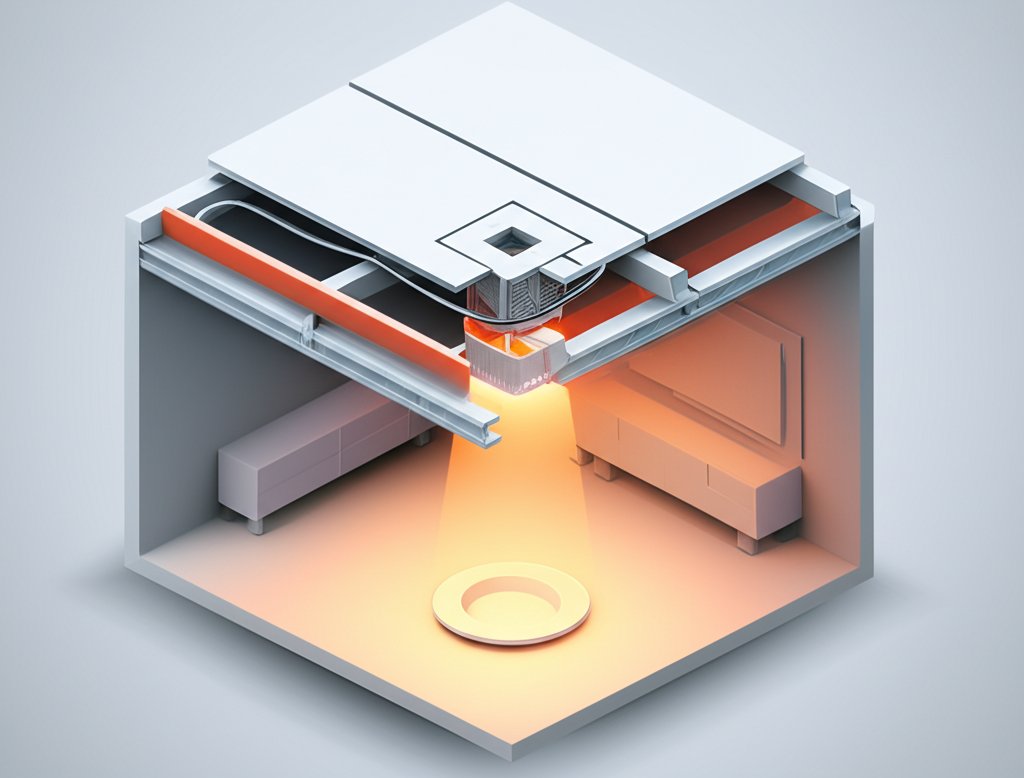
That dark, underused basement doesn’t have to feel like a dungeon. Transforming it into a bright, welcoming space—whether it’s a family room, home gym, or office—often starts with a smart lighting plan. And for a clean, modern, and effective solution, nothing beats well-placed basement recessed lighting. These fixtures, also known as can lights or downlights, sit flush with your ceiling, saving precious headroom and delivering focused light exactly where you need it.
But choosing the right ones can feel overwhelming. With terms like lumens, Kelvin, and trim types, it’s easy to get lost. This guide will walk you through everything you need to know to select and plan the perfect recessed lighting for your basement.
At a Glance: Your Quick-Start Checklist
- Calculate Your Need: Learn the simple formula to figure out how many lights you need based on square footage and ceiling height.
- Choose the Right Color: Understand how color temperature (Kelvin) creates a mood, from cozy warm white to energizing daylight.
- Select the Best Trim: Discover how different trim styles (like baffle or eyeball) control glare and direct light.
- Plan Your Layout: Get a basic framework for spacing your lights to eliminate dark spots and create even coverage.
- Consider Smart Features: Decide if you need features like app control, color-changing, or music-syncing capabilities.
- Ensure Durability: Find out why airtight and damp-rated fixtures are non-negotiable for most basements.
First, Nail the Foundation: Lumens, Spacing, and Layout
Before you even look at a single light fixture, you need a plan. Getting the basics of brightness and placement right is 90% of the battle. A bad layout will leave you with a “runway” effect or cavernous dark corners, no matter how great your lights are.
How to Calculate Your Basement’s Lumen Needs
A lumen is simply a measure of brightness. The key is to get enough total lumens for the size and purpose of your room.
- Measure Your Space: Calculate the total square footage of your basement (Length x Width).
- Determine Lumens Per Square Foot: For general living areas, a good rule of thumb is 10-20 lumens per square foot. For task-oriented spaces like a workshop or home gym, aim higher, around 30-50 lumens per square foot.
- Do the Math: Multiply your square footage by your target lumens.
- Example: Your basement is 1,000 square feet and will be a general family room.
- 1,000 sq ft x 20 lumens = 20,000 total lumens needed.
Now, you can figure out how many lights to buy. A typical 6-inch, 15-watt LED recessed light produces about 1,100-1,200 lumens. - 20,000 total lumens / 1,200 lumens per light = ~17 lights.
This gives you a solid starting point. While recessed lighting is a fantastic choice for its clean look and even spread, it’s just one piece of the puzzle. To see how it compares to other options and get a complete overview, check out our guide to Find the best basement LED lights.
A Simple Spacing and Layout Strategy
With a target number of lights in mind, you can plan the placement. Don’t just scatter them randomly. A grid layout provides the most consistent, professional-looking result. - Rule of Thumb for Spacing: A good starting point is to space your lights about half the distance of your ceiling height. For a standard 8-foot basement ceiling, this means placing lights about 4 feet apart.
- Distance from Walls: Place the first row of lights about 2-3 feet away from the walls. This prevents harsh shadows (known as “scalloping”) and illuminates the perimeter of the room.
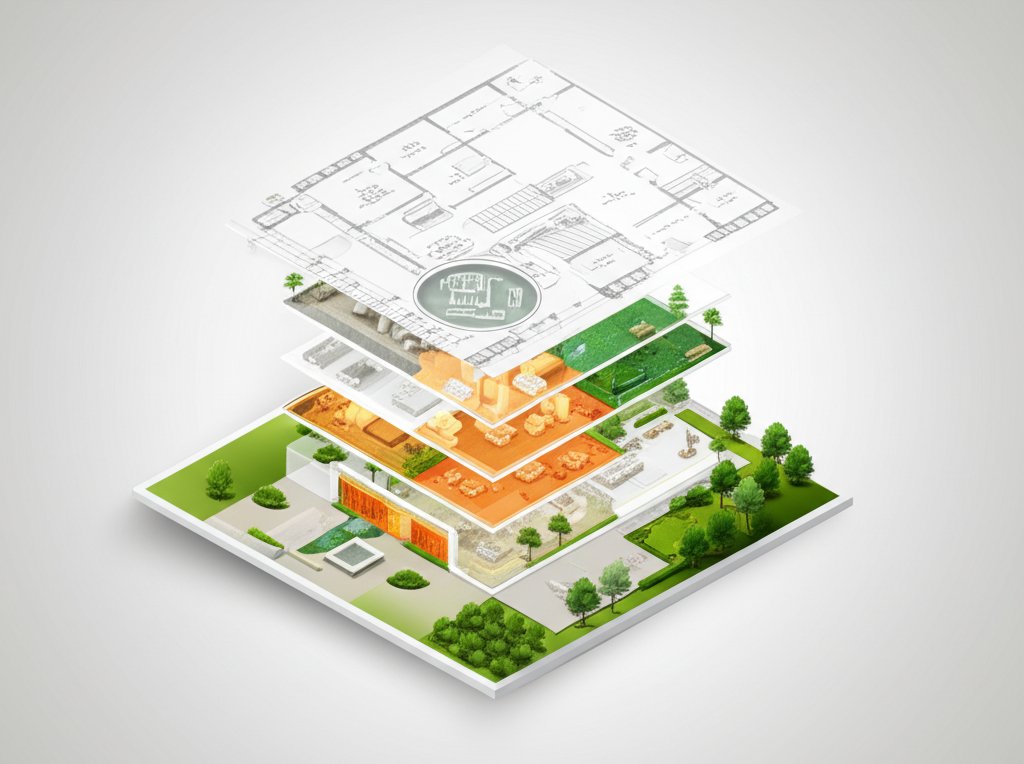
- Sketch It Out: Draw a simple diagram of your basement. Start by placing a light in each of the four corners (2-3 feet from each wall), then fill in the middle of your grid, adjusting for even spacing. This ensures the edges are lit and you can create an even pattern from there.
Decoding the Specs: What Really Matters on the Box
When you’re comparing recessed lights, the packaging is full of technical details. Here are the ones that have the biggest impact on your basement project.
Color Temperature (Kelvin): Setting the Right Mood
Color temperature, measured in Kelvin (K), describes how “warm” or “cool” the light appears. This is arguably the most important decision for creating the right atmosphere.
| Color Temperature | Description | Best For |
|---|---|---|
| 2700K – 3000K | Warm White | Creates a cozy, inviting, relaxing feel. Similar to traditional incandescent bulbs. |
| 4000K – 5000K | Cool/Neutral White | A crisp, clean, neutral light that enhances focus and clarity. |
| 5000K – 6500K | Daylight | An intense, blue-white light that mimics natural daylight. Boosts energy and alertness. |
- Practical Tip: Many modern LED lights, like models from Ensenior and Amico, come with a switch that lets you select from five or six color temperatures on the fixture itself. This is a game-changer, allowing you to try out different looks before committing.
Dimming Capabilities: Your Key to Flexibility
A basement often serves multiple purposes. It might be a kids’ playroom by day and a movie room by night. Dimmers give you the flexibility to adjust the brightness for any activity.
When choosing a dimmable light, check two things:
- Dimming Range: Some lights, like those from Torchstar, dim from 10-100%. Higher-end models may offer a wider range, like 5-100% or even 1-100%. A lower bottom range is better for creating a subtle, moody ambiance.
- Dimmer Compatibility: Not all dimmer switches work with all LED lights. To avoid flickering or humming, buy a dimmer switch that is specifically listed as compatible by the light manufacturer. Many brands sell their own or provide a list of recommended models.
Size and Form Factor: 4-inch vs. 6-inch Lights
The two most common sizes for residential recessed lighting are 4-inch and 6-inch.
- 6-Inch Lights: The traditional workhorse. They provide a wide beam of light, making them excellent for general, ambient illumination. You’ll need fewer of them to light a large space.
- 4-Inch Lights: Offer a more modern, refined look. Their beam is narrower, making them ideal for task lighting (over a counter or workbench) or for accenting specific areas. They can also be used for general lighting in smaller rooms or spaces with lower ceilings.
Many popular models, such as Ensenior, are available in both sizes to fit your design needs.
Damp Ratings and Airtight Seals
Basements can be damp. Moisture is the enemy of electronics, so choosing a fixture built to withstand it is critical for safety and longevity.
- Damp/Wet Rating: Look for lights rated for “damp locations.” For areas that might get truly wet, like a basement bathroom shower, you’ll need a “wet location” rating, often indicated by an IP (Ingress Protection) rating like IP65.
- Airtight Construction: An airtight housing, like that found on models from Bbounder, prevents air from flowing between your basement and the ceiling cavity. This stops moisture from getting into the fixture, preventing corrosion and potential mold growth in the ceiling.
The Finishing Touch: Choosing the Right Trim
The “trim” is the visible part of the light fixture that you see on the ceiling. It’s not just decorative; it shapes the light and controls glare.
| Trim Type | Description | Best Use Case |
|---|---|---|
| Baffle Trim | Features ridged interiors to absorb excess light and reduce glare. | The most popular choice for general ambient lighting in living areas and media rooms. |
| Eyeball Trim | Allows you to pivot and direct the light beam towards a specific feature. | Highlighting artwork, a fireplace, or a specific task area like a workbench. |
| Wall Wash Trim | Has a shield over one side of the bulb to direct a soft, even sheet of light down a wall. | Making a room feel larger and brighter, or accentuating a textured wall surface. |
| Shower Trim | A sealed trim with a tempered glass lens to protect the bulb from moisture. | Required for any light installed directly over a shower or tub. |
A Practical Playbook for Your Basement Project
Let’s put it all together with some real-world scenarios.
Scenario 1: The Cozy Family Media Room
- Goal: A comfortable, inviting space for watching movies and relaxing, with minimal screen glare.
- Lighting Recipe:
- Lights: 6-inch recessed lights for broad, general lighting.
- Color Temperature: 3000K (Warm White) to create a cozy, den-like feel.
- Trim: Baffle trim to reduce glare on the TV screen.
- Features: Excellent dimming capability (down to 5% or less) is a must. Install a compatible dimmer switch.
- Layout: Position lights around the perimeter of the seating area, not directly over it, to avoid light shining in people’s eyes. Use a wall wash trim to softly illuminate the wall behind the TV.
Scenario 2: The Bright Home Gym & Workshop
- Goal: An energizing, safe space with clear visibility for workouts and projects.
- Lighting Recipe:
- Lights: A mix of 6-inch lights for overall brightness and 4-inch lights over specific equipment or the workbench.
- Color Temperature: 5000K (Daylight) to mimic natural light and boost alertness.
- Trim: Standard baffle or open trim for general areas. Consider an eyeball trim over the workbench to direct light exactly where you need it.
- Features: High lumen output is the priority here. Dimming is less critical but still nice to have.
- Layout: A strict grid pattern directly overhead ensures no shadows are cast on your work or workout area.
Scenario 3: The Multi-Purpose Home Office Nook
- Goal: A focused workspace that doesn’t feel like a sterile cubicle.
- Lighting Recipe:
- Lights: Two or three 4-inch recessed lights.
- Color Temperature: 4000K (Neutral White) is ideal for productivity without being too harsh.
- Trim: Standard baffle trim.
- Features: A flicker-free light is essential to prevent eye strain during long work sessions.
- Layout: Position the lights slightly in front of your desk, not directly overhead or behind you, to illuminate your workspace without creating glare on your monitor or casting shadows from your body.
Answering Your Top Basement Lighting Questions
Q: How many recessed lights do I really need in my basement?
A: Use the formula: (Square Footage x 10-20 Lumens) / Lumens per Fixture. For a 500 sq ft basement, you’d need about 10,000 lumens total. If each light is 1,200 lumens, you’d need around 8 or 9 lights for good, even coverage. Always round up.
Q: Can I install recessed lighting in a low basement ceiling?
A: Absolutely. This is one of their biggest advantages. Modern “canless” or ultra-thin wafer LED lights require as little as half an inch of ceiling clearance. They are lightweight, easy to install, and perfect for basements where every inch of headroom counts.
Q: What’s the difference between “canless” LED lights and traditional “can” lights?
A: Traditional recessed lighting requires a bulky metal housing (the “can”) to be installed in the ceiling first, followed by the bulb and trim. Modern canless LED lights integrate the housing, light source, and trim into one slim unit that simply clips into the drywall. For most DIY basement renovations, canless is faster, cheaper, and more flexible.
Q: Can I put recessed lights in an unfinished basement ceiling?
A: Yes, you can. It’s often easier to run wiring in an open ceiling. Choose a fixture that is self-contained and easy to mount to a joist. Just be sure to plan for the eventual finished ceiling height and protect the fixtures with plastic when you paint the ceiling later on.
Your Path to a Brighter Basement
Choosing the right basement recessed lighting isn’t about finding one perfect fixture. It’s about building a flexible, layered system that serves the way you live. By focusing on a solid plan for layout and brightness first, you can then confidently choose the lights with the right color, trim, and features to bring your vision to life.
Don’t let analysis paralysis stop you. Start with a simple sketch of your space, define its primary purpose, and choose a color temperature that creates the mood you want. The right lighting will do more than just illuminate a dark room—it will help you reclaim an entire floor of your home.

- DIY Bathroom Mirror Frame Designs on a Budget - October 12, 2026
- Creative Bathroom Mirror Border Ideas for Every Style and Budget - October 11, 2026
- Bathroom Finishes That Handle Moisture and Look Great - October 10, 2026