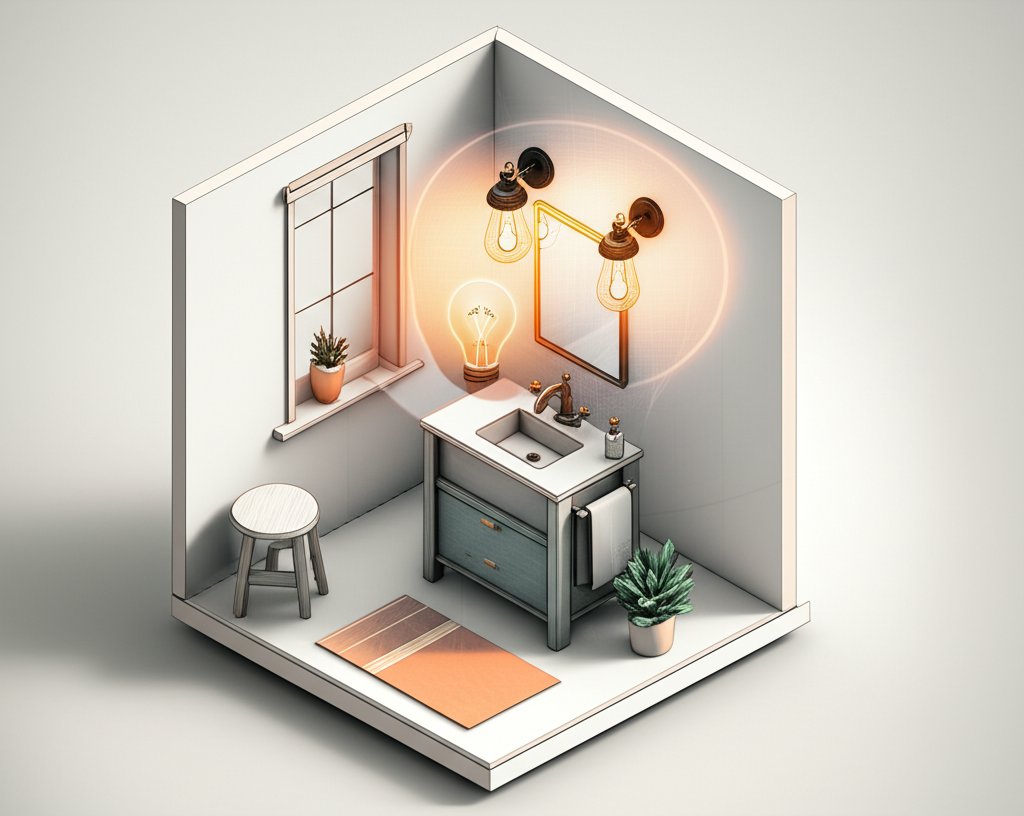
That final stretch of a bathroom remodel is both exciting and nerve-wracking. The tile is set, the vanity is in, but something is missing. The right farmhouse bathroom vanity lights are more than just functional fixtures; they are the character-defining element that bridges the gap between a nice bathroom and a truly finished, inviting rustic space. Get it right, and the light becomes the warm, welcoming focal point. Get it wrong, and the entire aesthetic can feel disjointed.
This guide moves beyond just picking a pretty fixture. We’re diving deep into the practical decisions—sizing, placement, materials, and even the bulb’s color—that ensure your choice is both beautiful and perfectly functional.
At a Glance: Your Path to the Perfect Farmhouse Light
- Match Your Style: Learn to distinguish between industrial, modern, and rustic farmhouse aesthetics to narrow your search.
- Master the Sizing: Use a simple rule of thumb to ensure your light fixture is perfectly proportioned to your vanity and mirror.
- Decide on Direction: Understand the crucial difference between up-lighting (for ambiance) and down-lighting (for tasks) and which is right for you.
- Mix Metals with Confidence: Follow a straightforward framework for pairing finishes like matte black and oil-rubbed bronze with your existing faucets and hardware.
- Choose the Right Glow: Uncover why the light bulb’s color temperature (Kelvin) is just as important as the fixture itself for a flattering, functional light.
- Install for Success: Pinpoint the ideal mounting height to eliminate harsh, unflattering shadows.
Go Beyond the Obvious: Key Farmhouse Light Styles
The term “farmhouse” is broad, covering a spectrum from rugged and rustic to clean and contemporary. The first step is to identify which dialect of farmhouse design speaks to you. This choice will guide every other decision, from material to the shape of the glass shade. While the overall category is large, you can get a great overview of the full range of possibilities to find your starting point. After that, zeroing in on a specific sub-style makes selecting the perfect fixture much simpler. For a complete look at the different categories available, you can Discover Farmhouse Vanity Lights and see how these styles come to life.
The Industrial Farmhouse: Metal Cages, Edison Bulbs, and Raw Finishes
This style leans into the functional, utilitarian roots of farm life. Think of materials found in a classic barn or workshop: raw metal, exposed hardware, and simple, strong shapes.
- Key Features: Wire cages, pulley systems, gooseneck arms, and dark metal finishes like matte black or iron.
- Best For: Bathrooms with concrete countertops, subway tile with dark grout, or exposed brick. It creates a bold, graphic statement.
- Case Snippet: In a guest bath with a simple pedestal sink and a black-framed round mirror, a three-light fixture with black metal cages and visible Edison bulbs adds instant personality and an edgy, historic feel.
The Modern Farmhouse: Sleek Lines, Glass Shades, and Matte Finishes
Popularized by designers like Joanna Gaines, this is a cleaner, more refined take on the rustic aesthetic. It blends the warmth of traditional farmhouse design with the simplicity of modernism.
- Key Features: Linear forms, clear or frosted glass shades (often bell-shaped or cylindrical), and simple backplates. Matte black and brushed nickel are popular finishes.
- Best For: Spaces that aim for a bright, airy, and uncluttered feel. It pairs beautifully with shiplap walls, light wood vanities, and quartz countertops.
- Case Snippet: Over a 60-inch dual-sink vanity with white quartz, a five-light linear fixture in matte black with clear cylindrical glass shades provides ample, even light while maintaining a clean, sophisticated profile.
The Rustic Farmhouse: Reclaimed Wood, Goosenecks, and Distressed Metals
This is the most traditional and texture-rich of the styles. It emphasizes natural materials, weathered finishes, and a cozy, lived-in charm.
- Key Features: Fixtures mounted on reclaimed wood backplates, oil-rubbed bronze or galvanized steel finishes, and mason jar or seeded glass shades.
- Best For: Creating a warm, cabin-like retreat. It complements stone vessel sinks, distressed wood vanities, and warm-toned tile.
- Case Snippet: For a small powder room, a two-light fixture mounted on a weathered oak backplate with oil-rubbed bronze gooseneck arms and seeded glass shades adds immense character without overwhelming the space.
Get the Scale Right: Sizing Your Vanity Light Like a Pro
One of the most common mistakes is choosing a light that is too small for the vanity. An undersized fixture looks like an afterthought and fails to properly illuminate the space. Getting the scale right is a simple measurement game.
The Golden Rule of Width
Your primary measurement is the width of your vanity mirror, not the vanity cabinet itself.
The Rule: Aim for a light fixture that is approximately 75% of the mirror’s width. If you’re centering it over the vanity cabinet, it should not be wider than the cabinet.
For very wide vanities (over 48 inches), especially those with two sinks, consider using two separate fixtures mounted over each sink instead of one long bar. This creates better balance and more focused task lighting.
| Mirror/Vanity Width | Recommended Light Fixture Width |
|---|---|
| 24 inches | 18-22 inches |
| 30-36 inches | 22-28 inches |
| 48 inches | 36-44 inches (or two 18″ sconces) |
| 60+ inches (Dual Sink) | Two separate 20-24″ fixtures |
Up or Down? Deciding on Light Direction
The direction the shades face drastically changes the type of light you get.
- Down-lighting: Shades point down, casting direct light onto the vanity. This is the best choice for task lighting—applying makeup, shaving, or brushing your teeth. The downside is it can create more distinct shadows if not placed correctly.
- Up-lighting: Shades point up, bouncing light off the ceiling. This creates a softer, more diffuse ambient light that fills the room more gently. It’s great for general illumination and creating a relaxing atmosphere but is less effective for detailed tasks.
Pro-Tip: For a master bathroom where tasks are paramount, a down-light is almost always the superior choice. For a guest powder room where ambiance is key, an up-light can feel more welcoming and less clinical.
The Height Equation: Mounting for Flawless Function
Improper mounting height is the number one cause of unflattering shadows. Mount a light too high, and you’ll get dark circles under your eyes.
- Standard Height: The center of the fixture’s backplate should be mounted 75 to 80 inches from the finished floor.
- Mirror-Based Height: Alternatively, mount the fixture 3 to 5 inches above the top of the mirror frame.
Always aim to have the bottom of the lowest shade sit just above eye level. This ensures the light illuminates the sides of your face, not just the top of your head, which is the key to shadow-free task lighting.
From Matte Black to Warm Wood: Matching Finishes and Materials
The finish of your farmhouse bathroom vanity lights ties the entire room together. It should complement your faucet, shower hardware, and cabinet pulls without being excessively “matchy-matchy.”
The Big Three Finishes: Matte Black, Oil-Rubbed Bronze, and Galvanized Steel
- Matte Black: The MVP of modern farmhouse design. It’s versatile, bold, and pairs well with nearly any color scheme. It excels in creating a graphic contrast against light walls.
- Oil-Rubbed Bronze: This finish offers a warmer, more traditional feel. Its dark brown base with copper undertones brings a sense of age and authenticity, perfect for rustic or classic farmhouse styles.
- Galvanized Steel/Brushed Nickel: These silver-toned finishes offer a clean, industrial, or sometimes coastal feel. They are great for brightening up a space and pairing with cool-toned color palettes (grays, blues).
The Art of Mixing Metals
You don’t have to match your light fixture to your faucet perfectly. In fact, a thoughtfully mixed-metal scheme often looks more curated and professionally designed.
- Select a Dominant Metal: Let your primary finish be the one used on the most prominent fixtures, like the faucet and shower trim.
- Choose One Accent Metal: Use a second, contrasting metal for your light fixture, mirror frame, and cabinet hardware.
- Unify with Texture: The key to successful mixing is shared texture. A brushed nickel faucet pairs better with a matte black light than with a polished chrome one. Keep the sheens consistent (e.g., all matte, all brushed).
Don’t Forget the Glass: Clear, Seeded, or Frosted?
The type of glass shade dramatically affects the light’s quality and appearance.
- Clear Glass: Puts the bulb on full display, making it perfect for showing off vintage-style Edison bulbs. It provides the brightest, most direct light but can also cause glare and shows dust and fingerprints easily.
- Seeded Glass: Contains tiny air bubbles trapped within the glass. This adds a layer of texture and visual interest, subtly diffuses the light to reduce glare, and does a fantastic job of hiding dust.
- Frosted or Opal Glass: This opaque glass provides the most diffuse, even, and softest light. It completely hides the bulb and is the best option for eliminating all glare, creating a serene, spa-like glow.
It’s Not Just the Fixture—It’s the Light Itself
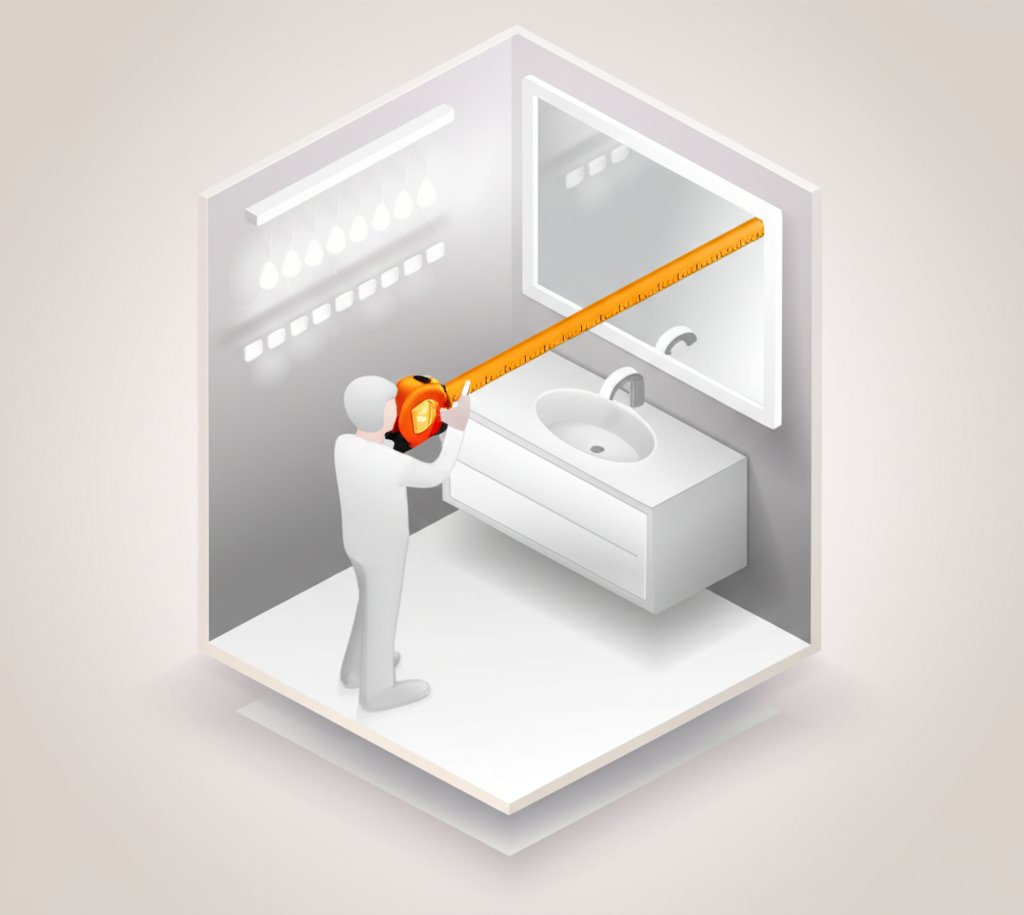
You can pick the most stunning fixture, but if you put the wrong bulbs in it, the light will be harsh and unflattering. Pay attention to two key metrics: lumens and Kelvin.
Lumens and You: How Bright is Bright Enough?
Lumens measure brightness. According to the American Lighting Association, a bathroom vanity needs 700 to 800 lumens for the primary task area. For a three-light fixture, this means each bulb should provide around 700-800 lumens (the equivalent of a traditional 60-watt incandescent bulb). Always check the fixture’s maximum wattage rating per socket.
The Kelvin Scale: Getting the Color Temperature Just Right
Kelvin (K) measures the color of the light, from a warm, candle-like yellow to a cool, clinical blue. This is arguably the most important factor for a bathroom.
- 2700K (Warm White): Very cozy and yellow. Great for a relaxing bedroom, but can make it hard to accurately see colors when applying makeup.
- 3000K (Soft White): The goldilocks zone for bathrooms. It’s a clean, neutral white light that renders skin tones accurately and is bright without feeling sterile. This is the expert-recommended choice.
- 4000K–5000K (Cool White/Daylight): This light has a blueish tint and can feel harsh and clinical in a home setting. It can wash out skin tones and make a warm, rustic space feel cold.
Your Farmhouse Vanity Lighting Questions, Answered
Q: Can I use farmhouse bathroom vanity lights in a non-farmhouse bathroom?
A: Absolutely. The clean lines of modern farmhouse fixtures, in particular, are incredibly versatile. A simple black or bronze vanity light can work beautifully in transitional, minimalist, or even coastal-inspired bathrooms, adding a touch of classic, understated character.
Q: Are LED bulbs a good choice for these fixtures?
A: Yes, they are the best choice. LEDs are energy-efficient, long-lasting, and come in a huge variety of shapes, brightness levels (lumens), and color temperatures (Kelvin). Just be sure to buy dimmable LEDs if your fixture is connected to a dimmer switch. Many companies now make beautiful vintage-style filament LEDs that mimic the look of an Edison bulb.
Q: Do I need a fixture rated for damp locations?
A: Yes. Any light fixture installed in a bathroom should be UL-listed for “damp locations.” This ensures it’s built to withstand the humidity and condensation common in bathrooms, preventing rust and electrical issues. Nearly all fixtures sold as “bathroom vanity lights” will carry this rating, but it’s always wise to double-check.
Q: What’s the biggest mistake people make when choosing these lights?
A: Going too small. A fixture that is too diminutive for the vanity looks cheap and fails to anchor the space. When in doubt, it’s almost always better to err on the side of being slightly too large than too small. Use the 75% rule for your mirror’s width as your guide, and you’ll be in great shape.
Your Quick-Start Guide to the Perfect Farmhouse Light
Choosing the right fixture feels less daunting when you break it down into a simple checklist. Follow these steps to a confident decision.
- Measure First: Get the exact width of your vanity mirror and the height from the floor to where you want the light centered (aim for 75-80 inches).
- Define Your Style: Are you drawn to the raw look of Industrial, the clean lines of Modern, or the warm textures of Rustic Farmhouse?
- Choose Your Direction: Do you need bright, direct task lighting (Down-light) or soft, ambient room-filling light (Up-light)?
- Pick Your Finish: Select a dominant metal (likely your faucet) and choose a light fixture that either matches it or acts as a deliberate accent in a complementary finish.
- Select Your Bulbs: The final, crucial step. Look for dimmable LED bulbs around 700-800 lumens each with a color temperature of 3000K for the most functional and flattering glow.
With these details handled, your new fixture won’t just be a light source. It will be the defining piece that pulls your entire modern rustic vision together, casting your beautiful bathroom in the perfect light.

- DIY Bathroom Mirror Frame Designs on a Budget - October 12, 2026
- Creative Bathroom Mirror Border Ideas for Every Style and Budget - October 11, 2026
- Bathroom Finishes That Handle Moisture and Look Great - October 10, 2026