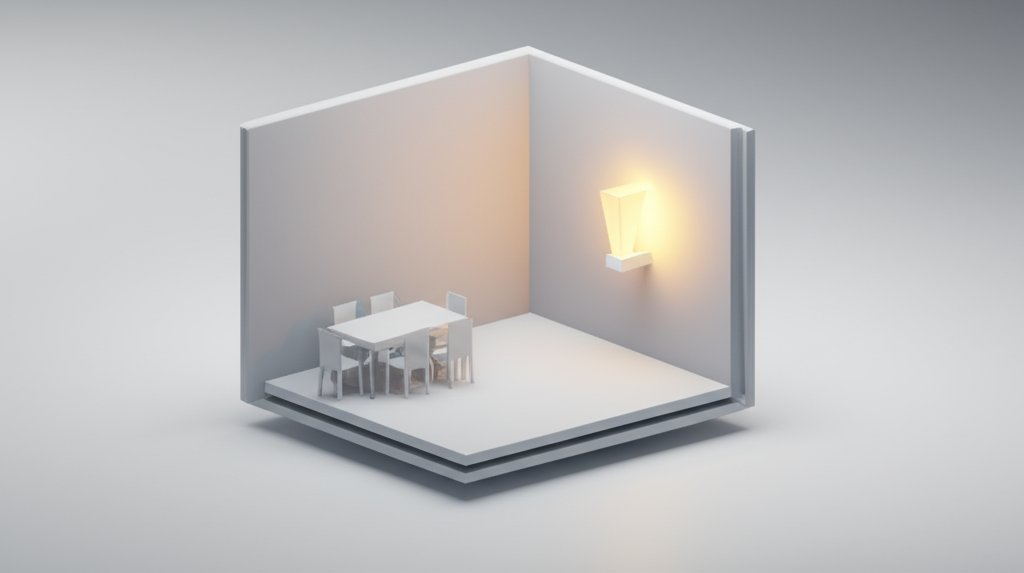
That stunning chandelier hanging over your table is the star of the show, but it often leaves the rest of the room in the shadows. This creates a “spotlight effect,” where the table is brilliantly lit but the room’s corners and walls feel dark and disconnected. This is where dining room wall sconces transform the space, moving it from merely functional to truly atmospheric. They are the essential supporting actors that add depth, warmth, and a polished feel to the entire room.
Sconces are more than just decorative accents; they are the key to a professionally layered lighting scheme that makes a dining room feel inviting, balanced, and complete.
At a Glance: Your Sconce Success Plan
- Define the Job: Learn to identify if you need sconces for general ambiance, accenting a feature, or task lighting.
- Master Placement: Get simple, expert rules for the perfect height and spacing to avoid glare and achieve balance.
- Choose Your Style: Discover how to select sconces that complement—not compete with—your existing chandelier and decor.
- Understand Light Direction: See how uplights, downlights, and shaded sconces create dramatically different moods.
- Make Smart Technical Choices: Learn why dimmers are non-negotiable and how to pick the right bulb color for an inviting glow.
Beyond the Chandelier: Defining Your Sconces’ Job
Before you start browsing styles, the most important step is to decide what you want your dining room wall sconces to do. Assigning them a specific role prevents you from just adding more light and instead empowers you to shape the room’s atmosphere with intention. Most sconces serve one of three primary functions.
Ambient Lighting: Creating a General, Warm Glow
This is the most common and arguably most important role for sconces in a dining room. They work to soften the harsh shadows cast by a central chandelier, filling the perimeter of the room with a soft, diffuse light. This makes the space feel larger, more welcoming, and infinitely more comfortable for guests.
- Best for: Almost any dining room, especially those that feel a bit stark or have dark corners.
- How it works: Sconces with fabric shades, frosted glass, or alabaster diffuse the light, casting a gentle wash on the walls. They raise the overall light level without creating distracting bright spots.
- Example Snippet: In a transitional dining room, a pair of fabric drum-shade sconces on either side of a large window can provide a beautiful, even glow for evening meals, eliminating the “cave effect” outside the main table light.
Accent Lighting: Highlighting Art and Architecture
Sometimes, a wall itself is a feature worth showcasing. Accent sconces are designed to draw the eye to a specific element, turning a plain wall into a point of interest. They add a layer of drama and sophistication that ambient light alone cannot achieve.
- Best for: Highlighting a piece of art, a textured wall (like brick or board-and-batten), or architectural details like columns or archways.
- How it works: These are often “uplights” or “downlights” that cast a controlled beam of light up or down the wall. This technique, known as “wall grazing,” accentuates texture and creates beautiful shadow play. Adjustable “swing-arm” or “picture light” sconces are also perfect for this job.
- Example Snippet: Imagine a long dining room wall with a large abstract painting. Two sleek, minimalist downlight sconces placed on either side will frame the artwork beautifully, making it a deliberate focal point.
Task Lighting: Illuminating a Specific Zone
While the dining table is the primary task area, other zones in the room often need dedicated light. A sideboard or buffet is a perfect example. Sconces here aren’t just decorative; they provide practical light for serving food, mixing drinks, or simply finding the right set of wine glasses.
- Best for: Flanking a buffet, a bar cart, or a built-in credenza.
- How it works: Task-oriented sconces typically direct their light downward. This focuses illumination on the surface below without shining in anyone’s eyes.
- Example Snippet: A pair of elegant sconces with metal shades flanking a dark wood buffet not only looks classic but makes it easy to see what you’re doing when dishing out dessert during a dinner party.
The Art and Science of Sconce Placement
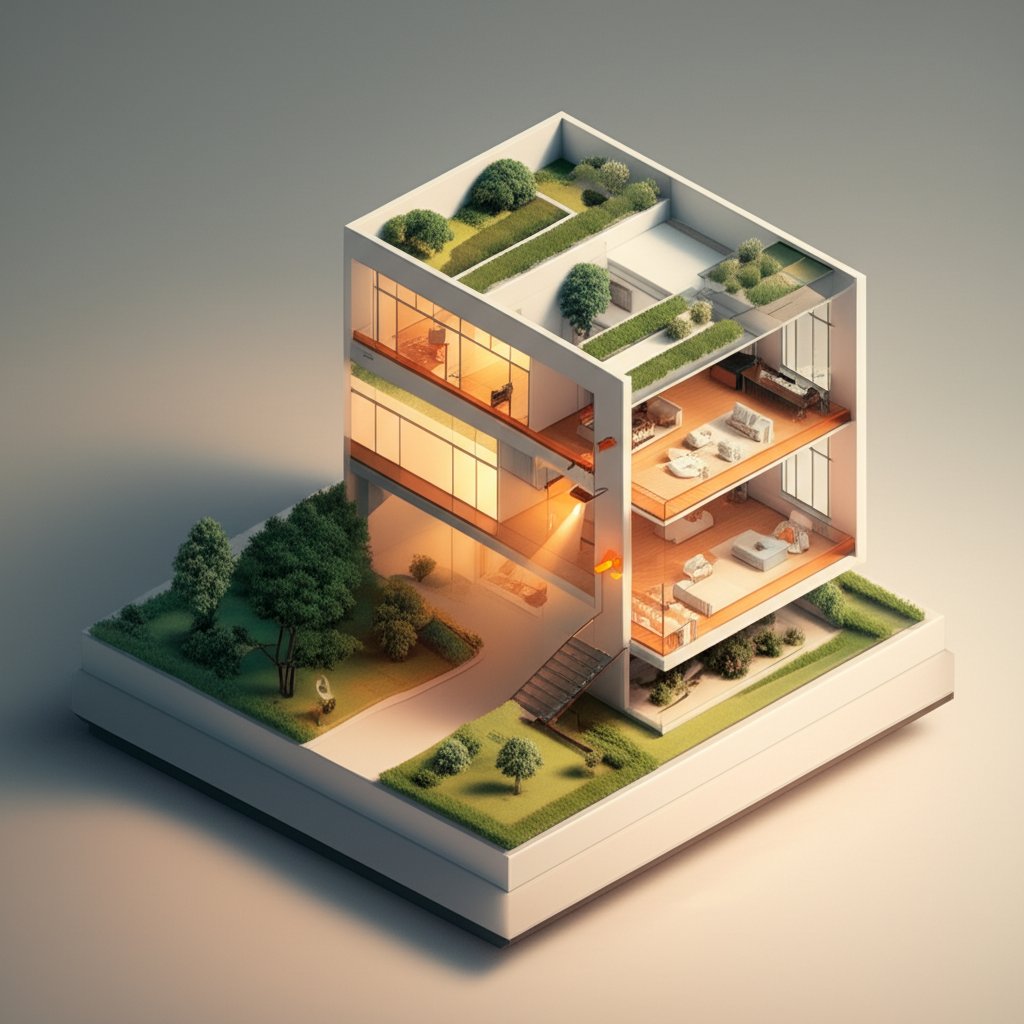
Poorly placed sconces can ruin the effect, creating annoying glare or looking visually unbalanced. Fortunately, a few simple guidelines used by interior designers ensure a polished, professional result every time.
Finding the Right Height
The most common mistake is hanging wall sconces too high. The goal is to place them at a height that illuminates the room without the bare bulb being directly in your line of sight when you’re standing or walking by.
- The Golden Rule: The center of the sconce should be between 60 and 66 inches up from the finished floor.
- Adjust for Ceiling Height: In rooms with ceilings over 9 feet, you can cheat this upward slightly to 68 or even 70 inches to maintain proportion.
- The Eye-Level Test: A quick check is to have someone stand next to your marked spot. The light source should generally be just above their eye level.
Perfecting the Spacing
Spacing depends on whether you’re lining a long wall or flanking a specific object.
- For a Long, Bare Wall: If you’re using multiple sconces, space them 6 to 10 feet apart. This provides an even rhythm of light without looking cluttered.
- When Flanking an Object: To frame a buffet, mirror, or piece of art, mount the sconces 4 to 6 inches from the sides of the object. This creates a cohesive visual unit.
While these placement rules are a great starting point, they fit into a broader strategy of layered lighting. For a complete overview of how sconces, chandeliers, and other fixtures work together, see our comprehensive Dining Room Sconce Guide.
A Note on Scale and Proportion
The size of your sconces should relate to the wall they’re on and the furniture they’re near. A tiny, delicate sconce will look lost next to a massive, heavy sideboard. Conversely, an oversized sconce can overwhelm a small piece of art.
- Quick Tip: Before buying, use painter’s tape to mock up the height and width of the sconce on your wall. This simple trick lets you visualize the scale and placement in your actual space, preventing costly mistakes.
Harmonize, Don’t Homogenize: A Guide to Style Selection
Should your sconces match your chandelier? This is a frequent question, and the answer is: they should relate, but they don’t have to be identical twins. A coordinated look is more sophisticated than a perfectly matched one.
The “Family” Approach: Matching Finishes
This is the most straightforward method. If your chandelier has a brushed brass finish, choosing sconces in the same finish creates instant cohesion. The shapes can be different, but the shared material ties them together. It’s a can’t-miss strategy for a clean, pulled-together look.
The “Cousin” Approach: Complementary Styles
This approach offers more visual interest. Here, you mix styles that share a common element. For instance:
- Modern Chandelier + Transitional Sconces: Pair a sculptural, sputnik-style chandelier with simple, clean-lined sconces featuring a classic fabric shade. The shared element might be the metal finish.
- Traditional Chandelier + Modern Sconces: A classic crystal chandelier can be beautifully updated by flanking a nearby mirror with sleek, unadorned cylindrical sconces in a polished nickel. The contrast feels fresh and intentional.
The “Statement” Approach: Intentional Contrast
This is a bold, designer-level move. It involves pairing fixtures that are purposefully different in style, material, and era. For example, placing ultra-modern, minimalist black sconces in a dining room with traditional wainscoting and a rustic farmhouse table. This works when the rest of the room’s decor bridges the gap between the two styles. It’s high-risk, high-reward.
Your Sconce Selection Checklist
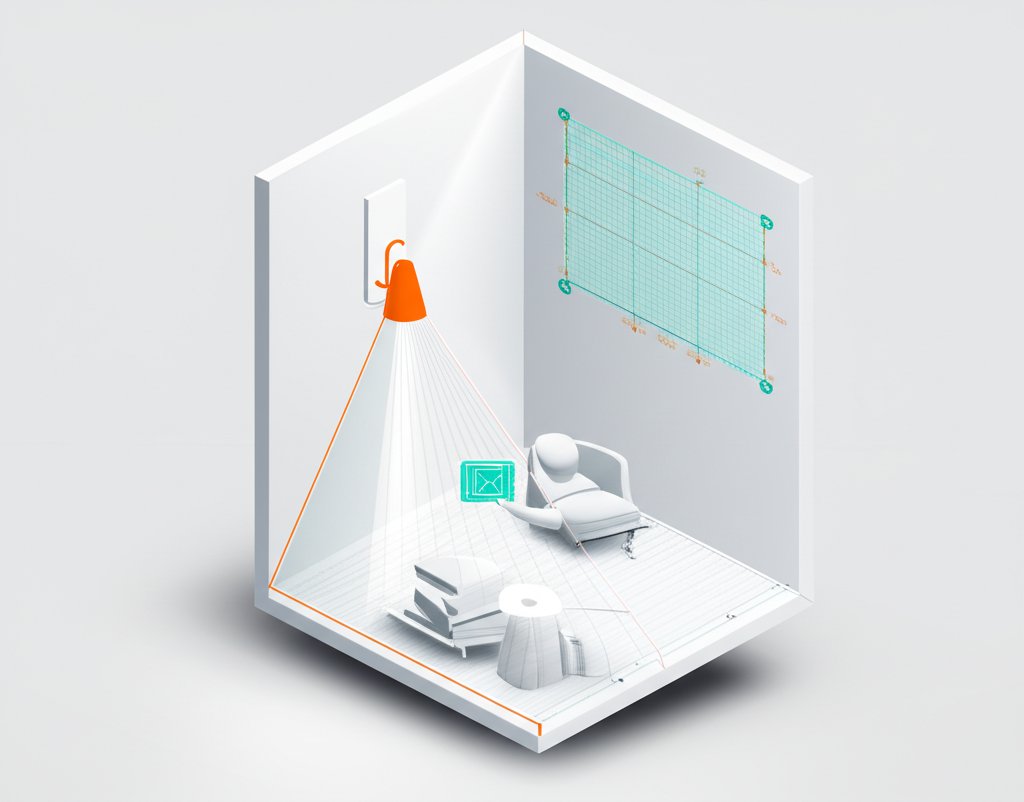
With your purpose, placement, and style in mind, use this final checklist to narrow down your options and make the perfect choice.
1. Light Direction (Uplight, Downlight, or Ambient?)
The direction of the light has a massive impact on the room’s mood. Use this table as a quick guide.
| Light Type | Best For… | Mood & Effect |
|---|---|---|
| Uplight | Rooms with standard or high ceilings; general ambiance | Creates an illusion of height; soft, indirect, and elegant |
| Downlight | Task lighting over a buffet; accenting a feature below | Focused and direct; creates drama and highlights textures |
| Ambient/Shaded | Overall warmth; reducing glare; most common dining use | Diffused, soft, and inviting; the most comfortable light |
2. Dimmer Switches Are Non-Negotiable
If you do only one thing, do this. A dining room serves many functions—from a brightly lit space for homework or cleanup to a low, intimate setting for a romantic dinner. According to lighting design experts, the ability to control the intensity of your sconces is essential for creating the right ambiance for any occasion. Insist on having them wired to a dimmer switch.
3. Bulb Type and Color Temperature
The bulb you choose is just as important as the fixture itself.
- Color Temperature: Look for bulbs with a Kelvin (K) rating between 2700K and 3000K. This range produces a warm, yellowish-white light similar to an incandescent bulb, which is universally flattering and creates a cozy, welcoming atmosphere. Anything over 3500K will start to feel cool, clinical, and uninviting—more appropriate for an office than a dining room.
- Bulb Type: LEDs are the clear winner. They are incredibly energy-efficient, last for years, and are available in a wide range of color temperatures and are fully dimmable (just be sure to buy dimmable-rated bulbs).
4. Hardwired vs. Plug-in
- Hardwired: This is the standard for a clean, permanent installation. The wiring is hidden in the wall, and the sconce is controlled by a wall switch. This requires an electrician but provides the most professional look.
- Plug-in: A great option for renters or for those who want to avoid electrical work. These sconces have a cord that hangs down the wall to a nearby outlet. Many come with cord covers that can be painted to match your wall, helping them blend in.
Quick Answers to Common Sconce Questions
How many wall sconces should I put in a dining room?
Typically, dining room wall sconces are installed in pairs for symmetry and balance, such as one on each side of a buffet, window, or large piece of art. On a very long, uninterrupted wall, a series of three or four can create a beautiful rhythm, but pairs are the most common and effective application.
Are dining room wall sconces outdated?
Absolutely not. While traditional candelabra-style sconces might feel dated in a modern home, the concept of layered wall lighting is timeless. Contemporary sconces are available in every imaginable style, from minimalist and industrial to organic and sculptural. They are a staple in high-end interior design for the exact reason they’ve always been popular: they add warmth, dimension, and sophistication.
Can sconces be the only light source in a dining room?
It’s strongly discouraged. A dining room’s primary function centers on the table, which requires direct overhead illumination from a chandelier or pendant. Wall sconces alone will light the perimeter of the room but leave the table—the main event—in relative darkness. They are designed to be a crucial secondary layer of light, not the primary source.
Putting It All Together: Your First Three Steps
Feeling ready to add the perfect finishing layer to your dining room? Don’t get overwhelmed by the options. Start with this simple, three-step action plan.
- Assess Your Room’s Needs. Stand in your dining room tonight. Where are the dark, forgotten corners? Is there a beautiful feature—like a sideboard or a mirror—that feels like it’s floating? Identify the wall that would most benefit from an infusion of light and warmth. This is your starting point.
- Measure and Mark with Tape. Grab a measuring tape and some painter’s tape. Mark the 60-66 inch height on your chosen wall. Then, use tape to create a rough outline of the sconce size you’re considering. Live with it for a day. Does the scale feel right? Is the placement balanced? This five-minute task can save you from a major design regret.
- Define the Vibe. Choose one word that describes the feeling you want for your dining room: “Cozy,” “Dramatic,” “Elegant,” or “Minimalist.” Let that single word guide your final selection. “Cozy” leads you to a warm, shaded sconce. “Dramatic” points toward an uplight or downlight. This simplifies your decision and ensures the final result aligns with your vision.

- DIY Bathroom Mirror Frame Designs on a Budget - October 12, 2026
- Creative Bathroom Mirror Border Ideas for Every Style and Budget - October 11, 2026
- Bathroom Finishes That Handle Moisture and Look Great - October 10, 2026