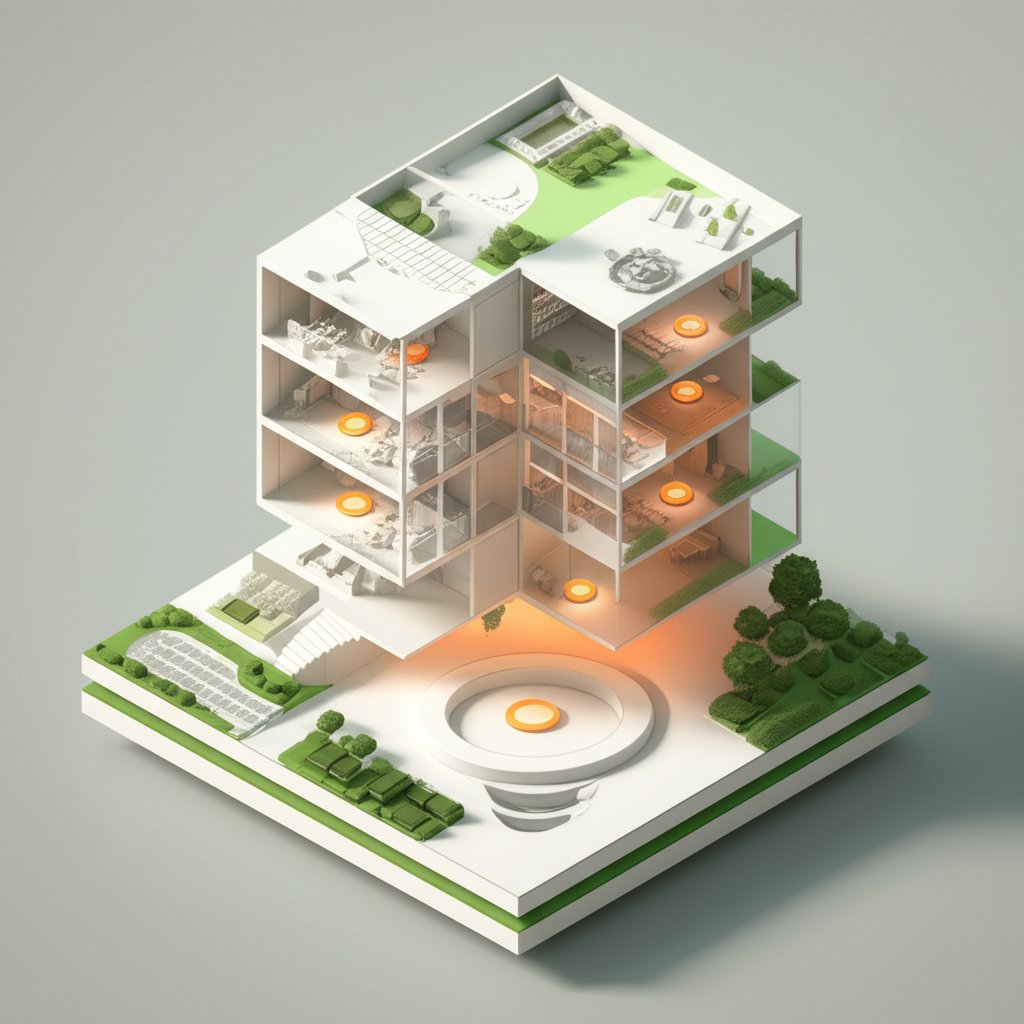
The wrong light fixture can dominate a room, pulling focus from your carefully chosen decor. Big, bulky lights can make low ceilings feel even lower. But what if you could make the light source itself almost disappear, leaving behind only perfectly illuminated spaces? This is the magic of small recessed lights, the unsung heroes of modern interior design. They trade sheer size for precision, tucking neatly into your ceiling to wash walls, spotlight art, and add layers of ambiance without ever stealing the show.
Forget the oversized, heat-guzzling can lights of the past. Today’s miniature marvels—often just one to four inches in diameter—are powerful, efficient, and incredibly versatile. They are the secret weapon designers use to make spaces feel brighter, bigger, and more intentional.
At a Glance: Your Guide to Small Recessed Lighting
Short on time? Here’s what you need to know to get started.
- What are they? Small recessed lights (or “pot lights”) are light fixtures installed directly inside a ceiling, floor, or wall. “Small” typically refers to an aperture (opening) of 4 inches or less.
- Why choose them? They offer a clean, minimalist look, provide targeted and layered lighting, and can make rooms feel more spacious. They’re perfect for highlighting features and creating specific moods.
- Key Decisions: You’ll need to choose the right size, brightness (lumens), color temperature (Kelvin), and trim style for your space and purpose.
- Installation Types: The two main categories are “canless” (ultra-thin LEDs) and traditional “canned” lights, which come in versions for new construction or remodeling projects.
- Best Applications: They excel as task lighting in kitchens, accent lighting for artwork or architectural features, and ambient lighting in hallways, bathrooms, and basements.
Why Size Matters: The Power of Miniature Lighting
For decades, the standard recessed light was a 5- or 6-inch behemoth. It did the job of general illumination, but with all the subtlety of a floodlight. The shift toward smaller fixtures isn’t just a trend; it’s a fundamental change in lighting philosophy from broad illumination to purposeful design.
Think of it like this: a 6-inch can light is a bucket of light, while a 3-inch light is a focused beam. The smaller source gives you more control. Instead of one large fixture in the middle of a room, you can use several smaller ones to create “pools” of light exactly where you need them—over a kitchen counter, on a gallery wall, or in a reading nook.
This approach, known as “layered lighting,” combines three types of light:
- Ambient: The overall, general light in a room.
- Task: Focused light for specific activities like chopping vegetables or reading.
- Accent: Directional light used to highlight an object or feature, like a painting or a textured wall.
Small recessed lights are champions of task and accent lighting. Their discreet nature allows them to supplement other light sources (like a pendant or chandelier) without creating visual clutter. The result is a room that feels professionally designed, comfortable, and intuitive.
Decoding the Specs: What to Look for in Small Recessed Lights
Walking into the lighting aisle can be overwhelming. Lumens, Kelvins, trims, housings—the jargon comes fast. Let’s break down the essential features into plain English so you can choose with confidence.
Size and Aperture (1 to 4 inches)
The “size” of a recessed light refers to the diameter of its opening, or aperture. Small recessed lights typically range from 1 to 4 inches.
- 1- to 2-inch: These are “pinhole” or “jewel” lights. They are masters of accent lighting. Use them in groups to highlight architectural details, illuminate collectibles inside a bookshelf, or create a starry-sky effect on a ceiling. They aren’t meant for general room lighting.
- 3- to 4-inch: This is the sweet spot for versatility. A 3- or 4-inch light is small enough to look sleek and modern but powerful enough to contribute significantly to a room’s ambient and task lighting. They are the go-to choice for kitchens, bathrooms, and hallways.
Trim Style: The Visible Part of the Light
The trim is the visible ring and interior of the light that you see from below. It’s not just decorative; it shapes the light itself.
- Baffle Trim: Features uniform grooves on the interior to absorb stray light and reduce glare. This is a popular, classic choice for a soft, diffused look.
- Reflector Trim: Has a smooth, mirror-like interior that maximizes light output. It produces a brighter, more concentrated beam. Best for high ceilings or when you need maximum punch.
- Gimbal (or Eyeball) Trim: This trim is adjustable, allowing you to pivot the lamp and direct the light beam toward a specific object, like a piece of art or a fireplace mantel. It’s the ultimate tool for accent lighting.
- Trimless (or “Mud-in”): For the true minimalist, trimless fixtures are installed flush with the ceiling and then plastered over, making the light source appear as a clean, sharp hole with no visible ring.
Color Temperature (CCT): Setting the Mood
Color temperature, measured in Kelvin (K), describes how “warm” or “cool” the light appears. This is one of the most important decisions you’ll make, as it dictates the entire feel of your space.
- 2700K (Warm White): Emits a cozy, yellowish glow similar to a traditional incandescent bulb. Perfect for living rooms, dens, and bedrooms where you want a relaxing atmosphere.
- 3000K (Soft White): A slightly crisper, whiter light. It’s a versatile middle ground that works well in kitchens, bathrooms, and offices where you need clarity without the light feeling too sterile.
- 4000K (Cool White): A neutral, white light that borders on blue. It creates a bright, energizing feel, often used in commercial settings, garages, or very modern kitchens.
- 5000K+ (Daylight): An intense, bluish-white light that mimics natural daylight. It’s excellent for task-heavy areas like workshops but can feel harsh in living spaces.
Many modern LED lights now come with selectable CCT, allowing you to choose your preferred color temperature with a switch on the fixture itself during installation.
New Construction vs. Remodel Housings
Before LEDs became dominant, every recessed light needed a “can” or “housing”—the metal bucket that sits inside the ceiling. These housings still exist and fall into two categories.
- New Construction: These housings have mounting bars designed to be nailed or screwed directly to ceiling joists before the drywall goes up. They are the most secure option if you have open access to your ceiling framing.
- Remodel: Designed for existing ceilings, these housings are secured by clips that clamp onto the back of the drywall. You simply cut a hole and push the housing through. If you’re adding lights to a finished room, you’ll need remodel can lights designed for this purpose.
Where Small Recessed Lights Shine Best: Application Ideas
The true beauty of small recessed lights is their adaptability. They can solve lighting problems in nearly any room of the house.
Kitchens: Task Lighting with Precision
The kitchen is arguably the best place to use small recessed fixtures. Use 3- or 4-inch lights to create overlapping zones of light. Place them directly over the edge of your countertops (not in the center of the walkways) to illuminate your workspace without casting shadows from your own body. A row of small gimbals directed at the cabinet faces can make the whole kitchen feel brighter.
Living Rooms & Dens: Creating Ambiance and Highlighting Art
In living areas, avoid the “runway” look of a single, straight line of lights. Instead, think in groups and layers.
- Wall Washing: Place a series of lights about 2-3 feet from a wall to cast a broad, even wash of light down its surface. This makes the room feel larger and brighter.
- Art Spotlighting: Use a single gimbal trim angled at 30 degrees to perfectly frame a favorite painting.
- Fireplace & Bookshelves: A pair of small lights can transform a brick fireplace into a dramatic focal point. Tiny 1- or 2-inch lights can add depth and intrigue to built-in shelving.
This layered approach is also incredibly effective in finished basements, which often suffer from a lack of natural light. Strategic placement can define different zones—a TV area, a game table, a bar—and make the space feel cozy instead of cavernous. There are many great Basement pot light ideas that rely on small fixtures to achieve this effect.
Bathrooms & Hallways: Safety and Style in Small Spaces
In hallways, a few well-spaced 3-inch lights provide clean, effective pathfinding without cluttering a narrow space. In bathrooms, it’s crucial to use fixtures rated for the location. Any light placed inside a shower must be “wet-rated.” Lights above a vanity or in the general bathroom area should be at least “damp-rated.” A small, wet-rated light in a shower niche is a perfect example of functional, high-end design.
The Installation Lowdown: What You Need to Know

With the rise of new technology, installing recessed lighting has become more accessible than ever. But there are still a few key concepts to understand before you start drilling holes.
Canless vs. Can-style Lights: The New Standard
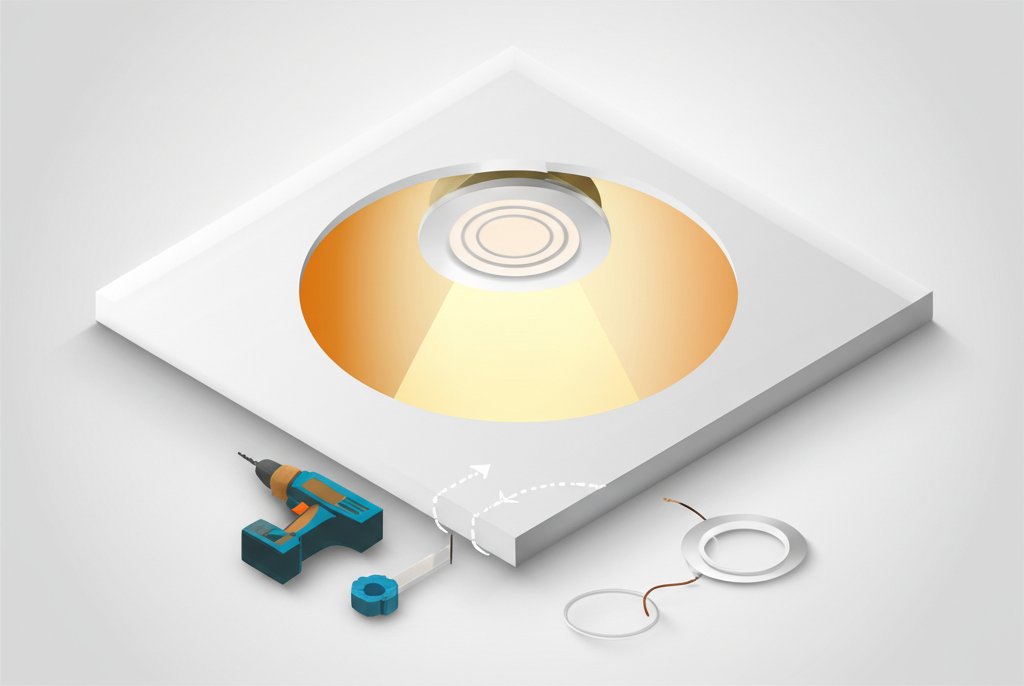
The biggest innovation in recent years is the “canless” or “wafer” light. These fixtures are incredibly thin (often less than an inch thick) because the LED light source and the trim are integrated into a single unit. A separate, small junction box houses the wiring and can be tucked into the ceiling cavity.
This design has huge advantages. Because there’s no bulky can, you can install them almost anywhere, even directly under a ceiling joist. This flexibility is a game-changer for older homes with unpredictable framing. These Low Profile Recessed Lights are quickly becoming the default choice for both remodelers and professional electricians due to their simplicity and versatility.
Planning Your Layout: The Rules of Thumb
Proper spacing is the key to avoiding dark spots or overly bright “hot spots.” While every room is different, here are some general guidelines to get you started:
- General Spacing: A common formula is to divide the ceiling height by two. For an 8-foot ceiling, you would space your lights about 4 feet apart.
- Distance from Walls: For general lighting, place the first row of lights about 2-3 feet away from the walls. For wall-washing, move them closer, to around 18-24 inches.
- Task Lighting: For kitchen counters, position the lights so they are centered over the work surface, typically about 12-18 inches from the wall/cabinets.
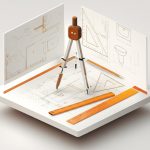
Always lay out your plan on paper first. You can even use painter’s tape on the ceiling to visualize the locations before making any cuts.
DIY vs. Hiring a Pro: Making the Call
If you’re experienced with basic electrical work—like changing an outlet or a standard light fixture—and are only installing a few remodel-style lights on an existing switch, you might feel comfortable tackling it yourself.
However, for most projects, hiring a licensed electrician is the safest and wisest choice. This is especially true if you are:
- Installing lights in a new circuit.
- Unsure about the existing wiring in your home.
- Working with a large number of lights.
- Dealing with insulated ceilings, which require specific IC-rated fixtures.
An electrician can ensure your layout is optimal, your wiring is up to code, and your home is safe.
Common Questions & Pitfalls to Avoid
Even with a plan, questions pop up. Here are quick answers to some of the most common ones.
Do small recessed lights provide enough light?
Yes, absolutely! The key is using enough of them and spacing them correctly. A single 4-inch, 800-lumen LED light can be as bright as a 60-watt incandescent bulb. By using multiple fixtures, you can easily achieve and surpass the brightness of a single, large ceiling fixture while getting much better light distribution.
Are they energy-efficient?
Modern LED recessed lights are incredibly efficient. An LED that produces the same amount of light as a 60-watt incandescent bulb may only consume 8 or 9 watts of power. They also last for tens of thousands of hours, meaning you won’t be changing bulbs for a decade or more.
Can I install them in an insulated ceiling?
Yes, but you must use a fixture that is IC-rated, which stands for “Insulation Contact.” These housings are designed to be safely buried in ceiling insulation without creating a fire hazard. Non-IC-rated fixtures require a clearance of at least three inches from any insulation. Nearly all modern canless LED lights are IC-rated.
What’s the difference between a pot light, a can light, and a recessed light?
They are all different names for the same thing! “Recessed light” is the most technical term. “Can light” refers to the traditional metal can housing, and “pot light” is a common colloquialism, particularly in Canada.
Beyond the Bulb: Your Next Steps to Flawless Lighting
Choosing the right lighting is about more than just visibility; it’s about shaping how you experience your home. Small recessed lights offer a sophisticated, versatile toolkit to do just that. They empower you to move beyond generic, one-size-fits-all solutions and become the intentional designer of your own space.
Start by walking through your home and identifying the problem spots. Is there a dark corner where you love to read? A beautiful piece of art that gets lost in the shadows? A kitchen workspace that feels dim?
For each area, think about the purpose of the light you want to add. Is it for general ambiance, a specific task, or a dramatic accent? Answering that question will guide your choice of size, trim, and color temperature. From there, you can begin sketching a layout, confident that you have the knowledge to create a lighting plan that is not only functional but truly transformative.

- Bathroom Materials Selection Offers Quality Fixtures for Home Design Projects - October 9, 2026
- Best Cosmetic Storage Containers For a Tidy Vanity - October 8, 2026
- Best Makeup Storage Boxes to Keep Your Vanity Spotless - October 7, 2026