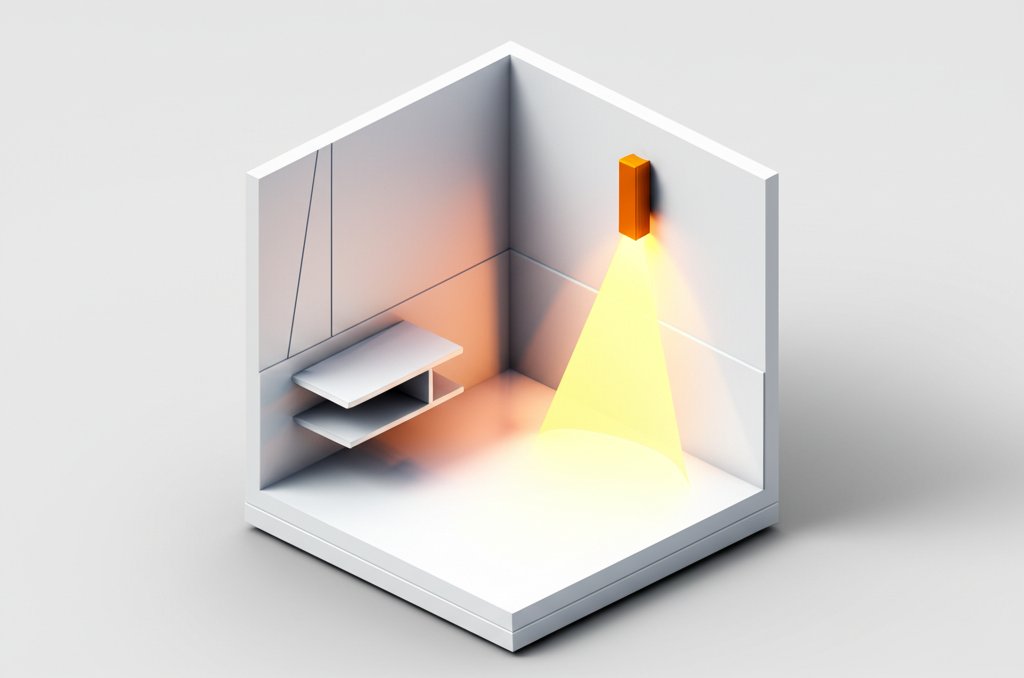
A poorly lit hallway often feels like a forgotten space—a mere passageway rather than a part of your home’s story. Many people install a single, harsh ceiling light and call it a day, but this can create uneven shadows and a sterile atmosphere. This is where modern sconce lights change the entire dynamic, acting as both architectural accents and sophisticated light sources that guide the way with a clean, intentional glow.
These fixtures are more than just utility; they are sculptural elements that embody a “less is more” philosophy. By embracing clean lines, innovative materials, and integrated technology, modern sconce lights can make a narrow corridor feel wider, a low ceiling seem taller, and a plain wall look like a deliberate design feature.
At a Glance: What You’ll Learn
- The DNA of a Modern Sconce: Understand the core principles that separate modern designs from traditional ones—from minimalist forms to integrated LED technology.
- A Practical Selection Framework: Follow a step-by-step process to choose the right fixture based on your hallway’s dimensions, your lighting needs, and your home’s aesthetic.
- Expert Placement Rules: Learn the industry standards for mounting height and spacing to create a balanced and professional-looking installation.
- Decoding the Specs: Make sense of lumens, color temperature (Kelvin), and CRI to ensure you get the quality of light you envision.
- Common Pitfalls to Avoid: Sidestep frequent mistakes, like choosing fixtures that are out of scale or create unwanted glare.
What Truly Defines a Modern Sconce?
The term “modern” can be broad, but in the world of lighting, it points to a specific design ethos rooted in simplicity, functionality, and a forward-thinking use of materials. Modern sconce lights shed the ornamentation of traditional fixtures in favor of a clean, purposeful presence.
Beyond Just a Light: Form Follows Function
Modern design is built on the principle that an object’s shape should be primarily based upon its intended function. For sconces, this means the form is engineered to direct light in a specific, controlled way.
- Uplights: These fixtures cast light toward the ceiling, creating a soft, ambient glow that makes a space feel larger and more open. They are excellent for hallways with standard or high ceilings.
- Downlights: By directing illumination downward, these create pools of light that can highlight flooring, wash a wall with texture, or serve a more functional purpose.
- Up/Down Lights: A popular modern choice, these fixtures emit light from both the top and bottom, creating dramatic vertical patterns and providing a balanced mix of ambient and accent lighting.
- Wash Lights: These sconces sit close to the wall and cast a wide, even sheet of light, perfect for grazing a textured surface like brick or stone, or for providing general, glare-free illumination.
The Materials of Modernism: Metal, Glass, and Unexpected Textures
Materials in modern sconce lights are chosen for their inherent beauty and structural integrity. You won’t find intricate carvings or fussy details. Instead, you’ll see:
- Metals: Matte black, brushed nickel, polished chrome, and warm brass are staples. The finish is often sleek and uniform, emphasizing the fixture’s geometric shape.
- Glass: Often frosted, opal, or clear, glass is used to diffuse light softly or shape it precisely. A simple glass cylinder or a clean rectangular panel is a common motif.
- Concrete & Plaster: Some contemporary designs use materials like cast concrete or plaster, which can be painted to match the wall, allowing the light effect itself to become the primary design element.
Integrated LED: The Engine of Sleek Design
Perhaps the biggest driver of modern sconce design is the integrated LED. Unlike traditional sconces designed around a bulky incandescent bulb, fixtures with integrated LEDs allow for incredibly slim, creative, and minimalist forms. The light source is built directly into the fixture, enabling designs that were previously impossible—think razor-thin light bars, glowing geometric shapes, and seamless sculptural forms. This technology also brings superior energy efficiency and a long lifespan, making it a practical and sustainable choice.
Your 5-Step Playbook for Choosing the Right Modern Sconce
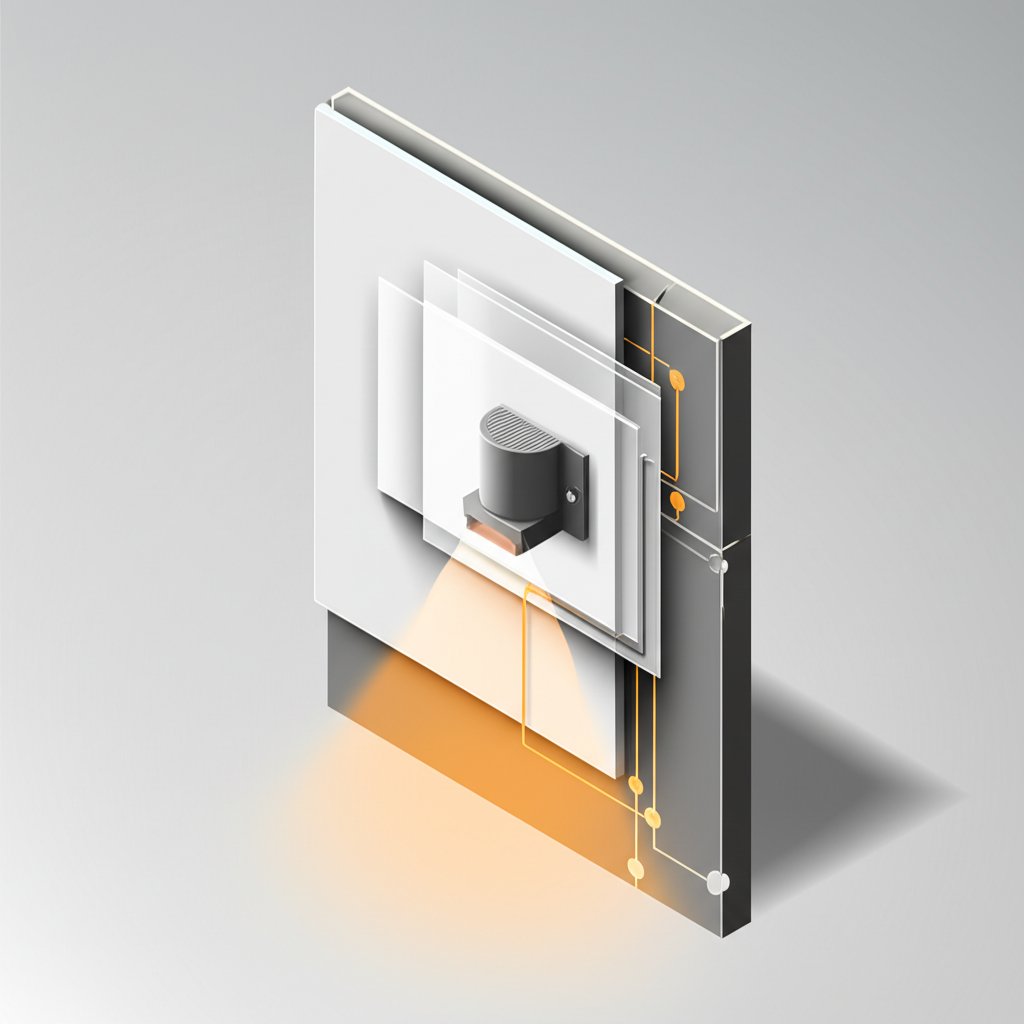
Selecting the perfect fixture involves more than just picking a style you like. Follow this process to ensure your choice is both beautiful and perfectly suited to your space.
Step 1: Read the Room—Analyze Your Hallway’s Architecture
First, take stock of your hallway’s physical characteristics. The dimensions and existing light will dictate the type and number of sconces you need.
- Length & Width: For a long, narrow hallway, a series of smaller, low-profile sconces can create a rhythm that draws the eye forward. A wider, more open foyer might accommodate a single, larger sculptural sconce as a statement piece.
- Ceiling Height: Low ceilings (under 8 feet) benefit from uplight sconces, which create an illusion of height. For high ceilings, up/down lights add architectural interest by activating more of the vertical space.
- Natural Light: If your hallway has no windows, your sconces will be the primary light source. In this case, choose fixtures that provide ample ambient light and consider installing them on a dimmer for flexibility.
For a broader overview of how sconces fit into a complete lighting plan, see the comprehensive Hall Wall Lighting Guide. This will help you understand how to layer different types of fixtures for a cohesive and functional result.
Step 2: Define the Mission—Ambient, Accent, or Task Lighting?
What do you need the light to do?
- Ambient Lighting: This is the general, overall illumination for the space. For this, you’ll want sconces that cast a wide, diffuse glow, like those with frosted glass shades or uplight designs.
- Accent Lighting: If you plan to hang artwork or highlight an architectural feature, you need focused light. Look for adjustable sconces or “picture lights” with a directed beam.
- Wayfinding: In its simplest form, hallway lighting guides you from one space to another. Sconces placed rhythmically down a corridor serve this purpose beautifully, providing safety and a sense of direction.
Step 3: Match the Aesthetic—From Minimalist to Sculptural
Now for the fun part. Modern design isn’t a single look; it’s a spectrum. Brands like Kuzco Lighting excel at the minimalist end, with ultra-clean lines and geometric purity. In contrast, a designer like Jonathan Adler might offer a whimsical, sculptural piece like the Giraffe Sconce, which is modern in its boldness and artistic form.
Case Snippet: The Narrow, Art-Filled Corridor
A client had a long, 4-foot-wide hallway lined with family photos. They needed light but couldn’t have fixtures protruding into the walkway. The solution was a series of slim, ADA-compliant uplight sconces. Mounted at 66 inches, they bathed the ceiling in a soft glow, making the space feel taller, while indirectly illuminating the photos without causing glare. The fixtures themselves almost disappeared, letting the light and the art take center stage.
Step 4: Nail the Technical Specs—Lumens, Color, and Dimmability
Understanding the quality of light is non-negotiable.
- Lumens (Brightness): Forget wattage; lumens measure actual brightness. For ambient hallway lighting, aim for 10-20 lumens per square foot. A 10-foot by 4-foot hallway (40 sq ft) would need 400-800 total lumens, which could be supplied by two 300-lumen sconces.
- Color Temperature (Kelvin): This measures how warm (yellow) or cool (blue) the light appears. For a cozy, inviting feel in a home, stick to the 2700K to 3000K range. Anything over 4000K can feel clinical.
- Dimmability: This is crucial for hallways. The ability to dim your sconces allows you to use them as soft nightlights or turn them up for cleaning or welcoming guests. Always check that both the fixture and the dimmer switch are compatible.
| Light Spec | What It Is | Recommended for Hallways |
| :— | :— | :— |
| Lumens | A measure of brightness. | 10-20 per square foot for ambient light. |
| Kelvin (K) | The color of the light. | 2700K (warm white) to 3000K (soft white). |
| CRI | Color Rendering Index (0-100). | 90+ to ensure colors and skin tones look natural. |
Step 5: Consider Scale and Proportion
A common mistake is choosing a sconce that’s too small or too large for the wall. A tiny sconce on a large, empty wall will look lost, while an oversized one can overwhelm a narrow space. A general guideline is that a sconce should be roughly one-quarter to one-third the height of a nearby door or window frame. Before you buy, cut a piece of cardboard to the dimensions of the sconce and tape it to the wall to visualize its presence.
Where to Place Modern Sconces for Maximum Impact

Proper placement is just as important as the fixture itself. Follow these industry standards for a professional, balanced look.
The Height Rule: Eye-Level is Key
The standard height for wall sconces is between 60 and 66 inches above the finished floor. This places the light source around eye level, preventing you from looking directly into a bare bulb while still illuminating the space effectively. If your ceilings are higher than 9 feet, you can mount them slightly higher, around 68-72 inches. The goal is for the upper third of the wall to be illuminated.
The Spacing Formula: Creating a Rhythmic Flow
In a long hallway, space sconces approximately 8 to 10 feet apart. This creates a pleasing visual rhythm and ensures even light distribution without dark spots. Staggering them on opposite sides of the hall can also work well, especially in narrower corridors, as it helps to visually widen the space. Always start and end the run about 6 feet from the doorways to avoid interference.
Practical Tip: Use painter’s tape to mark the center of each proposed sconce location on the wall. Live with the markers for a day or two to get a feel for the spacing and height before you call the electrician.
Quick Answers to Common Questions
Q: Do all modern sconce lights use integrated LED?
Not all, but the vast majority of truly contemporary designs do. Integrated LED is what allows for the ultra-slim and unconventional shapes that define modern lighting. Some transitional or “soft modern” sconces may still use standard E26 or E12 bulbs, offering more flexibility in bulb replacement but limiting the fixture’s form factor.
Q: How bright should hallway sconces be?
It depends on their purpose. For general ambient light, a total of 400-800 lumens is a good target for a standard hallway, distributed across multiple fixtures. If the sconces are purely for accent, they can be lower—around 150-200 lumens each. Always opt for dimmable fixtures to adjust the brightness as needed.
Q: Can I install modern sconce lights myself?
If you are replacing an existing fixture and are comfortable with basic electrical work (like turning off the breaker and connecting wires), you might be able to DIY. However, for new installations that require running new wiring, it is always safest and recommended to hire a licensed electrician.
Q: Are modern sconces only for minimalist homes?
Absolutely not. Because of their clean lines, modern sconce lights act as a neutral but sophisticated element that can complement many decors. A simple, geometric sconce can provide a beautiful contrast in a traditional or transitional home, preventing the decor from feeling dated. The key is to match the finish and scale to the surrounding elements.
Your Final Checklist Before You Buy
You’ve analyzed your space and narrowed down your style. Before you click “purchase,” run through this final mental checklist to ensure you’ve covered all the bases.
- Check the Depth (Projection): Is it an ADA-compliant fixture? In a narrow hallway or high-traffic area, a sconce should not project more than 4 inches from the wall to prevent people from bumping into it.
- Confirm Dimmability: Have you verified that both the LED driver in the fixture and the wall switch you plan to use are compatible for smooth, flicker-free dimming?
- Match the Finish: Hold a sample of the sconce’s finish (if possible) next to other hardware in the space, like doorknobs or picture frames, to ensure they complement each other.
- Review the Light Direction: Will the light cast be comfortable? An uplight is glare-free, while a downlight could create a bright spot on a glossy floor. Think about how the light will fall and interact with your surfaces.
By moving beyond basic overhead lighting, you empower your hallways to become more than just transitional zones. With the right modern sconce lights, they become intentionally designed spaces that contribute to the beauty, flow, and character of your entire home.

- DIY Bathroom Mirror Frame Designs on a Budget - October 12, 2026
- Creative Bathroom Mirror Border Ideas for Every Style and Budget - October 11, 2026
- Bathroom Finishes That Handle Moisture and Look Great - October 10, 2026