
For the bigger picture and full context, make sure you read our main guide on Commercial Style Kitchen At Home: Pro Design Tips.
markdown
Tired of your home kitchen holding back your culinary ambitions? Many serious home cooks dream of a space that functions like a professional kitchen, but the leap from aspiration to reality can feel overwhelming. The good news is that incorporating commercial kitchen at home ideas is more attainable than you think, and it’s not just about stainless steel everything.
At a glance:
- Discover key appliances that bridge the gap between home and restaurant kitchens.
- Learn how to optimize your kitchen layout for efficiency and workflow.
- Identify essential building materials for durability and easy maintenance.
- Understand important safety and regulatory considerations.
- Get inspired by real-world examples and practical tips.
Bridging the Gap: Key Appliances for the Home Chef
One of the most significant upgrades you can make when recreating a commercial kitchen at home is upgrading your appliances. These aren’t just about aesthetics; they’re about performance, durability, and control.
The Commercial-Style Range: A Culinary Command Center
Forget your standard electric cooktop. A commercial-style range is often the centerpiece of a serious home kitchen. What makes it different?
- High-BTU Burners: Gas ranges, in particular, offer burners with significantly higher BTU output, allowing for rapid heating and searing. Look for burners capable of at least 15,000 BTU, and ideally one that hits 20,000-25,000 BTU for wok cooking or quickly boiling large pots of water.
- Durable Construction: Cast-iron grates, heavy-duty knobs, and stainless-steel finishes are built to withstand constant use.
- Precise Control: Large, easy-to-grip knobs provide fine-tuned flame control, crucial for delicate sauces and simmering.
- Oven Power: Look for features like true convection, which ensures even heat distribution for consistent baking results.
A popular option is a dual-fuel range, offering the best of both worlds: a gas cooktop for immediate heat adjustments and an electric oven for consistent, even baking. Modern ranges often include digital panels, letting you precisely program temperature and cook times for repeatable results.
Pitfall to avoid: Some commercial-style ranges have smaller oven cavities than standard home ranges. Measure carefully to ensure it can handle your Thanksgiving turkey!
Beyond the Range: Essential Appliance Upgrades
- Commercial-Grade Refrigerator: While a full walk-in refrigerator might be overkill, consider a restaurant-style stainless-steel refrigerator with adjustable shelving and powerful cooling to keep ingredients fresh.
- High-Powered Ventilation: A commercial-grade vent hood is non-negotiable, especially with a high-BTU range. It will effectively remove smoke, grease, and odors, keeping your kitchen air clean.
- Dishwasher Powerhouse: A high-temperature dishwasher with a short cycle time will save you time and effort on cleanup.
- Prep-Focused Sink & Faucet: A large, deep sink with a commercial-style faucet featuring a high arc and a powerful sprayer is essential for efficient food preparation and cleanup. These faucets typically offer single-handle operation and a spray that can swivel 360 degrees.
Layout is Key: Optimizing Your Kitchen Workflow
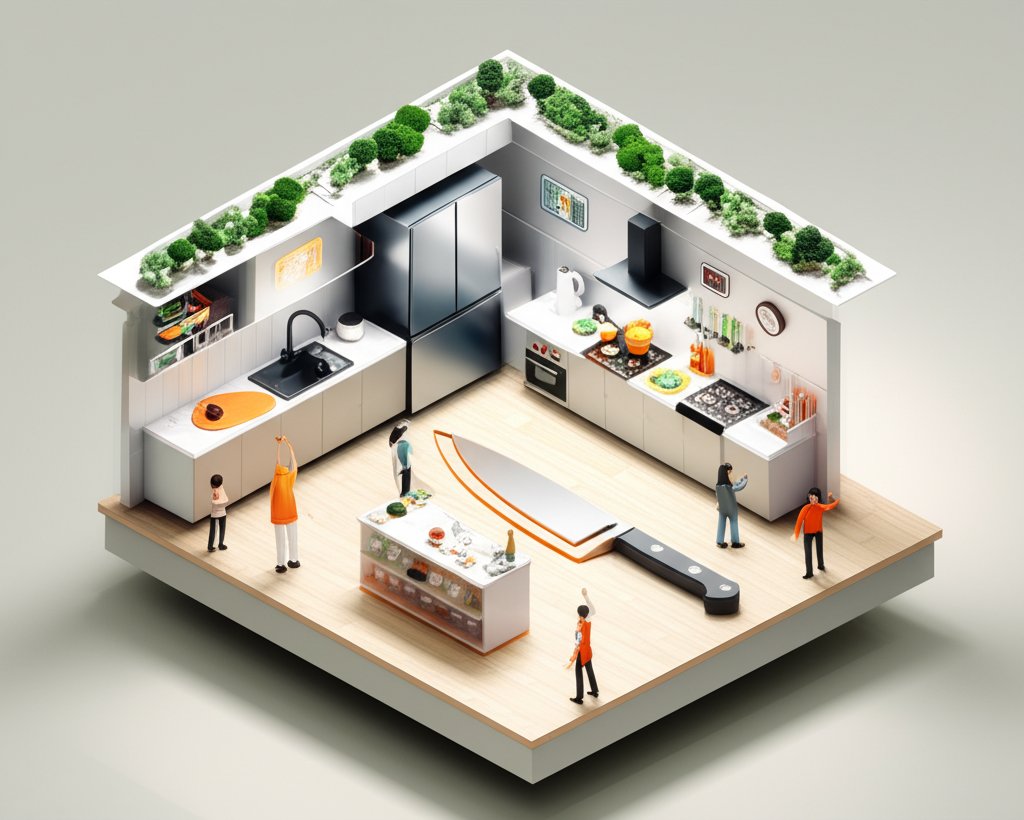
Commercial kitchens are designed for efficiency, and your home kitchen should be no different. Consider these layout principles:
- The Work Triangle: The classic work triangle connects the refrigerator, sink, and range. Optimize the distances and angles within this triangle to minimize steps.
- Dedicated Prep Zones: Create separate areas for different tasks, such as chopping vegetables, assembling dishes, and plating.
- Ample Counter Space: You can never have too much counter space. Opt for durable, easy-to-clean materials like stainless steel or butcher block.
- Island Power: A kitchen island can provide additional prep space, storage, and seating. Consider adding a sink or cooktop to the island for enhanced functionality.
- Open Flow: Industrial kitchens often benefit from open floor plans and high ceilings. This promotes efficient workflow and a spacious feel.
Example scenario: Imagine prepping a complex dish. A well-designed layout allows you to move seamlessly from the refrigerator to the prep area, then to the cooktop, and finally to the plating station, without unnecessary steps or obstructions.
Building Materials: Durability Meets Style
Commercial kitchens prioritize durability and easy cleaning. Incorporating these materials into your home kitchen will create a space that is both functional and stylish.
- Stainless Steel: The workhorse of any commercial kitchen, stainless steel is durable, heat-resistant, and easy to clean. Use it for countertops, backsplashes, and appliances.
- Concrete Floors: Concrete floors are incredibly durable and can withstand heavy foot traffic. They also have a modern, industrial aesthetic.
- Epoxy Flooring: Epoxy floor coatings are a great way to keep the concrete well protected.
- Exposed Brick: If possible, incorporate exposed brick walls to add texture and warmth to the space.
- Commercial-Grade Tile: Choose durable, non-slip tile for flooring and backsplashes.
- Open Shelving: Stainless steel or wire shelving provides easy access to frequently used items.
Color Palette: Stick to a neutral color palette with cool grays, blacks, and warm browns, and metal accents to create a sophisticated and timeless look.
Safety and Regulatory Considerations
Before embarking on a commercial kitchen at home project, it’s crucial to consider safety and regulatory requirements.
- Zoning Laws: Check local zoning laws to ensure that commercial kitchens are permitted in your area.
- Health Department Approval: Obtain approval from the local health department for your water source and sewage disposal.
- Proper Ventilation: Install a commercial-grade vent hood to remove smoke, grease, and odors.
- Fire Safety: Install fire extinguishers and smoke detectors in the kitchen.
- Electrical Safety: Ensure that all electrical appliances are properly grounded and that electrical sockets are not overloaded.
- Food Safety Certification: Consider obtaining food safety certification to ensure that you are handling food safely.
Licensing: Depending on your intended use for the kitchen, you may need to obtain a food service establishment license or other permits. Research the specific requirements in your area. Here are a few options, prioritizing different aspects: * Build a Commercial Kitchen at Home * Pro Kitchen Design Tips Here * Design Like A Pro * Commercial Kitchen Design Guide * Home Commercial Kitchen Guide.
Practical Playbook: Steps to Commercial Kitchen Bliss

Here’s a step-by-step guide to help you translate these commercial kitchen at home ideas into reality:
- Assess Your Needs: Define your culinary goals and identify the equipment and layout that will best support them.
- Create a Budget: Determine how much you are willing to spend on the project.
- Design Your Kitchen: Work with a kitchen designer or architect to create a detailed plan.
- Obtain Permits: Obtain all necessary permits from local authorities.
- Hire Contractors: Hire qualified contractors to complete the construction and installation work.
- Purchase Appliances: Select high-quality, commercial-grade appliances.
- Install Equipment: Install all equipment according to manufacturer’s instructions.
- Inspect and Test: Inspect all work and test all equipment to ensure that it is functioning properly.
Quick Answers: Common Questions and Misconceptions
Q: Is stainless steel the only option for countertops?
A: No, while stainless steel is a popular choice, butcher block, concrete, and quartz are also viable options.
Q: How much does it cost to build a commercial kitchen at home?
A: The cost can vary greatly depending on the size of the kitchen, the equipment you choose, and the complexity of the project. Expect to spend anywhere from $20,000 to $100,000 or more.
Q: Do I need a commercial-grade refrigerator?
A: While not essential, a commercial-grade refrigerator offers superior cooling performance and storage capacity. If you frequently cook for large groups or need to store large quantities of ingredients, it is a worthwhile investment.
Q: Can I DIY a commercial kitchen?
A: While some aspects of the project can be DIYed, it is best to hire qualified contractors for electrical, plumbing, and gas work.
Time to Build: Your Culinary Command Center Awaits
Implementing commercial kitchen at home ideas is about more than just aesthetics. It’s about creating a functional, efficient, and inspiring space that empowers you to pursue your culinary passions. By focusing on high-quality appliances, a well-designed layout, durable materials, and safety considerations, you can transform your home kitchen into a professional-grade workspace. Now, go forth and create!

- DIY Bathroom Mirror Frame Designs on a Budget - October 12, 2026
- Creative Bathroom Mirror Border Ideas for Every Style and Budget - October 11, 2026
- Bathroom Finishes That Handle Moisture and Look Great - October 10, 2026