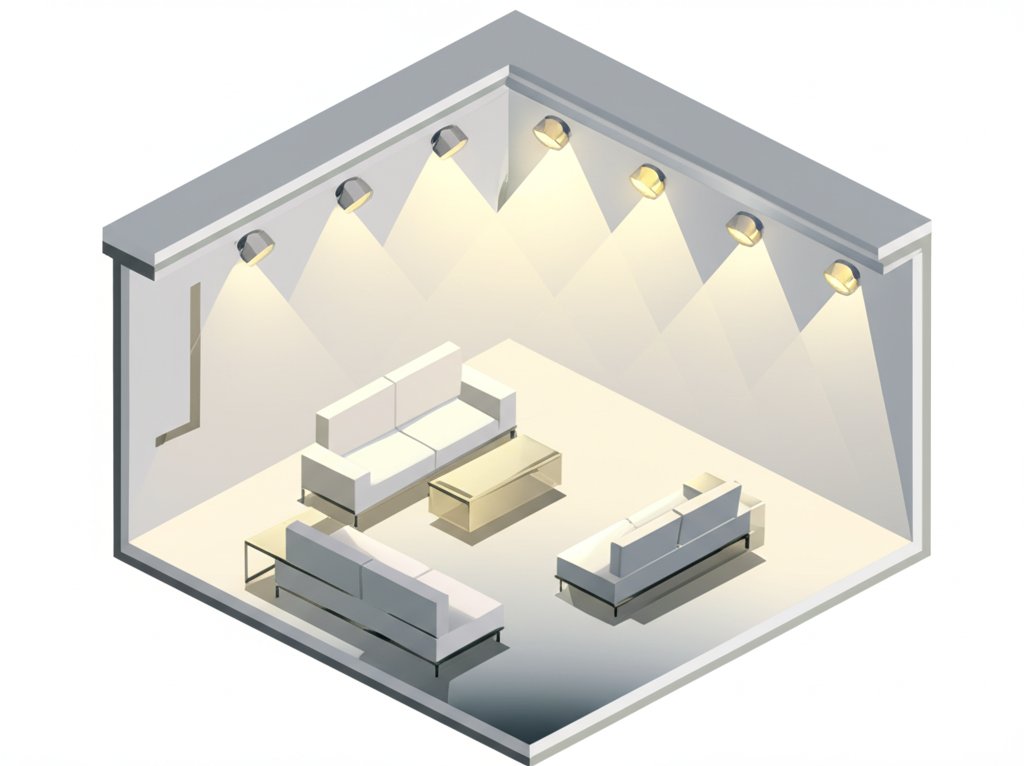
The right lighting can make a cramped room feel open, a sterile kitchen feel warm, and a living room feel like a cozy retreat. Yet, so many of us live with the harsh, buzzing, or just plain dim light from outdated fixtures. The culprit is often hiding in plain sight, tucked into your ceiling. The solution, however, is simpler and more affordable than a full renovation: upgrading to the best recessed light bulbs led can completely redefine your space.
This isn’t just about screwing in a new bulb. It’s about taking control of your home’s atmosphere—making colors richer, spaces more functional, and energy bills lower. But navigating the world of lumens, Kelvins, and trim types can feel like a chore.
This guide cuts through the noise. We’ll give you the confidence to walk down the lighting aisle, pick the perfect bulb, and finally get the beautiful, efficient lighting your home deserves.
At a Glance: Your LED Lighting Cheat Sheet
Pressed for time? Here are the most important takeaways for choosing the right recessed LED bulbs:
- Think Lumens, Not Watts: Lumens measure brightness; watts measure energy use. For a typical 65-watt incandescent replacement, look for an LED around 800 lumens.
- Kelvin Sets the Mood: Color temperature (measured in Kelvin) dictates the light’s feel. 2700K-3000K is warm and cozy (living rooms, bedrooms), while 4000K-5000K is cool and energizing (kitchens, offices, garages).
- Dimmer Compatibility is Key: Not all LED bulbs play nice with all dimmer switches. Using an incompatible pair can cause flickering or humming. Always check the bulb’s packaging for dimmer recommendations.
- CRI Brings Colors to Life: The Color Rendering Index (CRI) measures how accurately a light source reveals colors. Look for a CRI of 90+ for vibrant, true-to-life tones in kitchens and bathrooms.
- The Right Fit Matters: Match the bulb’s size and shape (e.g., BR30, PAR20) to your existing recessed can, or “housing.”
Why Your Recessed Lighting Deserves an LED Upgrade
For decades, those “cans” in the ceiling were filled with hot, energy-guzzling incandescent or frustratingly slow-to-warm-up CFL bulbs. LED (Light Emitting Diode) technology changed the game entirely. If you’re still on the fence, consider the undeniable advantages.
Unmatched Energy Efficiency: An LED bulb uses up to 85% less energy than its incandescent counterpart to produce the same amount of light. An 11-watt LED can easily replace a 65-watt incandescent, and that difference adds up quickly on your utility bill.
Incredible Lifespan: A quality LED bulb can last 25,000 hours or more. That’s potentially over 20 years of use if you have the lights on for three hours a day. Compare that to the 1,000-hour lifespan of a typical incandescent, and you can say goodbye to constantly dragging out the ladder for replacements.
Superior Light Quality: LEDs offer instant-on brightness with no warm-up time. They also provide a much wider range of color temperatures and superior color accuracy, giving you precise control over how your rooms look and feel.
Decoding the Lingo: Your Guide to LED Specs

The packaging on an LED bulb is packed with technical terms. Don’t be intimidated. Understanding these four key metrics is all you need to make a brilliant choice.
Lumens, Not Watts: The New Way to Measure Brightness
We were all trained to shop for watts, but watts measure energy consumption, not light output. Lumens (lm) are the true measure of brightness.
Think of it this way: an old 65-watt incandescent bulb produced about 650-800 lumens. A modern LED produces that same 650-800 lumens using only 10-12 watts.
- For ambient/general lighting (living room): 600-850 lumens per fixture.
- For task lighting (kitchen counter): 800+ lumens per fixture.
- For accent lighting (hallway): 400-600 lumens per fixture.
Color Temperature (Kelvin): Crafting Your Room’s Mood
Color temperature, measured in Kelvin (K), describes how warm (yellowish) or cool (bluish) the light appears. This is arguably the most important factor in setting the ambiance of a room.
| Kelvin (K) Range | Light Appearance | Best For | The Vibe |
|---|---|---|---|
| 2700K | Soft White | Bedrooms, living rooms, dens | Cozy, intimate, relaxing |
| 3000K | Warm White | Kitchens, bathrooms, basements | Inviting, clean, welcoming |
| 4000K | Cool White | Garages, workspaces, offices | Bright, focused, neutral |
| 5000K | Daylight | Task-heavy areas, security lighting, commercial spaces | Crisp, energizing, vibrant |
| A common mistake is putting “Daylight” (5000K+) bulbs everywhere. While great for a workshop, they can make a living room feel sterile and clinical. For most homes, sticking in the 2700K-3000K range creates a comfortable and flattering glow. |
CRI (Color Rendering Index): Seeing Colors As They Truly Are
Have you ever put on a navy blue shirt that looked black, only to see its true color in sunlight? That’s CRI in action. The Color Rendering Index measures a light’s ability to reveal the true colors of objects on a scale of 0 to 100, with 100 being natural sunlight.
- CRI 80+: The standard for most homes. It’s perfectly adequate for general lighting.
- CRI 90+: Excellent. This is the gold standard for areas where color accuracy is important, like over a kitchen island where you’re checking food, in a bathroom where you apply makeup, or near artwork. You’ll notice paint colors look richer and skin tones appear more natural.
Many premium bulbs, like some from Sunco, now offer a CRI of 93 or higher, making a noticeable difference in visual clarity.
Lifespan and Why It Matters
LED lifespan is measured in hours, and a rating of 25,000 hours is common. This long life not only saves you money on replacement bulbs but also saves you the hassle of frequent changes, especially in high ceilings. When you’re shopping, also look for a solid warranty (3-5 years is a good sign) from a reputable brand.
The Right Fit: Matching the Bulb to Your Fixture
Before you buy, you need to know what kind of recessed fixture you have. The two main components are the housing (the “can” in the ceiling) and the trim (the visible part you see).
Retrofit Kits vs. Integrated Fixtures: What’s the Difference?
This is a fundamental choice.
- Retrofit LED Bulbs: These are the most common solution. A retrofit is a self-contained unit that includes the bulb and the trim in one piece. It’s designed to screw into your existing socket (usually an E26 base, the standard for most lamps) and then push up into the housing, held in place by friction clips or springs. This is the easiest and most popular way to upgrade.
- Integrated LED Fixtures: In these modern fixtures, the LED diodes are built directly into the housing. There is no separate “bulb” to replace. While they offer a sleek look and long life, the entire fixture must be replaced when the LEDs eventually burn out.
For most homeowners, a retrofit kit is the way to go. It offers flexibility and is a simple DIY project. Our comprehensive Guide to Recessed Bulbs provides more detail on housings and installation.
Bulb Shapes and Sizes (BR30, PAR20, etc.)
Recessed bulbs have specific shape codes. The letters describe the shape, and the number indicates the diameter in eighths of an inch.
- BR (Bulged Reflector): The most common type for general home lighting. It casts a wide, soft-edged pool of light. A BR30 is 30/8ths of an inch (or 3.75 inches) in diameter and fits most standard 5″ and 6″ recessed cans.
- PAR (Parabolic Aluminized Reflector): These bulbs produce a more focused, spotlight-like beam. They are great for task lighting over a counter or accent lighting on a piece of art. Common sizes are PAR20, PAR30, and PAR38.
Trim Styles: From Baffles to Gimbals
The trim is the visible ring around the light. Retrofit kits come with a built-in trim, and you have several styles to choose from:
- Baffle Trim: The most popular style. It has ribbed interiors (usually black or white) designed to absorb excess light and reduce glare, creating a softer, more comfortable illumination.
- Gimbal & Eyeball Trim: These are adjustable, allowing you to pivot and rotate the light to direct it exactly where you need it—perfect for sloped ceilings or highlighting a fireplace.
- Shower Trim: These have a sealed lens and are “wet-rated” or “damp-rated,” making them safe for use in bathrooms, showers, and covered patios.
The Dimming Dilemma: Getting Smooth, Flicker-Free Light
One of the biggest frustrations with early LEDs was their poor dimming performance. Thankfully, technology has improved dramatically, but you still need to be careful.
The problem is that most dimmer switches in homes were designed for high-wattage incandescent bulbs. Low-wattage LEDs can confuse them, leading to annoying flickering, humming, or a limited dimming range.
To avoid this:
- Buy Dimmable Bulbs: Make sure the package explicitly says “dimmable.”
- Check Your Switch: If you have an old dial-style dimmer, it will almost certainly need to be replaced with a modern one designed for LEDs (often labeled CL, LED+, or ELV/MLV compatible).
- Consult the Compatibility List: Many bulb manufacturers provide a list of tested and compatible dimmer switches on their website. A quick search can save you a huge headache.
Getting dimming right is a common challenge, but our guide to Choosing Dimmable Recessed Bulbs can help you avoid the pitfalls and achieve that perfect, smooth fade.
Our Top Picks for Recessed LED Bulbs in 2024

We’ve evaluated the market based on performance, reliability, color quality, and value. Here are our top recommendations, focusing on the popular BR30 size for 5/6-inch cans.
Best Overall: Sunco BR30 LED Bulbs (12-Pack)
- Lumens: 850
- Wattage: 11W (65W Equivalent)
- Color Temperature: 3000K (Warm White)
- CRI: 93+
- Lifespan: 25,000 Hours
Sunco consistently delivers an exceptional balance of quality and value. These bulbs render colors beautifully with a high CRI, making them perfect for kitchens and living areas. The 3000K temperature is a versatile “Goldilocks” choice—warm but not too yellow. With smooth dimming on compatible switches and a long lifespan, this multi-pack is a smart investment for a whole-home upgrade.
Runner-Up: Sunco BR30 LED Bulbs, Daylight (6-Pack)
- Lumens: 850
- Wattage: 11W (65W Equivalent)
- Color Temperature: 5000K (Daylight)
- CRI: 93+
- Lifespan: 25,000 Hours
For those who need crisp, energizing light, this is the one. It’s the same excellent bulb as our top pick but in a 5000K Daylight temperature. It’s an ideal choice for garages, home offices, and laundry rooms where visibility and focus are paramount. The high CRI ensures that even in this cooler light, colors remain true and don’t wash out.
Best on a Budget: Sigalux Dimmable LED Flood Lights (BR30)
- Lumens: 650
- Wattage: 9W (65W Equivalent)
- Color Temperature: 2700K (Soft White)
- CRI: 80+
- Lifespan: 25,000 Hours
If you need to outfit a large space without breaking the bank, Sigalux offers incredible value. These bulbs produce a very cozy 2700K soft white light, perfect for creating a relaxing atmosphere in bedrooms and dens. While their dimming performance can be finicky with older switches, they work reliably with modern LED-compatible dimmers. The 650-lumen output is a direct replacement for older 65W bulbs.
Best Value Upgrade: SYLVANIA ECO LED BR30 Light Bulb
- Lumens: 650
- Wattage: 10W (65W Equivalent)
- Color Temperature: 2700K (Soft White)
- CRI: 80+
- Lifespan: 11,000 Hours
From a trusted name in lighting, the Sylvania ECO line provides a dependable, no-frills upgrade at an extremely low price point. The frosted finish helps diffuse the light softly. While its lifespan is shorter than premium options, its rock-solid performance and affordability make it a fantastic choice for replacing old incandescents throughout your home without a major initial investment.
Best Affordable Basic: Amazon Basics BR30 LED Light Bulb
- Lumens: 800
- Wattage: 11W (65W Equivalent)
- Color Temperature: 2700K (Soft White)
- CRI: 80+
- Lifespan: 10,000 Hours
For a straightforward, affordable bulb that gets the job done, the Amazon Basics model is a strong contender. It delivers a solid 800 lumens of soft white light, making it brighter than some budget competitors. While its dimming isn’t as seamless as the Sunco models and its lifespan is more modest, it’s a reliable workhorse for areas where you don’t need premium features.
Answering Your Lingering Questions (FAQ)
Here are quick answers to some of the most common questions about recessed LED lighting.
Q: Can I use any LED bulb in a recessed can?
No. You must use a bulb rated for recessed or enclosed fixtures. These are designed to handle the heat that can build up inside the can. Also, ensure the size (like BR30) matches your fixture’s requirements.
Q: Why are my new LED bulbs humming or flickering?
This is almost always a dimmer switch incompatibility. Your old dimmer is likely not designed to handle the low electrical load of LEDs. Replacing the switch with a modern, LED-compatible model should solve the problem.
Q: What do certifications like Energy Star and UL mean?
UL (Underwriters Laboratories) is a safety certification. A UL-listed product has been tested to meet stringent safety standards, protecting against fire and electrical shock. Energy Star is a government-backed program certifying high energy efficiency. Energy Star bulbs use less energy and have a longer, more reliable lifespan than non-certified products.
Q: Is it okay to buy used LED bulbs?
It’s highly discouraged. You have no way of knowing how many hours are already on the bulb, and its lifespan and efficiency could be significantly reduced. Given the affordability of new, warrantied bulbs, buying used isn’t worth the risk.
The Final Flip of the Switch
Upgrading your recessed lighting is one of the highest-impact DIY projects you can undertake. It’s more than just a practical fix; it’s an aesthetic transformation. By understanding the essentials—lumens for brightness, Kelvin for mood, and CRI for color—you’re no longer just buying a light bulb. You’re designing an experience.
Take a moment to walk through your home. Look at the light. Is it serving the space, or is it holding it back? With the right recessed LED bulbs, you have the power to create rooms that are not only brighter and more efficient but also more beautiful and more you.

- Bathroom Materials Selection Offers Quality Fixtures for Home Design Projects - October 9, 2026
- Best Cosmetic Storage Containers For a Tidy Vanity - October 8, 2026
- Best Makeup Storage Boxes to Keep Your Vanity Spotless - October 7, 2026