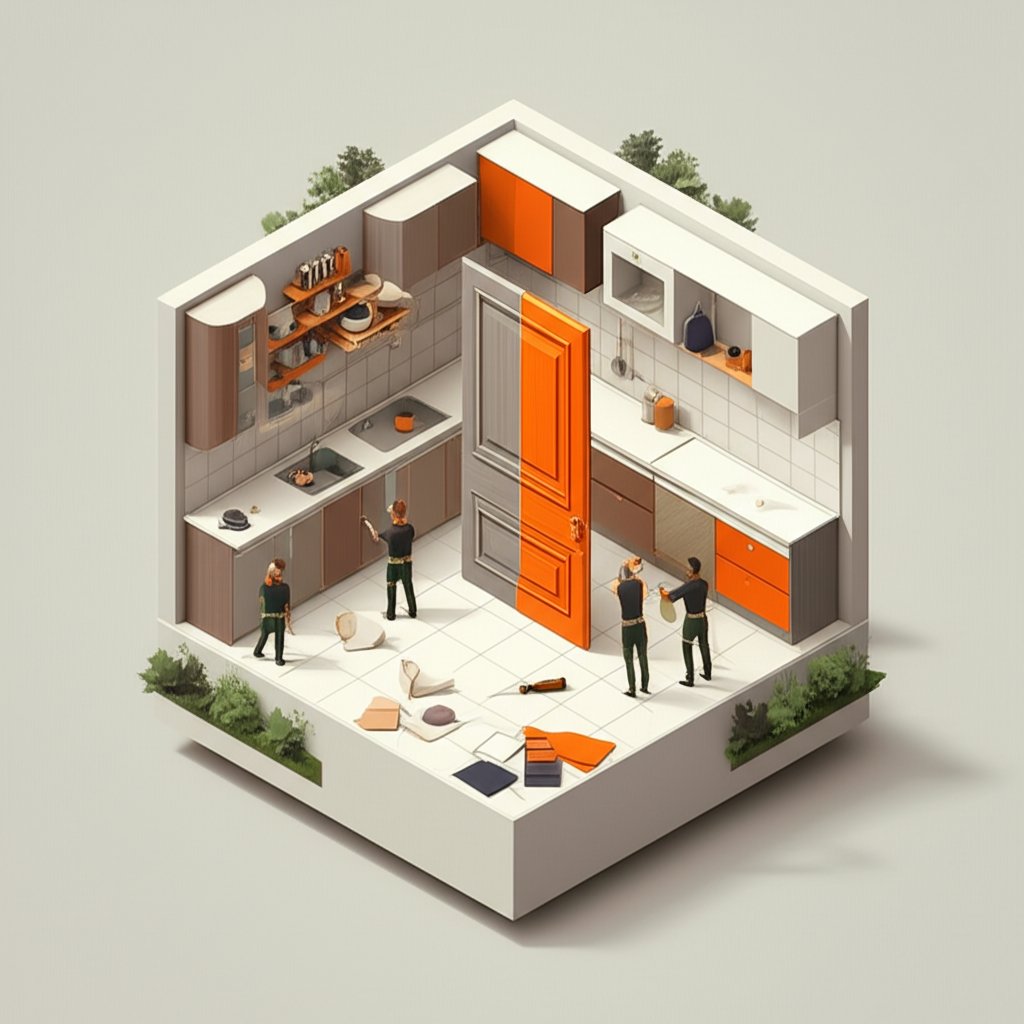
Dreaming of a kitchen upgrade but cringing at the thought of a full-blown remodel? You’re not alone. Many homeowners are turning to cabinet refacing as a cost-effective way to breathe new life into their kitchens. The refacing kitchen cabinets cost is significantly less than replacing them entirely, but is it the right choice for you? This guide will walk you through everything you need to know, from pricing to materials, helping you decide if refacing is the perfect solution for your kitchen makeover.
At a Glance: Is Cabinet Refacing for You?
- Cost-Effective: Refacing typically costs 30-50% less than replacing cabinets.
- Quick Turnaround: Most refacing projects take less than a week.
- Good for Sound Cabinets: Refacing works best if your existing cabinet boxes are structurally sound.
- Cosmetic Upgrade: It’s a great way to update the style and finish of your kitchen.
- Considered Environmentally Friendly: Keeps your existing cabinets out of a landfill.
What is Cabinet Refacing, Exactly?
Cabinet refacing – sometimes called a “cabinet makeover” – is like giving your kitchen cabinets a facelift. You’re essentially replacing the visible surfaces of your existing cabinets with new ones. This includes:
- Replacing cabinet doors and drawer fronts. This is the most noticeable part of the process, allowing you to choose a new style, color, and material.
- Applying new veneer to the cabinet boxes. This covers the existing frame, creating a seamless look.
- Updating hardware: New knobs, pulls, and hinges complete the transformation.
Think of it like this: you’re keeping the “bones” of your kitchen (the cabinet boxes) but giving them a brand-new outfit.
How Much Does Refacing Kitchen Cabinets Cost?
Let’s get down to brass tacks: what will refacing set you back?
The average cost to reface kitchen cabinets typically falls between $4,500 and $13,000 in 2024. According to Angi and HomeAdvisor, homeowners often pay between $4,501 and $10,546, with an average of $7,220 for professionally refaced cabinets. Keep in mind these are averages, and your specific project could be higher or lower depending on several key factors. Want a deeper dive? You can explore a detailed Refacing Cabinets: Cost Breakdown.
Key Factors Affecting Refacing Costs:
- Kitchen Size: The more cabinets you have, the more you’ll pay. Contractors often charge based on the total linear square feet of your cabinets.
- Material Choice: This is a big one! Low-end materials, like thermofoil over particleboard, are cheaper than solid wood or wood veneer.
- Kitchen Layout: Complex layouts with tight angles or corner cabinets can increase labor costs.
- Labor Costs: These vary significantly by location. Expect to pay more in urban areas.
- Hardware: While you can reuse your existing hardware, many homeowners choose to upgrade for a fresh look.
- Geographic Location: As with any home improvement project, location matters. You can see how location dramatically shifts pricing; for instance, the price to reface in Boise, Idaho versus New York City has a huge range.
To illustrate, let’s break down the cost by material per linear foot: - Laminate: $100 per linear foot
- High-Quality Veneer: $200 per linear foot
- Real Wood Veneer: $455 per linear foot
Choosing the Right Refacing Material

The material you choose for your cabinet doors and veneer plays a significant role in both the look and the refacing kitchen cabinets cost. Here’s a rundown of common options:
- Laminate: A budget-friendly option available in many colors and patterns but less durable than other materials. Expect to pay $1,000 to $3,000 total.
- Rigid Thermofoil (RTF): A type of plastic laminate that mimics the look of wood. It’s also relatively inexpensive, costing $1,000 to $3,000. Be mindful of humidity if you go this route.
- Wood Veneer: Thin sheets of real wood applied over a substrate. Offers a more authentic wood look than laminate at a mid-range price ($2,500 to $6,500 for high-quality veneer, $6,000 to $14,000 for real wood).
- Solid Wood: The most durable and expensive option. Solid wood allows for repairs and offers a timeless look ($5,000 to $10,000 total).
When choosing, consider durability, maintenance, and your budget. Wood veneers offer a good balance of cost and aesthetics.
Refacing vs. Refinishing vs. Replacing: Understanding the Options
Before you commit to refacing, it’s essential to understand your other options: refinishing and replacing.
- Refinishing: This involves sanding and applying a new coat of paint or stain to your existing cabinets. This is the most budget-friendly option (typically $3,000 to $5,000) but only works if your cabinets are in good condition and you’re happy with the existing door style.
- Replacing: This involves completely removing your old cabinets and installing new ones. This is the most expensive option (averaging $400 to $3,500 per linear foot), but it allows you to completely redesign your kitchen layout.
Refacing is the sweet spot, offering a significant upgrade without the full cost of replacement. More information on your alternatives is available; you can explore Cabinet Refinishing: Cost Breakdown here.
When is Refacing the Right Choice?
Refacing is a good option if:
- Your cabinet boxes are structurally sound (no water damage, cracks, or sagging).
- You like your current kitchen layout.
- You want to update the style and finish of your cabinets without spending a fortune.
If your cabinet boxes are falling apart or you want to completely change your kitchen’s layout, replacement is the better choice.
DIY vs. Professional Refacing: Which is Best?
While DIY refacing is possible, it’s generally not recommended unless you have extensive experience. Working with veneer can be tricky, and mistakes can be costly. A lopsided application can really throw off your kitchen’s visuals. Pros handle the tear out, the minor repairs, the surface prep, and more.
Hiring a professional ensures a high-quality finish and can save you time and headaches in the long run, especially since labor often accounts for more than half of the total project cost.
The Refacing Process: What to Expect
Here’s a general overview of what to expect when you hire a professional to reface your cabinets:
- Consultation and Measurement: The contractor will assess your kitchen, discuss your design preferences, and take precise measurements.
- Material Selection: You’ll choose your new door style, veneer, and hardware.
- Door and Hardware Removal: The contractor will remove your old doors, drawer fronts, and hardware.
- Surface Preparation: The cabinet boxes will be cleaned and sanded to ensure proper adhesion of the new veneer.
- Veneer Application: The new veneer is applied to the cabinet boxes.
- New Door and Drawer Front Installation: The new doors and drawer fronts are installed.
- Hardware Installation: The new knobs, pulls, and hinges are installed.
- Final Touches: The contractor will make any necessary adjustments and clean up the work area.
The entire process typically takes 3-5 days, depending on the size of your kitchen and the complexity of the project.
Maximizing Your Refacing Budget: Tips for Saving Money

Want to keep your refacing kitchen cabinets cost as low as possible? Here are a few tips:
- Choose Laminate or RTF: These materials are significantly cheaper than wood veneer or solid wood.
- Keep Your Existing Layout: Avoid moving cabinets, as this will add to the cost.
- Shop Around for Hardware: Hardware costs can add up quickly. Look for deals at local hardware stores.
- Skip the Extras: Avoid adding features like glass inserts or under-cabinet lighting (at least initially).
- Ask for Discounts: Inquire about military, senior, teacher, or first responder discounts. Volume discounts may also be available.
Common Questions About Cabinet Refacing
- Can I reface cabinets with damage? Minor surface damage can be repaired during refacing. However, cabinets with significant water damage, rot, or structural issues should be replaced.
- Will refacing increase my home’s value? Yes! Cabinet refacing offers a good return on investment (ROI), typically between 65% and 75%.
- Does refacing require removing the countertops? No, countertops don’t need to be removed during refacing unless you are planning to replace them at the same time.
- How long will refaced cabinets last? With proper care, refaced cabinets can last for 20-30 years.
- Is it possible to just replace the cabinet doors? In some circumstances, you can just replace the doors. This is often the case if you like the existing framework but just want to update from a flat-panel door to a raised-panel door, or vice versa.
Is Refacing Right for You? A Final Checklist
Before you make a decision, ask yourself these questions:
- Are my cabinet boxes in good condition?
- Am I happy with my current kitchen layout?
- Do I want to update the style of my cabinets without a full remodel?
- Am I comfortable with the potential cost of refacing?
If you answered “yes” to most of these questions, cabinet refacing could be the perfect solution for your kitchen makeover.
Next Steps: From Research to Reality
Ready to move forward with cabinet refacing? Here’s what to do next:
- Get Quotes: Contact several local contractors for estimates. Be sure to provide them with accurate measurements and details about your desired materials.
- Check References: Ask for references and review online reviews to gauge the contractor’s reputation.
- Review the Contract Carefully: Make sure the contract includes a detailed scope of work, payment schedule, and warranty information.
- Prepare Your Kitchen: Clear out your cabinets and drawers before the project begins.
Transforming your kitchen with cabinet refacing can be a rewarding experience. By understanding the costs, materials, and process involved, you can make an informed decision and create the kitchen of your dreams without breaking the bank. Don’t forget that cost is only one component; you’ll also want to compare Refinishing Costs Explained to make the right choice.

- DIY Bathroom Mirror Frame Designs on a Budget - October 12, 2026
- Creative Bathroom Mirror Border Ideas for Every Style and Budget - October 11, 2026
- Bathroom Finishes That Handle Moisture and Look Great - October 10, 2026